
BPC-157 UK: What It Is, Legal Status and Research (2026)

Quick answer
What is BPC-157?
BPC-157 (Body Protection Compound-157) is a synthetic 15-amino-acid peptide based on a fragment of a protein found in human gastric juice. Researchers have studied it mainly in animal and cell models of gut, tendon and blood-vessel biology. In the UK it’s legal to buy as a research material, though it isn’t a licensed medicine.
- Synthetic pentadecapeptide, supplied for research use only
- The evidence is mostly preclinical, and human data is very limited
- Banned in sport under the WADA Prohibited List (S0)
BPC-157 has had a busy 2026. In April, a Guardian investigation led the MHRA to look into UK clinics making claims about it. In July, the BBC reported on a US FDA panel vote to ease restrictions on it. All that attention has landed on a small peptide that started life in a Croatian university lab.
Below you’ll find what BPC-157 is, where it stands under UK law, what the studies show so far, why it’s banned in sport, and how to check a batch before it reaches the bench.
We supply BPC-157 strictly for laboratory research. It is not a medicine and is not for human or veterinary use. This page is general information, not medical or legal advice.
What Is BPC-157?
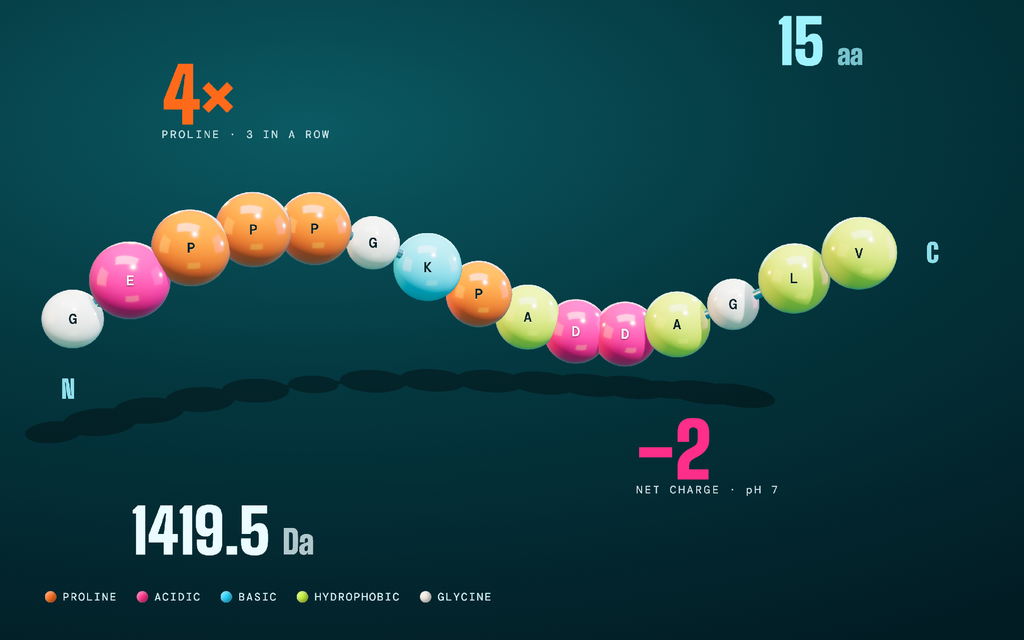
BPC-157 is a pentadecapeptide, a chain of 15 amino acids, made in the lab to match part of a larger protein found in human gastric juice. The name stands for Body Protection Compound-157. Most of what’s known about it comes from rat and cell studies published since the early 1990s.
The story starts with Predrag Sikirić at the University of Zagreb School of Medicine. His team collected gastric juice from hospital clinics, isolated a parent protein and, in 1990, named its active 15-residue stretch BPC-157. According to a 2026 Undark investigation, the Croatian drugmaker PLIVA later ran two early human trials in ulcerative colitis, and the rights returned to Sikirić in 2009.
Sikirić, who has worked on the idea since his student days in 1975, summed up his view of drug research to Undark in one line: “What is the essential purpose of the drug? To be useful for the people.”
One property turns up again and again in the Zagreb papers. BPC-157 is described as stable in human gastric juice, an acidic, enzyme-rich environment that breaks most peptides apart. That stability is why oral and capsule forms appear in the animal research alongside dissolved ones.
| BPC-157 fact sheet | |
|---|---|
| Full name | Body Protection Compound-157 |
| Class | Synthetic pentadecapeptide (15 amino acids) |
| Sequence | Gly-Glu-Pro-Pro-Pro-Gly-Lys-Pro-Ala-Asp-Asp-Ala-Gly-Leu-Val (GEPPPGKPADDAGLV) |
| Molecular formula | C62H98N16O22 |
| Molecular weight | ~1419.5 g/mol |
| CAS number | 137525-51-0 |
| Half-life (animal data) | Under 30 minutes |
| Standard research form | Lyophilised (freeze-dried) powder |
| Storage | Cold, dry and dark; long-term storage is typically at −20 °C |
The BPC-157 10mg specification and COA page shows these values alongside the current batch’s test data.
How Does BPC-157 Work?
The mechanism of BPC-157 isn’t fully established, and no single receptor for it has been identified. Lab studies have traced its activity through several overlapping signalling pathways linked to blood-vessel growth, cell movement and tissue structure. Nearly all of that work is preclinical.
The pathways that come up most often are:
- Angiogenesis and VEGFR2 signalling. Rat studies have looked at BPC-157 alongside VEGFR2, the receptor that drives new blood-vessel formation. A 2025 narrative review by McGuire and colleagues names it among the best-documented pathways.
- The nitric oxide pathway. The same review points to nitric oxide production through the Akt-eNOS axis, the signal that relaxes and widens blood vessels.
- Growth-hormone-receptor expression. Cultured tendon fibroblasts exposed to BPC-157 have shown more growth-hormone receptors on their surface.
- FAK-paxillin signalling. Cell-migration studies have examined BPC-157’s effect on FAK and paxillin, two proteins that help cells crawl, spread and anchor.
A common thread runs through these studies. Much of the tendon research focuses on tissue with a poor blood supply, which is why angiogenesis became the pathway researchers keep returning to.
Is BPC-157 a Growth Hormone?
No. BPC-157 is a short peptide and isn’t a hormone or a growth-hormone secretagogue (a compound that prompts the pituitary gland to release GH). The confusion traces back to one line of research on tendon cells, where BPC-157 was studied for its effect on growth-hormone-receptor numbers.
A 2025 systematic review in the HSS Journal reported that BPC-157 “enhances growth hormone receptor expression”. Receptor expression describes how ready a cell is to respond to growth hormone already in circulation. Secretagogues such as ipamorelin act at the pituitary, whereas BPC-157 research has stayed at the level of local tissue signalling.
What Does the Research on BPC-157 Actually Show?
Most BPC-157 research has been carried out in rats and cell cultures, across gut, tendon, muscle, bone and blood-vessel models. Human data comes from a handful of small pilot and retrospective reports. A randomised, placebo-controlled Phase 2 trial began in 2026 and is due to report in 2027.
On the preclinical side, the picture is encouraging. The McGuire review describes BPC-157 as “a potentially valuable tool in musculoskeletal medicine” and calls for well-designed human trials to test it properly. The same authors counted three published human pilot studies, covering knee pain, interstitial cystitis and an intravenous safety study.
| Research area | Model | Evidence level |
|---|---|---|
| Gastrointestinal (ulcer and IBD models) | Rat | Preclinical: many studies, mostly from one research group |
| Tendon and ligament | Rat, cell culture | Preclinical |
| Muscle and bone | Rat | Preclinical |
| Blood vessels (angiogenesis) | Rat, cell culture | Preclinical |
| Human | Small pilot and retrospective reports | Very limited, with no large controlled trials published |
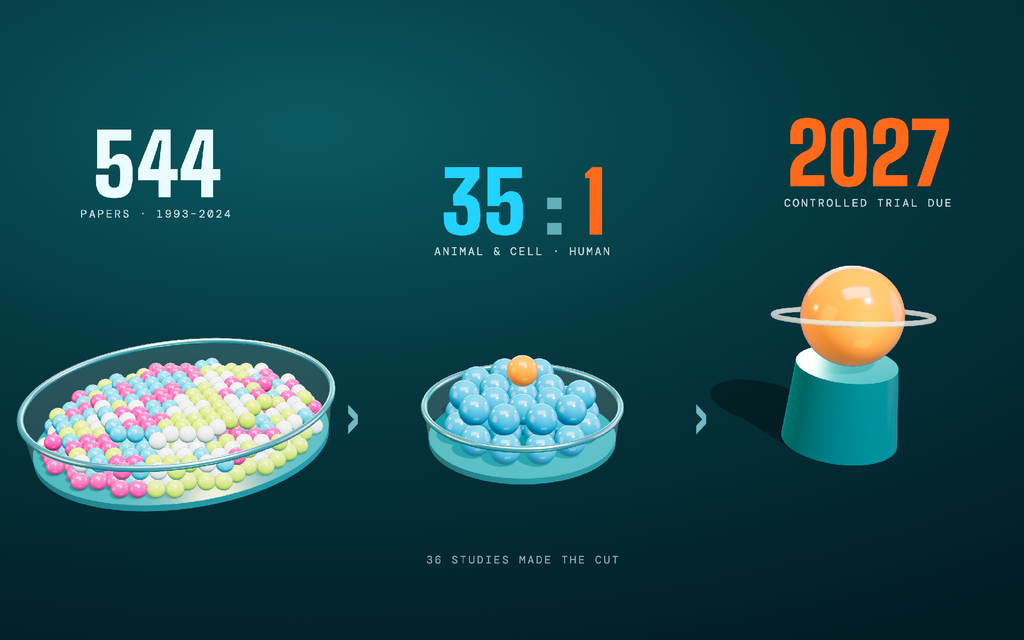
Much of the published work comes from Sikirić’s group in Zagreb, and replication by independent labs is still thin. Reviewers treat that as the main gap to close, since findings carry more weight once a separate team can reproduce them.
That independent test is now running. In February 2026, Hudson Biotech began a randomised, double-blind, placebo-controlled Phase 2 trial at Peking University Shenzhen Hospital, enrolling 120 adults with MRI-confirmed hamstring strains, according to its ClinicalTrials.gov record (NCT07437547). Primary completion is estimated for February 2027, which makes it the trial to watch.
Is BPC-157 Legal in the UK?
Yes, as a research material. BPC-157 isn’t a controlled drug under the Misuse of Drugs Act 1971, so buying and holding it for laboratory work is lawful. It has no MHRA marketing authorisation, though, so it can’t legally be sold, supplied or advertised for human use.
UK law draws its line at how a product is presented. Under the Human Medicines Regulations 2012, anything offered to treat or prevent a condition counts as a medicine, whatever its label says. For the wider rules on other compounds, see our guide: are peptides legal in the UK.
Can You Buy BPC-157 in the UK?
Yes. UK research suppliers stock BPC-157 labelled for research use only, as lyophilised powder, pre-mixed solution or pre-filled research pens. Suppliers working within the rules describe identity, purity and storage, and make no claims about effects in people. Our Research Use Only policy sets out how Apexion applies this to every order.
Is BPC-157 Available on the NHS?
No. There’s no licensed BPC-157 product in the UK, and it has no place in NHS treatment pathways, so GPs and hospital doctors don’t offer it. Anyone searching “BPC-157 UK NHS” will find it only through private clinics and research suppliers, and that’s where the regulator has turned its attention.
What Has the MHRA Said?
In April 2026, a Guardian investigation found UK clinics claiming BPC-157 helps with recovery from injuries. The MHRA confirmed these were medicinal claims, which clinics aren’t allowed to make.
Once a clinic makes medicinal claims, the MHRA said, its peptide products “will be considered medicines”. At least one clinic deleted its claims after the Guardian got in touch. The MHRA also said it will take action against clinics found breaching the rules, and a “research only” label gives no cover to a seller who markets health outcomes.
What Is the FDA’s Position on BPC-157?
BPC-157 isn’t FDA-approved. In 2023, the FDA placed it in Category 2, its list of substances with safety concerns for compounding. It came off that list in April 2026, and on 23 July an FDA advisory panel voted 8 to 6 to recommend it for US compounding pharmacies. The FDA’s final decision is still pending.
The BBC’s coverage of the vote, published on 24 July 2026, noted that the FDA doesn’t have to follow the panel but often does. For UK readers, the vote changes nothing on the ground. US compounding rules have no bearing on MHRA licensing, so BPC-157’s UK status stays the same whichever way the FDA rules. We’ll update this page when that decision lands.
Why Is BPC-157 a Banned Substance in Sport?
WADA lists BPC-157 under S0, non-approved substances, because no health authority anywhere has approved it for human therapeutic use. It has been named on the Prohibited List since 2022 and is banned at all times, in and out of competition. In the UK, UKAD enforces the ban.
S0 works as a catch-all category. Any substance without human approval falls under it, named or not, and a search of the WADA Prohibited List for BPC-157 returns S0 with the status “all times”.
Anti-doping rules run on strict liability. Athletes in UKAD’s testing pool are responsible for anything found in their sample, including traces from a mislabelled supplement, and a supplement marketed as a “BPC-157 complex” puts them in exactly that position.
What Are the Known Risks and Side Effects of BPC-157?
Human safety data on BPC-157 is very limited, so its side effects in people aren’t established. The three human pilot studies were small and short, and no long-term follow-up exists. Regulators want long-term safety data before they’ll approve a medicine, and for BPC-157 that data hasn’t been gathered yet.
The open questions researchers discuss fall into three groups:
- Long-term data. No study has followed people over months or years, so any late or cumulative effects remain unknown.
- Angiogenesis. Reviews note a theoretical question: a compound studied for new blood-vessel growth could, in principle, act on tissue where extra blood supply is unwanted, such as tumours. No study has shown this; it remains a question for future trials.
- Product identity. Unverified products may be mislabelled, underfilled or contaminated. That risk comes from the supply chain, and a batch COA is the way to rule it out.
Is BPC-157 Bad for the Heart?
There’s no reliable human evidence either way. Sikirić’s group has published rat studies in cardiovascular models, including heart-muscle and heart-rhythm models, but no human cardiac data has been published. For now, the effect of BPC-157 on the human heart is unknown.
BPC-157 Capsules vs Lyophilised Vials: What’s the Difference?
Research-grade BPC-157 normally comes as freeze-dried powder in a sealed vial, backed by a batch COA. Many “BPC-157 capsules” or “BPC-157 amino complex” products sold as supplements on Amazon UK are amino-acid blends, and they may contain little or no verified BPC-157.
| Lyophilised vial | Pre-filled research pen | Supplement capsule or tablet | |
|---|---|---|---|
| What’s inside | Freeze-dried BPC-157 powder | BPC-157 prepared to order | Often an amino-acid blend |
| Batch COA | Expected | Expected | Rarely supplied |
| Identity tested | HPLC, often LC-MS | HPLC | Seldom stated |
| UK status | Research material | Research material | Sold as a food supplement |
Searches for “BPC-157 capsules UK”, “BPC-157 tablets” and “BPC-157 Holland and Barrett” usually lead to this third column. We’re not aware of any authorised BPC-157 food supplement in the UK, so a capsule’s label claim is only as good as the lab data behind it.
Apexion supplies BPC-157 in pre-filled research pens, prepared to order in the UK, each with its own batch COA. Our comparison of peptide pens vs vials covers how the two formats differ for lab handling.
BPC-157 vs TB-500
BPC-157 and TB-500 are different peptides with different research areas. BPC-157 is a 15-amino-acid fragment based on a gastric protein. TB-500 is a synthetic fragment of thymosin beta-4, a protein found in most cells and studied for its role in cell migration.
Researchers often study the two side by side in tendon and muscle models. Our BPC-157 vs TB-500 research comparison goes through each one, and the BPC-157 + TB-500 blend specification lists our combined format for research. Both peptides also appear in the multi-peptide blends compared in KLOW vs GLOW.
How to Check the Quality of Research-Grade BPC-157
A reliable batch of BPC-157 comes with a certificate of analysis that ties the product in your hand to named lab data. Before any BPC-157 goes into an experiment, check the COA for these five points:
- A batch-specific COA. The lot number on the certificate should match the one on the product. A generic, undated certificate proves nothing about your batch.
- HPLC purity, with the method stated. Look for the percentage purity plus the column, wavelength or gradient used.
- An LC-MS observed mass near 1419.5 Da. Many reports show the doubly charged ion instead, at around 710 m/z, which confirms the same molecule.
- The testing lab and test date. A named lab and a recent date make the result traceable.
- Storage guidance. The COA or product sheet should state storage conditions for that specific batch.
Our guide on how to read a peptide COA goes through a real certificate line by line, and you can verify a research peptide batch with the same checks. For conditions after delivery, see peptide storage and handling.
Our BPC-157 is third-party tested, typically ≥98% HPLC-verified, and each batch links to its COA through a QR code or batch number. Our batch verification shows how to look one up.
Frequently Asked Questions
BPC-157 is used in laboratory research into the pathways it has been studied for, mainly angiogenesis, nitric oxide signalling and cell migration in gut, tendon and blood-vessel models. It isn’t approved for any human use in the UK or elsewhere, and it’s sold by research suppliers for in-vitro and preclinical work.
Yes, BPC-157 is legal to buy and hold in the UK as a research material, because it isn’t listed under the Misuse of Drugs Act 1971. It has no MHRA marketing authorisation, so selling or advertising it for human use breaks the Human Medicines Regulations 2012.
No, steroids are built on a four-ring carbon structure, while BPC-157 is a linear chain of 15 amino acids. WADA bans it under S0, non-approved substances, which is a separate category from S1, where anabolic agents are listed.
No, there’s no licensed BPC-157 medicine in the UK, so it isn’t available on NHS prescription. Private clinics offering it as a treatment risk breaching medicines law, and the MHRA opened an investigation into clinics making medicinal claims about BPC-157 and other peptides in April 2026.
Yes, on anti-doping tests. WADA-accredited laboratories test for BPC-157, which is banned at all times under the S0 category, and UKAD applies that ban to athletes in UK sport. Standard workplace or clinical drug screens aren’t designed to look for peptides like BPC-157.
Keep lyophilised BPC-157 sealed, cold, dry and away from light. Long-term storage is typically at −20 °C, and each batch’s guidance should take priority. Avoid repeated warming and cooling, since temperature swings and moisture speed up peptide breakdown. Our peptide storage and handling guide covers the detail.
The Bottom Line
BPC-157 is a legal UK research material and not a licensed medicine. Its evidence base is mostly animal and cell studies, and a controlled human trial is due to report in 2027. It’s banned in sport at all times, and the MHRA is watching clinics that make claims about it.
For laboratory work, choose a supplier with batch-matched documentation. Apexion supplies BPC-157 for research use only, never for human or veterinary use.
View BPC-157 10mg specification and COA
Sources
- McGuire FP et al. “Regeneration or Risk? A Narrative Review of BPC-157 for Musculoskeletal Healing.” Current Reviews in Musculoskeletal Medicine, 2025. PMC12446177
- Vasireddi N et al. “Emerging Use of BPC-157 in Orthopaedic Sports Medicine: A Systematic Review.” HSS Journal, 2025. PMC12313605
- ClinicalTrials.gov. NCT07437547, BPC 157 for Acute Hamstring Muscle Strain Repair. Record
- Undark. “A Peptide, a Secretive Scientist, and a Debate Over Evidence”, 29 May 2026. Article
- The Guardian. “Medicines watchdog to investigate UK peptide clinics over health claims”, 4 April 2026. Article
- BBC News. “FDA panel votes to loosen restrictions for controversial peptides”, 24 July 2026. Article
- World Anti-Doping Agency. The Prohibited List. wada-ama.org