
BPC-157 vs TB-500: Research Overview, Key Differences and Format Considerations

Why BPC-157 and TB-500 Are Compared
BPC-157 vs TB-500 is one of the most common peptide comparisons in research search results, yet the two are different materials with different scientific contexts. This guide is an educational comparison for laboratory and analytical research audiences. It is not guidance for human or veterinary administration, diagnosis, treatment, dosing, or self-experimentation.
BPC-157 and TB-500 appear together in research and commercial search results because they are linked to related biological research themes, such as tissue repair and angiogenesis. That shared framing is why people compare them, and it is also why the two are so often confused. Being studied in the same broad area does not make two compounds interchangeable.
This guide covers four things: the molecular and terminology differences between the compounds, their research mechanisms and the quality of the evidence, the important distinction between BPC-157, TB-500, and full-length thymosin beta-4, and the quality, documentation, and supply-format considerations that matter before any research material is chosen.
BPC-157 vs TB-500 at a Glance
BPC-157 and TB-500 are different peptide materials with different research profiles. The table below is a research-planning reference, summarising each compound’s identity, common research themes, and documentation priorities before the deeper sections.
| Research factor | BPC-157 | TB-500 |
| Basic identity | Synthetic pentadecapeptide; 15 amino acids | Synthetic fragment associated with thymosin beta-4 biology |
| Common research themes | Gastrointestinal, soft-tissue, vascular and inflammatory signalling models | Actin dynamics, cellular migration, tissue-remodelling and angiogenesis-related models |
| Evidence base | Predominantly preclinical; limited human research | Broader thymosin beta-4 literature exists, but it must not be treated as automatically equivalent to TB-500 |
| Key terminology caution | Avoid converting preclinical findings into human efficacy claims | Distinguish TB-500 from complete thymosin beta-4 in every substantive comparison |
| Documentation priority | Identity, purity, lot number and storage history | Identity, exact sequence or fragment information, purity, lot number and storage history |
| Format consideration | Available in lyophilised and prepared formats, depending on supplier | Available in lyophilised and prepared formats, depending on supplier |
Key takeaway:
- BPC-157 and TB-500 are different peptide materials with different scientific contexts.
- “Which is better?” is not a scientifically useful question without a defined model, endpoint, methodology, and compound-verification standard.
What Is BPC-157?
Molecular identity and nomenclature
BPC-157 is a synthetic 15-amino-acid peptide, which is why it is often called a pentadecapeptide (penta-deca meaning fifteen). The name “body protection compound” comes from the historical research literature, where the sequence was studied as a fragment associated with a gastric protein. The name describes that research origin and carries no therapeutic meaning. We publish the exact identity for its material on the COA, so the sequence you rely on is documented against the product specification.
Research themes in the literature
BPC-157 research has been investigated in several experimental areas, almost all preclinical. Published work explores angiogenesis-related signalling, nitric-oxide and vascular signalling hypotheses, gastrointestinal tissue models, and tendon, ligament, muscle, and soft-tissue models. These are reported in animal or in-vitro models, and preclinical studies have explored them as mechanisms, well short of confirmed outcomes.
Evidence limitations for BPC-157
The published BPC-157 evidence base is mainly preclinical. A 2025 systematic review in the HSS Journal screened the literature and included 36 studies: 35 were preclinical and only one was clinical, and the authors reported no completed controlled human efficacy trials. There is a clear lack of large, well-controlled human studies, and robust clinical safety evidence is absent. Read any claim in that light. For material identity and testing, researchers can review the batch documentation on the BPC-157 research material product page.
What Is TB-500?
TB-500 and thymosin beta-4 are not identical terms
The TB-500 thymosin beta-4 difference is the single most misunderstood point in this whole comparison. Thymosin beta-4 is an endogenous 43-amino-acid peptide with a substantial biological research history. TB-500 is commonly described as a synthetic fragment related to thymosin beta-4. They are connected, but they are not the same thing, and data on full-length thymosin beta-4 cannot automatically be presented as direct evidence for a TB-500 product.
Define the fragment carefully
TB-500 is generally described as the N-terminal acetylated 17-23 fragment of thymosin beta-4, subject to confirmation against the product specification being discussed. WADA’s research material identifies the active content as Ac-LKKTETQ, a seven-residue sequence. That precision matters: loose statements such as “TB-500 is thymosin beta-4” are inaccurate and blur the evidence. A fragment and its parent protein are different research materials.
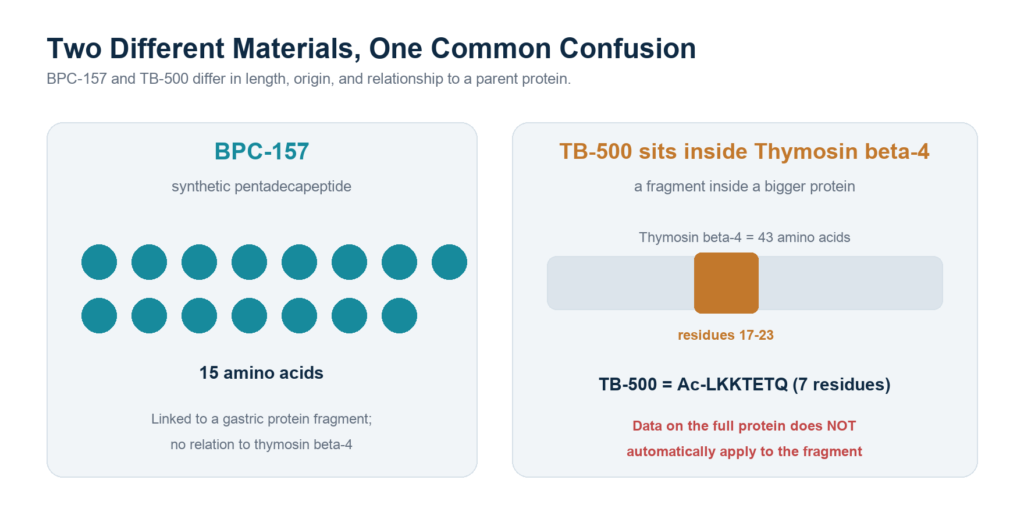
Figure 1: BPC-157 (15 aa) vs TB-500 (Ac-LKKTETQ, residues 17-23 of thymosin beta-4).
Research themes associated with TB-500
TB-500 research is associated with actin binding and cytoskeletal regulation, cell motility and migration models, and tissue-remodelling and angiogenesis-related research. These themes arise partly from thymosin beta-4 biology, so they must be attributed precisely: a theme observed for the full protein is not automatically an established property of the fragment.
Evidence limitations for TB-500
Keep three evidence buckets separate: TB-500-specific evidence, full-length thymosin beta-4 evidence, and general mechanistic or animal-model evidence. Thymosin beta-4 has been examined in animal studies and in phase-2 wound-healing research, but those findings do not establish equivalent clinical outcomes for a TB-500 product. Researchers verifying material can check the batch record on the TB-500 research material product page.
BPC-157 vs TB-500: Key Research Differences
Molecular and structural differences
The clearest BPC-157 research and TB-500 research difference is structural. BPC-157 is a 15-amino-acid synthetic peptide linked in the literature to a gastric protein fragment. TB-500 is a shorter fragment (Ac-LKKTETQ) tied to the 43-amino-acid thymosin beta-4. So the two differ in length, in nomenclature, and in their relationship to larger endogenous proteins. Any molecular graphic should be checked against verified product details before publication.
Mechanisms explored in research
BPC-157 research themes centre on angiogenesis and vascular signalling, growth-factor-related signalling, and gastrointestinal and connective-tissue experimental models. TB-500 research themes centre on actin-related biology, cell migration and cytoskeletal organisation, and tissue-remodelling research. The mechanisms are studied through different biology, even where the headline topic sounds similar.
Shared themes, different evidence
Both compounds may appear under angiogenesis, inflammatory-signalling, or tissue-repair discussions. A shared topic label does not mean an identical mechanism, the same evidence quality, or a comparable experimental effect. Two materials can sit under the same keyword and still behave very differently in a controlled study.
Localised versus systemic: a claim to treat carefully
Competitor content often frames BPC-157 as “localised” and TB-500 as “systemic.” Treat that framing with caution. It is an oversimplification, and it should not be presented as established human pharmacokinetic fact without compound-specific and formulation-specific data. This guide does not discuss routes of administration or protocol selection, and neither should a claim like this be used to imply them.
What Does the Evidence Actually Show?
Both compounds sit low on the evidence hierarchy for human outcomes. BPC-157 evidence is mostly animal and mechanistic. Thymosin beta-4 has a wider research history than TB-500, including clinical exploration, but that does not transfer to a TB-500 product. Neither is a validated treatment.
Evidence hierarchy
A simple hierarchy keeps claims honest, strongest at the top:
- Regulatory approval.
- Large controlled human trials.
- Small observational or pilot human research.
- Animal and preclinical models.
- In-vitro and mechanistic studies.
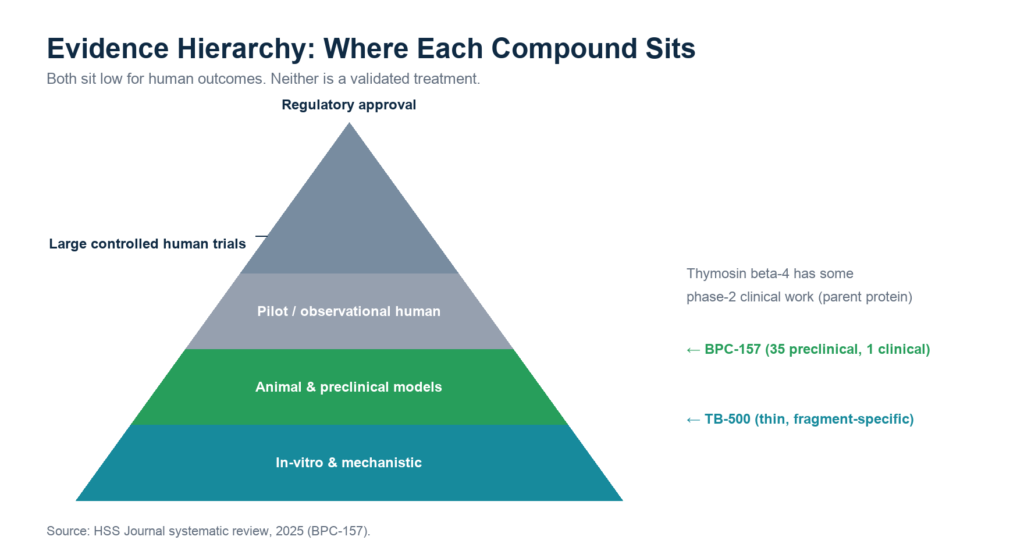
Figure 2: evidence hierarchy, where BPC-157 and TB-500 actually sit.
BPC-157 evidence profile
BPC-157 research is dominated by animal and mechanistic work. The HSS Journal systematic review found 35 of 36 included studies were preclinical, with no completed controlled human efficacy trials and no clinical safety dataset. That places it near the base of the hierarchy for human questions. Listing medical conditions as if they were established indications would misrepresent this evidence.
TB-500 and thymosin beta-4 evidence profile
Full-length thymosin beta-4 has a different and wider research history, including phase-2 clinical exploration in wound-healing contexts. That history belongs to the parent protein. It does not validate all TB-500 formulations, and it does not establish therapeutic efficacy for the fragment sold as a research material.
What researchers cannot conclude
Neither compound should be described as a proven treatment, a recovery shortcut, or a clinically validated solution. A preclinical signal is not a human outcome. And a commercial product label is not evidence of identity, purity, sterility, or clinical suitability. Those are separate questions answered by documentation, not by marketing.
Why BPC-157 and TB-500 Are Often Discussed Together
The comparison rationale
BPC-157 and TB-500 are frequently compared because their research themes are often framed as complementary, both touching tissue-repair and angiogenesis discussions. That is the comparison rationale, and it is a fair reason to study them side by side. It is not evidence of synergy. This guide avoids “stack,” “combined protocol,” or “better together” framing, because those claims need a specific study design and still should not be extrapolated to human use.
A research-design perspective
A neutral research approach runs in order: define the hypothesis first, then select a material only where its verified identity and available literature match the study objective, then document the product lot, concentration, storage conditions, and experimental endpoint. The research question drives material selection; marketing does not.
Callout: pairing two compounds increases study complexity and confounding risk. Every added material multiplies the variables you must control, identity by lot by concentration by endpoint, so a two-compound design demands extra rigour.
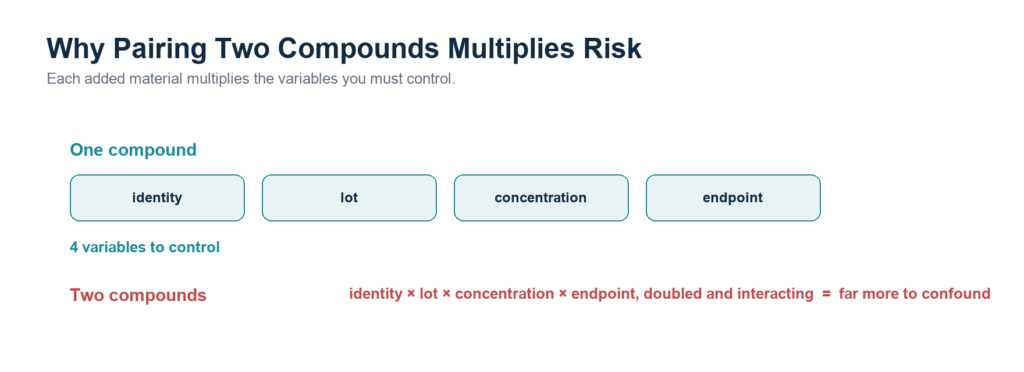
Figure 3: pairing two compounds multiplies the variables to control.
Format Considerations: Peptide Pens vs Lyophilised Vials
Why format belongs in a research comparison
Format does not change a compound’s identity by itself. A BPC-157 TB-500 vial and a metered pen of the same material contain the same peptide. Format does affect handling steps, concentration flexibility, documentation, storage workflow, and the potential for operator-introduced variation, which is why it belongs in a research comparison. Our peptide pen vs vial guide covers the format science in more depth.
Pre-filled or metered pen formats
A pre-filled or metered format can offer a fixed concentration or metered-volume design, fewer preparation steps at point of use, potentially simpler unit-level batch association and usage logging, and reduced open-container handling, depending on the device design and intended research workflow.
Questions to ask before selecting a pen format: Is the exact formulation disclosed? Is the batch number visible on the device and linked to a batch-specific COA? Is the declared concentration verified on the COA or a supporting analytical document? What are the documented storage conditions and in-use stability limits? Is the delivery device suitable for the intended laboratory workflow? Our Pen Priming Guide covers set-up for research handling.
Important limitations: when a BPC-157 TB-500 peptide pen is offered, remember that a pen format can reduce preparation steps but does not prove purity, identity, sterility, or stability, and a fixed concentration can limit protocol flexibility. This section uses no self-administration language by design.
Lyophilised vial formats
A lyophilised vial can offer greater concentration flexibility for defined laboratory protocols, suitability for analytical work requiring specific dilutions, and support for controlled, documented preparation where procedures are validated.
Documentation requirements: record the vial batch and COA, and record the preparation date, diluent or reagent lot, target concentration, storage location, and discard date. Use validated procedures appropriate to the laboratory’s work.
Important limitations: more handling steps can introduce preparation variability, and reconstitution and repeat access may change stability and contamination-control requirements. This guide gives no reconstitution recipe, volume calculation, or administration protocol.
BPC-157 and TB-500 format comparison
| Consideration | Pre-filled / metered format | Lyophilised vial |
| Concentration | Predetermined by supplier | Can be adjusted within a validated research procedure |
| Preparation workflow | Fewer point-of-use steps | Requires documented preparation |
| Batch association | May be simpler if unit and COA are linked | Requires lot and preparation log |
| Format flexibility | Lower | Higher |
| Storage documentation | Device lot, expiry, conditions and in-use period | Vial lot, preparation date, reagent lot and storage record |
| Quality decision | Verify device label, formulation and linked COA | Verify vial label, identity, purity and preparation controls |
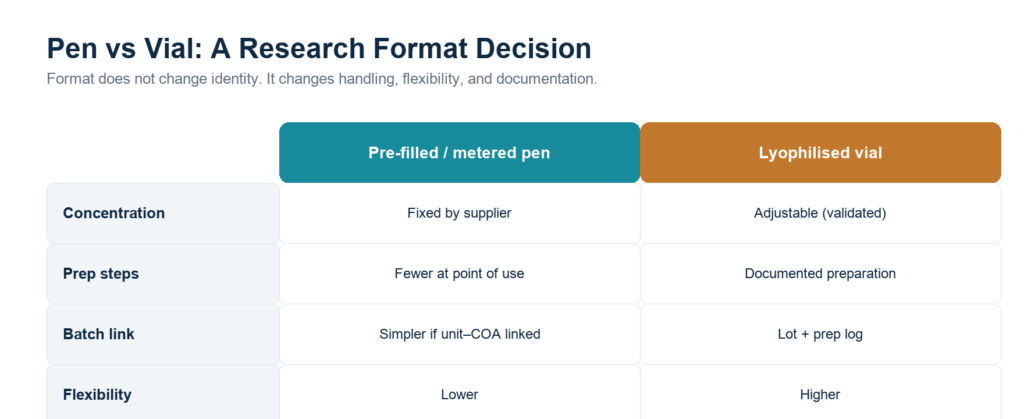
Figure 4: pen vs vial as a research format decision.
Quality Checks Before Comparing Any Two Peptide Materials
Before you compare any two peptide materials, confirm what each one actually is. A product name alone is insufficient. Work through three checks: identity, the Certificate of Analysis, and handling documentation.
Verify compound identity
Check the sequence, molecular mass, analytical identity method, and lot number, and confirm they match the supplier’s specification. For TB-500 specifically, check that the stated fragment or sequence (the Ac-LKKTETQ content) matches the specification, because “TB-500” on a label does not confirm the fragment inside.
Read the Certificate of Analysis
A batch-specific COA should include an HPLC purity result and chromatogram, an identity confirmation method such as mass spectrometry, a lot number matching the purchased unit, and the test date, laboratory details, and specification limits. Distinguish a batch-specific report from a generic sample COA, since only the batch-specific document describes the material you received. We state HPLC-verified purity on each product, at 98%-plus for BPC-157 and 99%-plus for TB-500.
Assess handling and storage documentation
Verify the storage conditions, record the shipment receipt condition where applicable, and follow the supplier’s documented stability guidance over generic online advice. Our forthcoming How to Read a Peptide COA and Peptide Storage and Handling for Research guides will cover these steps in order.
Regulatory and Sporting-Compliance Context
Research-use-only is not a clinical claim
Research materials are not licensed human or veterinary medicines. Research-use-only labelling describes intended use; it is not a clinical claim, and it is not evidence of safety or efficacy. Avoid country-specific legal claims unless they have been reviewed against the relevant jurisdiction and the publication date.
Competitive sport
Both compounds are prohibited in sport. WADA’s 2026 Prohibited List names BPC-157 and thymosin-β4 derivatives, including TB-500, as prohibited substances. This guide gives no athlete-use advice, no clearance timelines, and no evasion-related information; athletes and support staff should check the current list and their own governing body’s rules.
BPC-157 vs TB-500: Research Decision Framework
Whether you frame it as BPC-157 vs TB-500 or TB-500 vs BPC-157, the decision follows the science in a fixed order: question, then documentation, then format.
Choose the research question first. Is the interest molecular identity, cellular migration, angiogenesis-related signalling, a tissue-model response, or analytical method development? Then ask whether the selected peptide has a relevant and clearly qualified evidence base for that question.
Choose documentation before format. Do not choose a material on a marketing claim or a device style. Prioritise batch-specific evidence of identity, purity, and traceability first.
Choose the format around protocol constraints. Fixed-format pens suit work where the supplied concentration and documented device workflow match the research design. Lyophilised vials suit work where validated preparation flexibility is required. Neither format is inherently better without a defined use case and complete product documentation.
Frequently Asked Questions
What is the main research difference between BPC-157 and TB-500?
BPC-157 is a synthetic 15-amino-acid pentadecapeptide studied mainly in gastrointestinal and soft-tissue models. TB-500 is a shorter fragment (Ac-LKKTETQ) linked to thymosin beta-4 and studied in actin and cell-migration models. They are different materials with different evidence bases.
Is TB-500 the same as thymosin beta-4?
No. Thymosin beta-4 is an endogenous 43-amino-acid peptide. TB-500 is commonly described as its acetylated 17-23 fragment, Ac-LKKTETQ. Data on the full protein does not automatically apply to the fragment, so the two should be described separately.
Is there strong human clinical evidence for BPC-157?
No. A 2025 HSS Journal systematic review found 35 of 36 studies were preclinical, with one clinical study and no completed controlled human efficacy trials. The evidence base is mainly animal and mechanistic, and robust human safety data is absent.
Does thymosin beta-4 research directly apply to TB-500?
Not automatically. Thymosin beta-4 has a wider research history, including phase-2 wound-healing work, but that belongs to the full protein. It does not validate a TB-500 fragment product or establish therapeutic efficacy for it.
Are BPC-157 and TB-500 ever compared in the same research context?
Yes, because their research themes overlap in tissue-repair and angiogenesis discussions. A shared theme is a reason to compare them, not evidence of synergy. A sound comparison needs defined endpoints, controls, and batch documentation for every material.
Does a pre-filled peptide pen prove a product is higher quality than a vial?
No. A pen format can reduce preparation steps and simplify logging, but it does not prove purity, identity, sterility, or stability. Quality is shown by a batch-specific COA and supporting documentation, whatever the format.
What should a batch-specific peptide COA include?
At minimum: product and peptide identity, a lot number matching the unit received, HPLC purity with a chromatogram, an identity method such as mass spectrometry, the test date, laboratory details, and specification limits.
Are BPC-157 and TB-500 prohibited in competitive sport?
Yes. WADA’s 2026 Prohibited List names BPC-157 and thymosin-β4 derivatives, including TB-500. Athletes and support personnel should review the current list and their sport’s specific rules directly.
References and Editorial Review
This guide prioritises primary scientific sources:
- PubMed-indexed reviews and original research, ClinicalTrials.gov records, and official anti-doping documentation, cited immediately after the technical claims they support.
- Key references include the BPC-157 systematic review (HSS Journal, 2025), a thymosin beta-4 phase-2 wound-healing study (ClinicalTrials.gov), and the WADA Prohibited List.
- Editorial standards for this page: a visible publication date, a last scientifically reviewed date, and a named reviewer with a relevant qualification where available.
- This article does not provide medical, veterinary, or self-administration guidance.
- For material selection, prioritise batch-specific documentation; the Precision Manufacturing and quality hub sets out how we document identity and purity before a compound reaches your bench.
Compliance: All content is for laboratory and analytical research use only. The compounds discussed are not licensed human or veterinary medicines, are not for human or animal administration, and are not FDA-approved for any therapeutic use. Research-use-only labelling is a statement of intended use, not evidence of safety or efficacy.