KPV Peptide UK: What It Is, Research and Legal Status (2026)
Quick answer
What is KPV peptide?
KPV is a tripeptide (lysine-proline-valine) taken from the end of alpha-melanocyte-stimulating hormone (α-MSH). It’s studied mainly for its effect on inflammatory signalling in gut and skin cell models. UK law allows its purchase as research material. No regulator has licensed it as a medicine, and no controlled clinical trial exists.
Three amino acids: Lys-Pro-Val (α-MSH residues 11 to 13)
The evidence comes mostly from mouse colitis and cell studies
One of the four peptides in the KLOW blend
Three amino acids rarely make the news. KPV did in late July 2026, when a US Food and Drug Administration advisory panel backed it, by 8 votes to 6, for the American pharmacy compounding list. Search for KPV peptide in the UK, though, and you’ll mostly find shop listings and US consumer articles.
This guide follows the research trail: what KPV is, how it relates to α-MSH, what the evidence shows, why oral and vial forms both exist, its UK legal status, and what a batch certificate should show.
Apexion supplies KPV strictly for laboratory research. It is not for human or veterinary use. This is general information, not medical or legal advice.
What Is KPV Peptide?
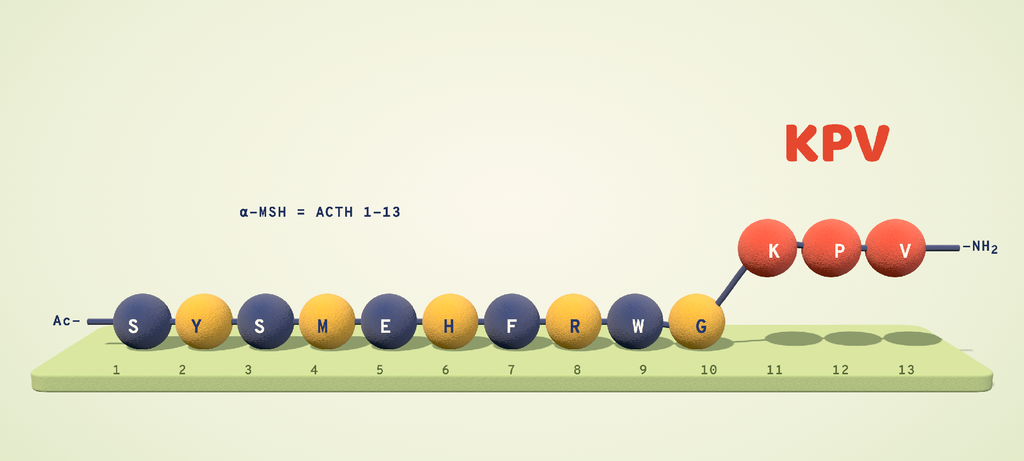
KPV is a three-amino-acid peptide, lysine-proline-valine, that matches positions 11 to 13 of α-MSH, a 13-amino-acid hormone. Researchers study it as a pared-down version of α-MSH’s anti-inflammatory activity, mostly in gut and skin cell models and in mice.
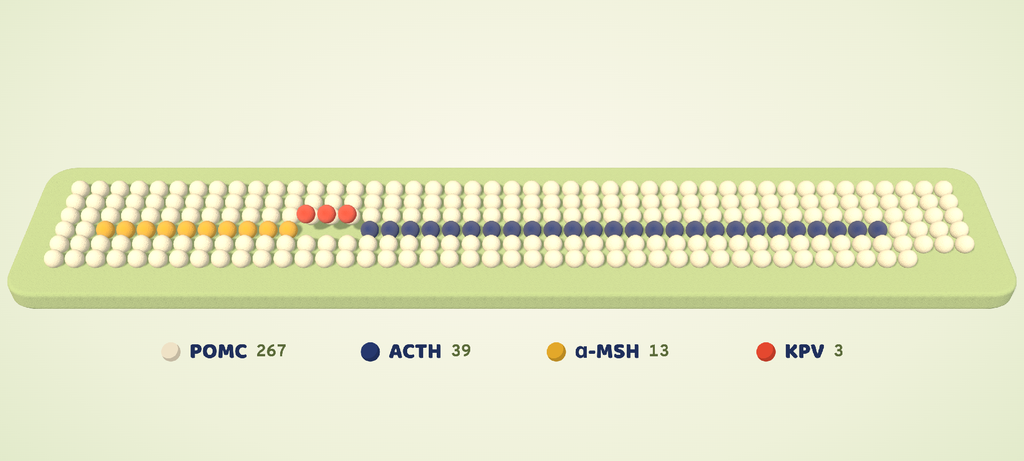
The parent hormone comes from a bigger precursor protein called POMC. Its first 13 residues line up with the start of another hormone, ACTH, which is why chemical databases such as PubChem also file KPV under the name ACTH-(11-13).
Interest in the fragment grew out of 1990s work by Anna Catania, James Lipton and colleagues, who reported that α-MSH could damp down inflammatory signalling. Thomas Luger’s University of Münster group summed it up in a 2007 review: “Most of the anti-inflammatory activities of α-MSH can be attributed to its C-terminal tripeptide KPV.”
13-residue α-MSH chain, with the final three, KPV, lifted out
Property
Detail
Full name
Lysyl-prolyl-valine (KPV)
Sequence
Lys-Pro-Val
Class
Tripeptide, α-MSH fragment
Also listed as
α-MSH (11-13), ACTH (11-13)
Molecular formula
C16H30N4O4
Molecular weight
~342.4 g/mol
CAS number
67727-97-3
Research form
Lyophilised (freeze-dried) powder; Apexion supplies a pre-filled 10mg research pen
The mechanism isn’t fully settled. Two lines of research stand out: KPV entering cells through the PepT1 transporter and quietening inflammatory signalling inside them, and the open question of whether it acts on melanocortin receptors such as MC1R the way full α-MSH does. Both rest on mouse and cell models.
PepT1 transport. PepT1 is a membrane transporter whose usual job is moving small two- and three-residue peptides out of the gut and into lining cells. In a 2007 Gastroenterology study, Guillaume Dalmasso, Didier Merlin and colleagues at Emory University showed that PepT1 also carries KPV into intestinal epithelial cells and T cells. Once inside those cultured cells, nanomolar amounts of KPV blocked NF-κB and MAP-kinase signalling, two of the main switches that turn on inflammatory genes.
The team also noted that PepT1 is “induced in colon during inflammatory bowel disease,” which made the inflamed mouse colon the obvious next test.
Melanocortin receptors. α-MSH acts through a family of melanocortin receptors, and MC1R is the best known of them. Whether KPV uses the same receptors is still debated. Luger’s review notes that “KPV seems not to bind to MC-1R,” and a 2008 mouse study by Kerstin Kannengiesser and colleagues found the peptide’s effects held up in mice with a non-working MC1R. The authors described them as “at least partially independent of MC1R signaling.”
KPV vs Alpha-MSH: What’s the Difference?
α-MSH is a 13-amino-acid hormone with roles in pigment, appetite and immune signalling. KPV is its final three residues, studied only for the anti-inflammatory part. The Münster group’s 2008 follow-up review described the fragment as keeping that activity with a “lack of pigmentary action.”
α-MSH
KPV
Length
13 amino acids
3 amino acids
Origin
Made from POMC in the pituitary and skin
C-terminal fragment of α-MSH
Receptors
Melanocortin receptors (MC1R to MC5R)
Debated; studied largely via PepT1 uptake
Pigment role
Yes
No pigment activity reported
Research focus
Pigment, appetite, inflammation
Inflammatory signalling in gut and skin models
Grid of the 267-residue POMC precursor, marking the ACTH, α-MSH and KPV stretches inside it
The short length is what drew researchers in. A three-residue peptide is cheap to make, simple to modify and small enough for PepT1 to carry.
What Does the Research on KPV Show?
Almost all KPV data is preclinical, mostly from mouse colitis models and cell studies, and no human trial has been run. The work keeps circling one question: how a tiny peptide behaves in inflamed gut tissue, and how to get more of it there.
Research area
Model
Evidence level
Intestinal inflammation (colitis)
Mouse (DSS and TNBS models), intestinal cells
Preclinical: the most studied area
Oral and nanoparticle delivery to the colon
Mouse
Preclinical (delivery research)
Skin and keratinocytes
Cell culture
Preclinical
Wound models
Animal, cell
Limited
Humans
None
No controlled clinical trials
The colitis work leans on two chemical models, DSS and TNBS, which each inflame the mouse colon in a predictable way. Dalmasso’s team gave KPV in the animals’ drinking water and tracked cytokine levels, and Kannengiesser’s group added a third model based on transferred immune cells.
Skin research is smaller and cell-based, mostly measuring inflammatory and oxidative-stress markers in keratinocytes, the main cells of the skin’s outer layer. In 2026, KPV also appeared in liver and fat-cell culture studies on lipid signalling.
Oral vs Lyophilised KPV: Why Are There Two Forms?
Research has looked at oral delivery because PepT1 carries KPV across the gut lining, while lyophilised powder is the standard research form for lab handling. A capsule or tablet listing is only as checkable as its paperwork, and without a batch COA there’s no way to confirm what’s inside.
Getting a peptide through the stomach intact is hard, so most oral KPV research is delivery research. Merlin’s group packed KPV into nanoparticles wrapped in a gel that releases them in the colon. In their 2010 mouse study, Hamed Laroui and colleagues reported a similar effect at a concentration “12,000-fold lower than that of KPV in free solution.” A January 2026 mouse study took the idea further with a KPV conjugate built to survive the gut and release its cargo where inflammation is present.
In papers, oral KPV means engineered carriers tested in mice. In shop listings, it usually means capsules or tablets, which need the same batch testing as any vial.
Apexion supplies KPV as a pre-filled 10mg research pen, which it prepares to order in the UK. The peptide pens vs vials comparison shows how that format differs from a traditional vial.
Is KPV Legal in the UK?
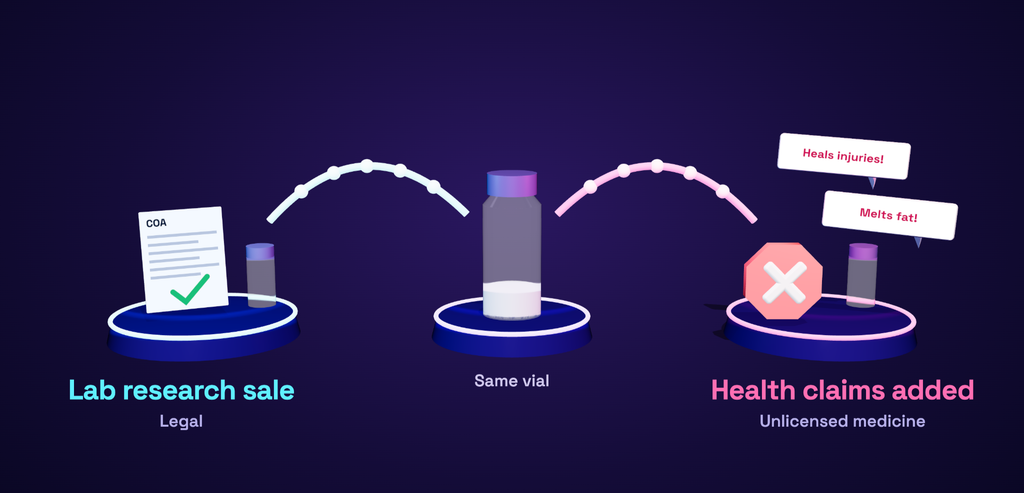
Yes. KPV can be bought in the UK as research material. No UK drug schedule controls it, and the MHRA has never licensed it as a medicine, so there’s no prescription route and no lawful sale for human use. Its status comes down to how it’s presented and supplied.
MHRA Guidance Note 8 sets two tests for a medicine. One asks whether a product is presented as treating or preventing disease. The other asks whether it’s used to modify physiological functions. Research material supplied for laboratory work, with no human-use claims, meets neither.
No prescription route exists, because there’s no licensed KPV medicine in the UK to prescribe. A clinic offering KPV isn’t supplying an MHRA-licensed product. The MHRA’s guidance adds that “where unauthorised products are marketed for a medical purpose MHRA will take appropriate action.” The same reasoning answers the over-the-counter question: pharmacy counters stock licensed medicines, and KPV holds no licence.
Is KPV Banned in Sport?
WADA doesn’t list KPV by name on its 2026 Prohibited List, and the 2027 list, published in September 2026, doesn’t name it either. KPV still falls under S0, the always-prohibited class for substances with no approval for human therapeutic use. Once the 2027 wording takes effect on 1 January, S0 spells this out by including “peptides” in its examples.
What Are the Risks and Unknowns of KPV?
There’s no controlled human safety data on KPV, so nobody knows what side effects it has in people. Every observation so far comes from mice and cultured cells. Questions such as “who shouldn’t take KPV” have no evidence-based answer, because no clinical trial has ever addressed them.
Three unknowns stand out:
Identity and purity: untested products may contain less KPV than labelled, a different form of it, or impurities
Long-term exposure: published studies run for days or weeks in mice
Combinations: blends add compounds that have never been studied together in people
Searches pairing KPV with cancer trace back to a 2016 mouse study from Merlin’s lab on colitis-linked tumours. That’s early animal work with no clinical evidence behind it.
KPV in Research Blends: KLOW
KLOW combines 50mg of GHK-Cu with BPC-157, TB-500 and KPV at 10mg apiece, 80mg in all. KPV is what separates it from GLOW, the three-peptide blend it builds on. Apexion supplies it as one pre-filled 80mg research pen.
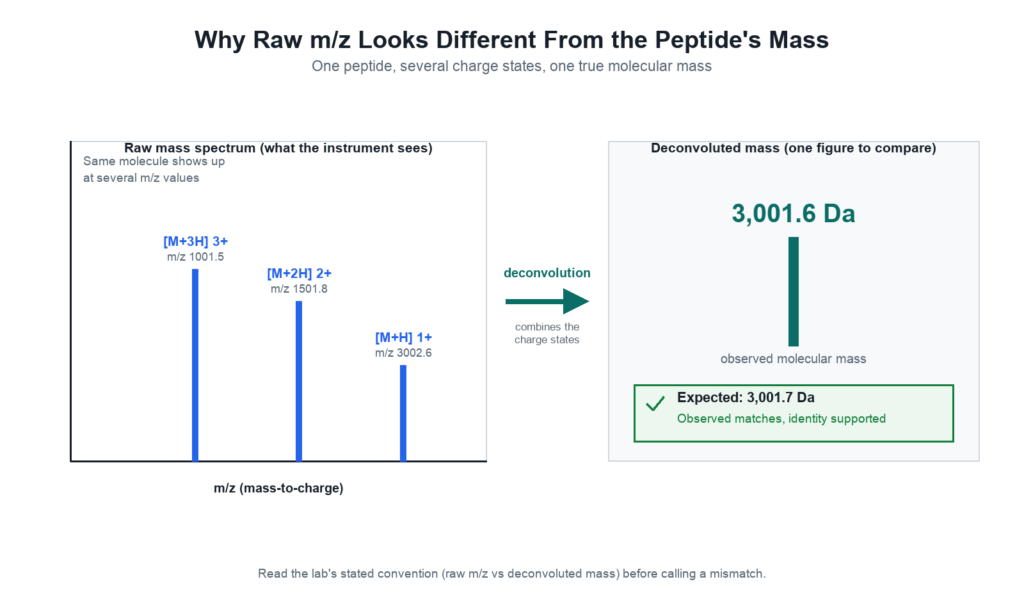
Check the batch-specific COA first. KPV’s small mass, about 342 g/mol, makes the LC-MS result a quick identity check. One detail deserves a look: free-acid KPV and the C-amidated version found at the end of α-MSH differ by about 1 g/mol, so the COA should name the form it tested.
☐ Lot numbers on the COA and the pen label agree
☐ HPLC purity is reported alongside its method
☐ The LC-MS mass is about 342 for free-acid KPV, or about 341 for the amidated form, with the form named
☐ The report gives the testing lab’s name and the test date
KPV turns up in laboratory research on inflammatory signalling, mostly in mouse colitis models and intestinal or skin cell cultures, where researchers track NF-κB activity and cytokine output. Other work uses it to develop gut-targeted nanoparticle delivery. It has no approved medical use and no controlled human trials.
Is KPV legal in the UK?
Yes, as research material. KPV appears nowhere in the Misuse of Drugs Act 1971 schedules and carries no MHRA licence, so it can’t be prescribed or supplied for human use. In sport, WADA’s S0 class covers it as a peptide with no therapeutic approval.
Is KPV the same as alpha-MSH?
No. KPV is the closing stretch of α-MSH, positions 11 to 13. α-MSH has 13 residues and acts on melanocortin receptors with roles in pigment, appetite and immune signalling. KPV is studied only for the anti-inflammatory part, has no reported pigment activity, and enters cells largely through the PepT1 transporter.
Is KPV the same as BPC-157?
No. They’re unrelated peptides. KPV has three amino acids and comes from α-MSH. BPC-157 has 15 amino acids, modelled on part of a stomach protein. Both appear in the KLOW blend, alongside GHK-Cu and TB-500. Our BPC-157 UK guide covers it in full.
Why is KPV studied in oral form?
KPV is studied in oral form because PepT1, a transporter in the gut lining, carries it into intestinal cells, and PepT1 levels rise in the inflamed mouse colon. That makes the gut a natural target. Researchers now test nanoparticle and conjugate carriers in mice to protect the peptide on its way through.
How should KPV be stored?
Lyophilised KPV stays most stable sealed up somewhere cold, dry and dark, as the batch label directs, since moisture is the biggest threat to freeze-dried powder. Apexion’s pre-filled pens stay cool and out of heat and direct light, and long-term storage is at −20 °C.
The Bottom Line
KPV is the three-residue tail of α-MSH, studied mainly in mouse models of gut inflammation and in cell cultures. No human trials exist. UK law treats it as a research material, it isn’t a medicine, and it’s the extra ingredient that turns GLOW into KLOW.
Apexion supplies KPV strictly for laboratory research. It is not for human or veterinary use. This is general information, not medical or legal advice.
Sources
Dalmasso G et al. Gastroenterology, 2008; 134(1): 166-178 (online October 2007). PMID 18061177.
Kannengiesser K et al. Inflammatory Bowel Diseases, 2008; 14(3): 324-331. PMID 18092346.
Laroui H et al. Gastroenterology, 2010; 138(3): 843-853. PMID 19909746.
Luger TA, Brzoska T. Annals of the Rheumatic Diseases, 2007; 66 Suppl 3: iii52-55. PMID 17934097.
Brzoska T et al. Endocrine Reviews, 2008; 29(5): 581-602. PMID 18612139.
Viennois E et al. Cellular and Molecular Gastroenterology and Hepatology, 2016; 2(3): 340-357. PMID 27458604.
MHRA. Guidance Note 8: A guide to what is a medicinal product.
WADA. 2027 Prohibited List (September 2026).
PubChem CID 125672.
Peptide Stacks Explained: A UK Research Guide (2026)
Quick answer
What is a peptide stack?
A peptide stack is a combination of two or more peptides studied together, either as separate vials in one protocol or as a single pre-mixed blend. Researchers pair peptides that act on different pathways to study complementary mechanisms. Very few combinations have been tested as combinations, and none is licensed for human use in the UK.
Common research stacks: BPC-157 + TB-500, and CJC-1295 + ipamorelin
A blend needs a COA that confirms every component
Legal as research materials, but most of the components are banned in sport
Updated October 2026
“Stacking” has gone mainstream. Vogue covered it in November 2025, Women’s Health picked it up in April 2026, and Reddit threads swap stack cheat sheets by the hundred. Almost all of that coverage is written for personal use, so anyone wanting the lab-bench version has had to piece it together.
This guide puts it in one place: what peptide stacks are, the common research combinations, the named blends (Wolverine, KLOW and GLOW), pre-mixed blends vs separate vials, UK legal status, and how to check a blend’s paperwork.
Apexion’s blends are supplied strictly for laboratory research. They are not for human or veterinary use. This page is general information, not medical or legal advice.
What Is a Peptide Stack?
A peptide stack is two or more peptides used together in one research protocol. Some labs keep each compound in its own vial and combine them at the bench. Others work from a pre-mixed blend, where fixed amounts of each peptide come together in a single vial or pen. Both count as peptide stacking.
So what are peptide stacks in practice? They come in two formats:
Separate vials: each peptide is supplied on its own, and the researcher decides how to combine them.
Pre-mixed blend: the combination is fixed at the point of manufacture, with one label and one batch number.
The word itself is gym slang. Scientific papers say “combination” or “co-administration”, which is why a literature search for “Wolverine stack” comes back nearly empty while “BPC-157 and thymosin beta-4” turns up real studies.
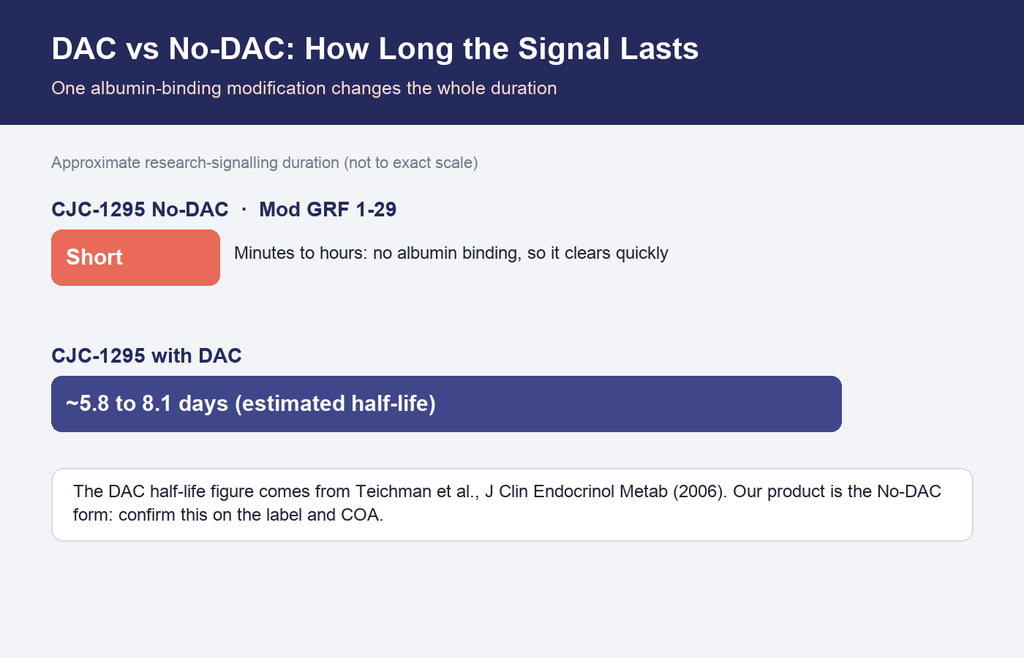
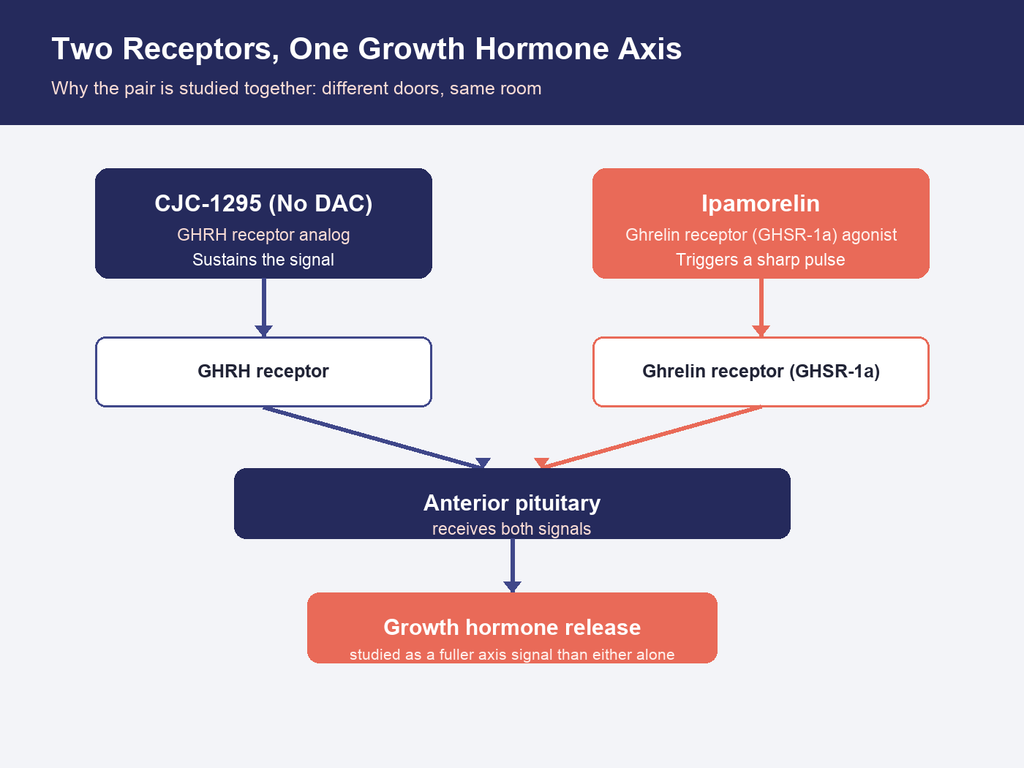
The logic behind combining is simple enough. Each peptide binds its own receptor or nudges its own pathway, so two compounds can reach the same system from different directions. The textbook case pairs a GHRH analogue (CJC-1295) with a ghrelin-receptor agonist (ipamorelin), two separate routes into pituitary growth-hormone signalling.
Peptides themselves are familiar ground for medicine. “A peptide is a legitimate molecule made from things we know about and already use,” Jeremy Korman, MD, told Cedars-Sinai in July 2026.
Why Are Peptides Studied Together?
Researchers study peptides together to compare complementary mechanisms inside one model. The working idea is that two compounds with different targets might reveal something neither shows alone. For most popular stacks, that idea comes from each peptide’s individual mechanism, and the combination itself has rarely been put to a direct test.
Three reasons come up again and again:
Different receptor targets. Two peptides hitting two receptors give a cleaner comparison than two peptides competing for one.
Different pathways in the same tissue model. A tendon or skin model lets a lab watch cell migration, collagen and blood-vessel signals side by side.
One blend, one batch. A fixed mix keeps the ratio identical from run to run and cuts down on bench handling.
Most synergy claims are built on paper, from what each compound does alone. The first direct test of the best-known pair only appeared in July 2026, when a team in Istanbul published a rat Achilles-tendon study with four groups: control, BPC-157, TB-500 and the two combined.
Both peptides improved tendon structure on their own, and TB-500 also raised the load the repaired tendon could take before failing. The combined group showed no extra gain over either peptide alone. The authors suggest the two may converge “on shared downstream pathways” and concluded that “both peptides warrant further investigation.”
That result gives a useful way to size up any stack. We call it the Pathway, Proof, Paperwork check:
Question
What to look for
Pathway
Do the components act on different receptors or pathways?
Proof
Has anyone studied the combination itself, or only each part?
Paperwork
Does the COA identify and measure every component?
What Is the Most Common Peptide Stack?
The two most common peptide stacks in the UK are BPC-157 + TB-500, known as the “Wolverine” stack, and CJC-1295 + ipamorelin. They’re the most searched and most sold combinations, and each pairs compounds with clearly different targets. GHK-Cu blends such as GLOW and KLOW come next.
BPC-157 + TB-500 brings together two peptides studied in tissue repair models, each from a different starting point. CJC-1295 + ipamorelin pairs two compounds that act on separate receptors in the same pituitary signalling system.
The copper-peptide blends are catching up quickly. “Peptide stacks KLOW” now has its own related search on Google, a sign of where interest in popular peptide stacks is heading.
Common Research Peptide Stacks at a Glance
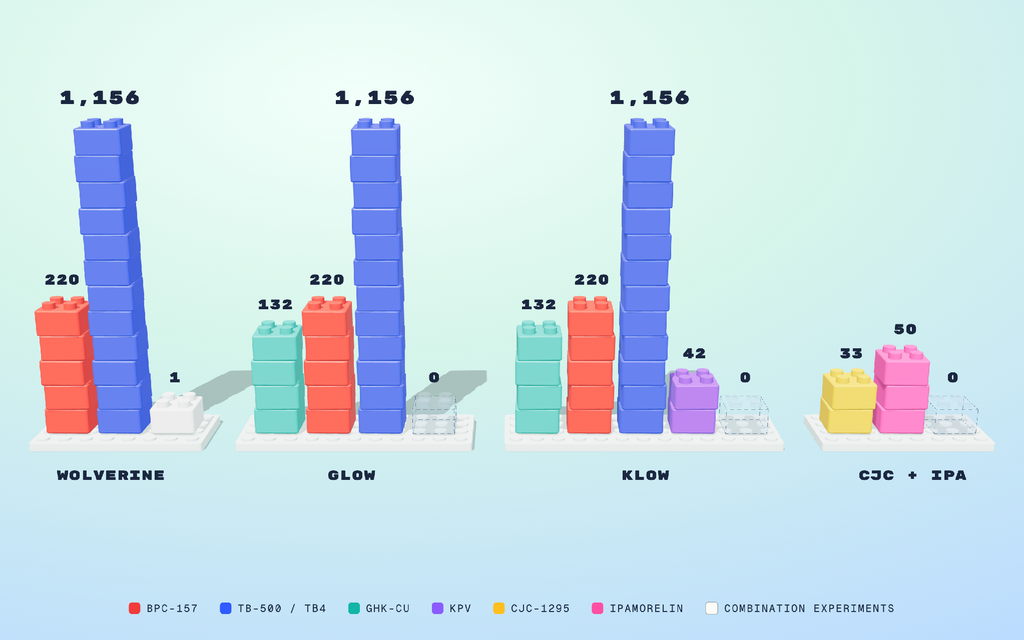
The table below covers the combinations UK researchers look for most, what each component is studied for, and how much evidence exists for the combination itself. It doubles as a quick peptide stacking chart. In every row, the bulk of the published work looks at the peptides one at a time.
Stack
Components
What each component is studied for
Evidence for the combination
Wolverine
BPC-157 + TB-500
Gut, tendon and blood-vessel models; actin and cell migration
One 2026 rat tendon study; otherwise each peptide alone
As above, plus copper-peptide collagen research and KPV anti-inflammatory pathway models
Studies of each peptide on its own only
GLOW
GHK-Cu + BPC-157 + TB-500
Collagen, tissue and cell-migration models
Studies of each peptide on its own only
CJC-1295 + Ipamorelin
GHRH analogue + ghrelin-receptor agonist
Pituitary growth-hormone signalling via two receptors
Studies of each peptide on its own, plus a class-level mechanistic rationale
Toy-brick towers comparing single-peptide research with combination research for each stack
BPC-157 + TB-500 (the “Wolverine” Stack)
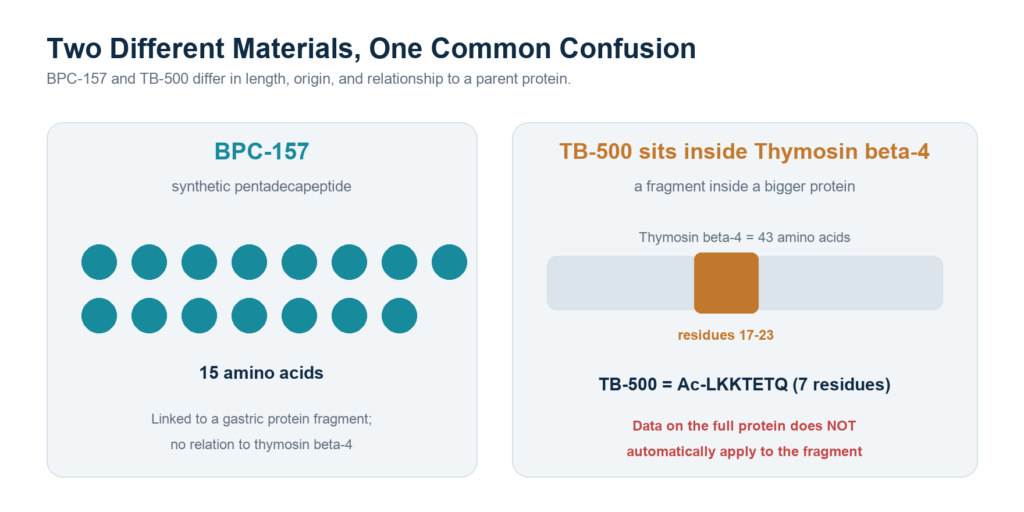
BPC-157 is a 15-amino-acid peptide based on a fragment of a gastric protein, studied mostly in rat models of gut, tendon and blood-vessel biology. TB-500 is a synthetic peptide based on thymosin β4, a protein best known for binding actin, the scaffolding inside cells. The pair is a classic two-pathway combination, and the 2026 tendon study above is the first to test them side by side. Our BPC-157 vs TB-500 guide compares them in detail, and the Wolverine blend specification and COA lists the 10mg + 10mg contents.
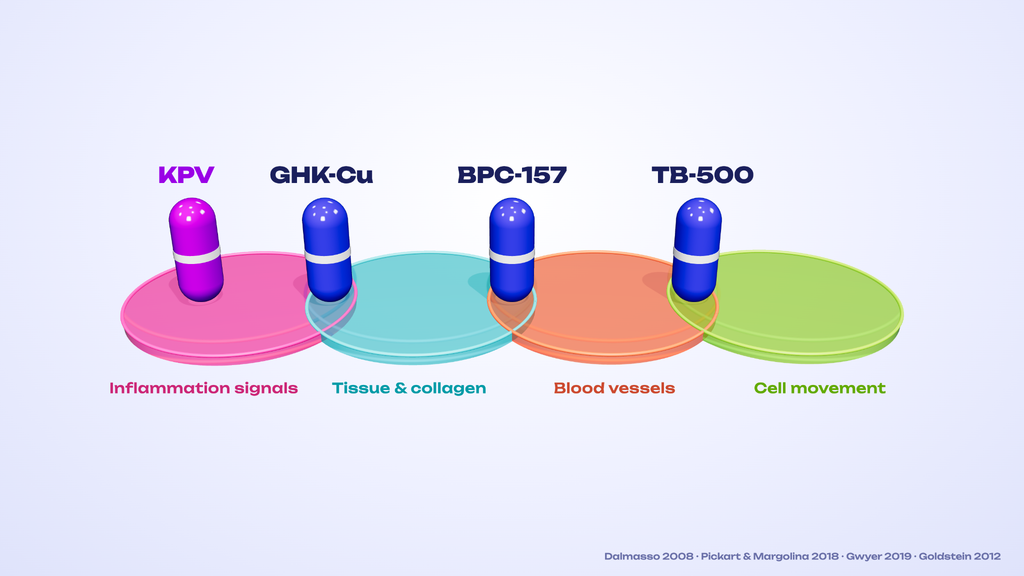
Both blends add GHK-Cu, a copper-binding tripeptide. A 2018 gene-data review by Loren Pickart reported that GHK changes the expression of 31.2% of human genes by 50% or more. KLOW then adds KPV, a three-amino-acid fragment of alpha-MSH. See the KLOW vs GLOW key differences and our GHK-Cu research overview.
Wolverine vs KLOW vs GLOW: What’s in Each Stack?
All three blends contain BPC-157 and TB-500 at 10mg each. GLOW adds 50mg of GHK-Cu, and KLOW adds the same GHK-Cu plus 10mg of KPV. Wolverine is the two-peptide base, GLOW is the three-peptide version, and KLOW is the four-peptide version with the largest total mass.
Wolverine
GLOW
KLOW
BPC-157
10mg
10mg
10mg
TB-500
10mg
10mg
10mg
GHK-Cu
None
50mg
50mg
KPV
None
None
10mg
Total
20mg
70mg
80mg
GHK-Cu makes up most of the mass in GLOW and KLOW, so the copper peptide is the main thing separating them from Wolverine. The peptide stack names themselves are branding. Wolverine borrows from the Marvel character, while GLOW and KLOW are trade names you won’t find in a single paper.
Pre-Mixed Blend vs Separate Vials: What’s the Difference?
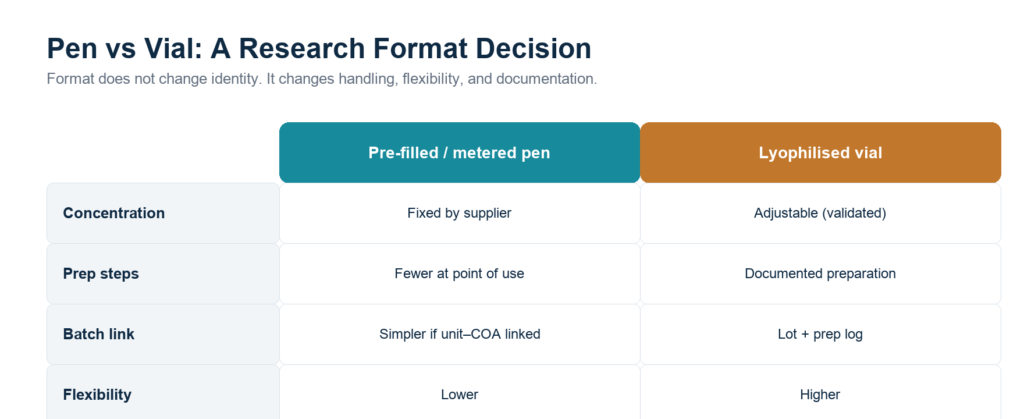
A pre-mixed blend puts fixed amounts of each peptide into one vial or pen, so the ratio is set before it reaches the lab. Separate vials let a researcher change the ratio between experiments, but every extra vial adds handling steps, documents to file and chances for error at the bench.
Factor
Pre-mixed blend
Separate vials
Ratio flexibility
Fixed by the manufacturer
Set by the researcher
Handling steps
One item to prepare and log
One per peptide
Consistency between runs
Same ratio every batch
Depends on bench technique
Documentation
One COA covering every component
One COA per vial
Storage
One set of conditions
Each peptide on its own label guidance
Each format suits a different design. A study that tests different ratios needs separate vials, while one that repeats a fixed combination many times gains from a blend, because the ratio can’t drift.
Apexion’s blends come as pre-filled research pens, which keep the fixed ratio in a sealed, measured format for laboratory handling. Our guide to peptide pens vs vials covers how the two compare.
Which Peptides Should Not Be Stacked Together?
There’s no validated list of peptides that shouldn’t be stacked, because almost no combinations have been formally studied. From a research-quality view, though, some pairings are much harder to justify than others. The weak spots are redundant targets, clashing chemistry and blends too crowded to verify.
Two compounds on the same receptor. Pairing ipamorelin with another ghrelin-receptor agonist, or two GHRH analogues, gives no mechanistic reason to combine them. Any result becomes hard to pin on either one.
Peptides with different stability or solvent needs. A blend has to suit every component at once. Copper-bound GHK-Cu, for example, brings metal-binding chemistry that the other peptides in a mix don’t share.
Large blends with many components. Each extra peptide is another identity to confirm and another peak to measure on the COA.
All three points come back to the Pathway and Paperwork questions in the check above. If either one fails, the combination is a weak research tool.
How Many Peptides Can You Stack at Once?
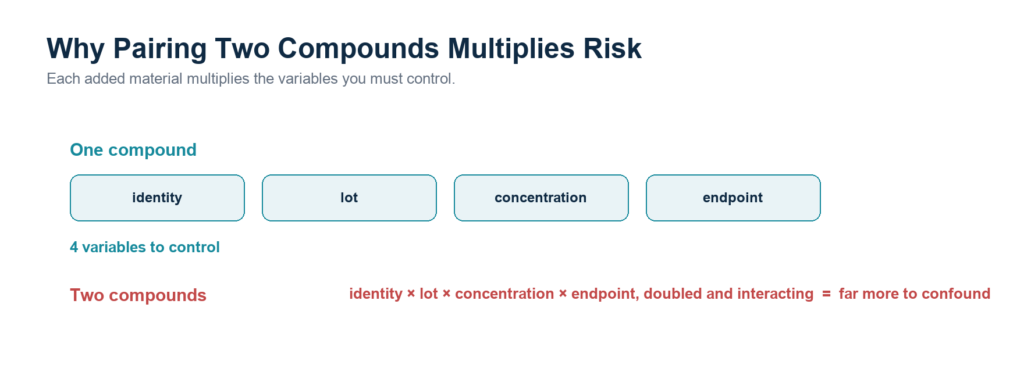
There’s no set limit on how many peptides can be stacked. Each added component makes results harder to attribute and the product harder to verify, so good research design usually favours the fewest variables that answer the question.
The arithmetic gets steep fast. Testing two peptides properly took the 2026 tendon study four groups. A full test of a four-peptide blend, covering every on-off combination, would need 16.
Is Peptide Stacking Legal in the UK?
Peptide stacking follows the same UK rules as single peptides. Research blends are legal to buy and sell as laboratory materials, but they can’t be sold or advertised for human use. Most of the individual components are also banned in sport under the WADA Prohibited List, which UKAD enforces in the UK.
Regulatory Status
The MHRA regulates medicines under the Human Medicines Regulations 2012. A licensed medicine holds a marketing authorisation, and research peptides hold none. The MHRA’s Guidance Note 8, amended in March 2026, decides whether something counts as a medicine by its presentation and function, including implicit claims on websites and social media. Our guide on are peptides legal in the UK goes further.
Sport
BPC-157 is named under S0 (non-approved substances) on the WADA list. TB-500, CJC-1295 and ipamorelin fall under S2 (peptide hormones, growth factors and related substances). All are banned at all times, in and out of competition. More detail is in our BPC-157 UK guide.
How to Verify a Peptide Blend
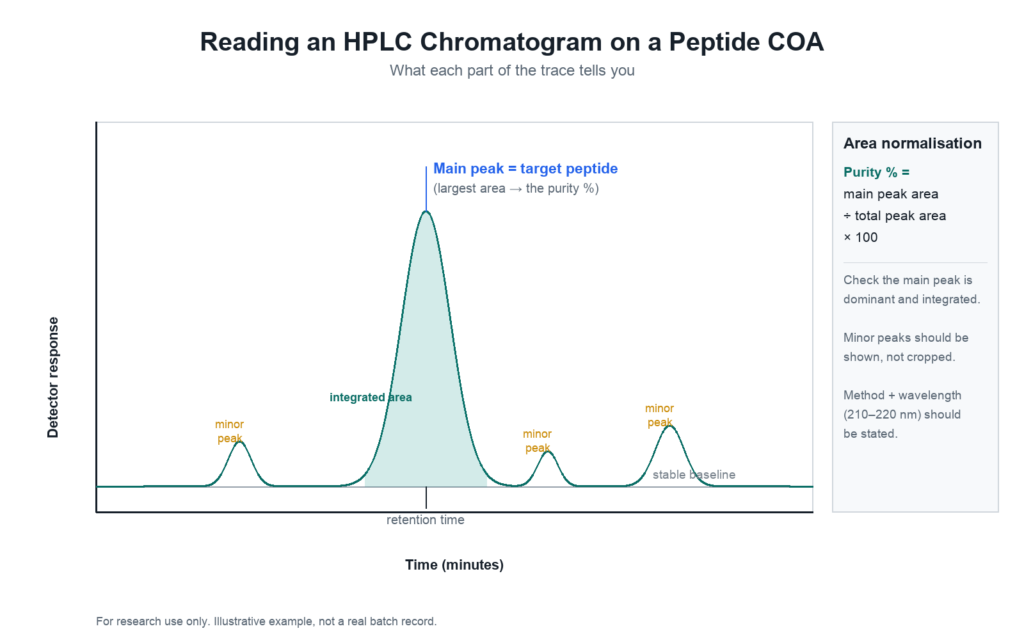
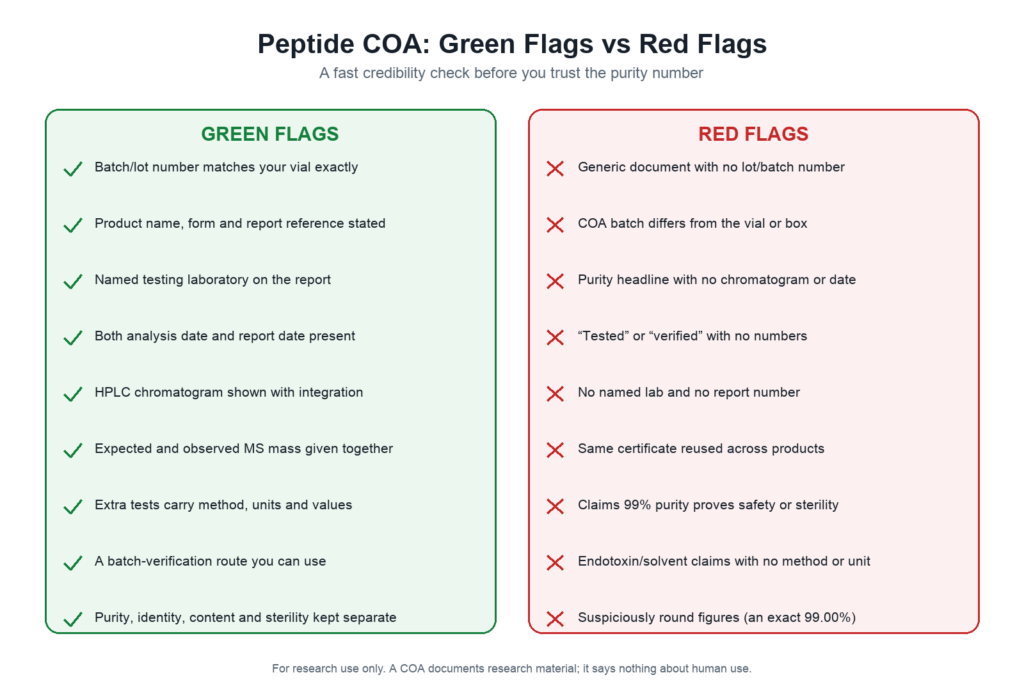
A blend’s certificate of analysis (COA) should identify and measure every component separately. A single overall purity figure can’t tell you whether one peptide in the mix is short or missing. Look for a separate HPLC result and LC-MS mass for each peptide, matched to the lot on the label.
Run through this checklist with the COA in hand:
The lot number on the vial or pen matches the COA.
Each peptide is listed with its own HPLC peak and purity.
There’s an LC-MS mass for each component.
The amount of each component is stated (for example, 10mg + 10mg).
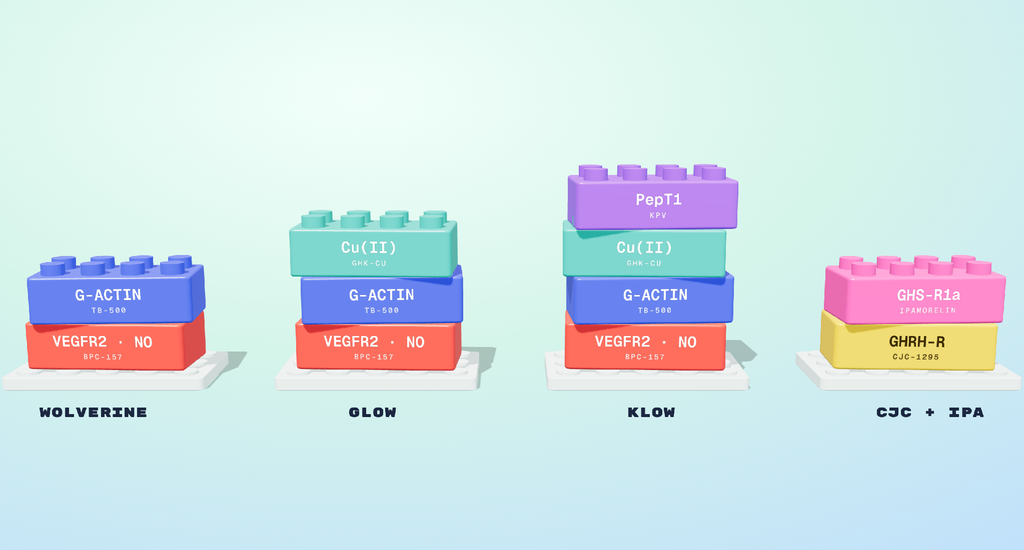
Toy-brick stacks showing the receptor or pathway each peptide targets
Frequently Asked Questions
What are peptide stacks?
Peptide stacks are combinations of two or more peptides studied together in one research protocol. They come either as separate vials combined at the bench or as a pre-mixed blend in one vial or pen. Researchers usually pair compounds with different targets, such as BPC-157 with TB-500, to compare complementary mechanisms.
What is the Wolverine stack?
The Wolverine stack is the nickname for BPC-157 combined with TB-500, usually 10mg of each. BPC-157 is studied in gut, tendon and blood-vessel models, and TB-500 in actin and cell-migration research. A 2026 rat tendon study was the first to test the pair directly. The name comes from the Marvel character.
What is the difference between KLOW and GLOW?
GLOW contains three peptides: BPC-157, TB-500 and GHK-Cu, for 70mg in total. KLOW contains the same three plus 10mg of KPV, a tripeptide fragment of alpha-MSH, for 80mg in total. KPV is the only difference, and it adds anti-inflammatory pathway research to the copper-peptide and cell-migration work GLOW covers.
Are peptides steroids?
No. Peptides are short chains of amino acids joined by peptide bonds. Anabolic steroids are lipid molecules built on a four-ring carbon skeleton derived from cholesterol. The two classes differ in structure and in the receptors they act on, though both appear on the WADA Prohibited List.
Are peptide blends less pure than single peptides?
A blend is as pure as each of its components, and a good COA shows that component by component. Every peptide should have its own HPLC peak and purity figure. Apexion blends are typically ≥98% HPLC-verified, with a certificate for each batch that you can check by QR code or batch number.
How should peptide blends be stored?
Lyophilised peptides keep best cold, dark and dry, and pre-filled research pens need a cool, stable environment that follows the batch guidance. Long-term storage is typically at −20 °C. Keep blends away from heat, direct light and unnecessary handling, which supports consistency and lowers contamination risk.
The Bottom Line
Peptide stacks combine compounds with different mechanisms, and that logic is sound. The evidence, though, still comes mostly from studies of each peptide alone, with the first direct test of a popular pair arriving in 2026. The same UK rules apply to blends as to single peptides, and every component should appear separately on the COA.
Apexion’s blends are supplied strictly for laboratory research and are not for human or veterinary use. To compare specifications, browse Apexion research stacks.
Sources
Biçer O, Adanir O, et al. Effects of BPC-157 and TB-500 on Achilles tendon healing in rats. Jt Dis Relat Surg, July 2026. PubMed
Bowers CY, et al. GH-releasing peptide stimulates GH release and acts synergistically with GHRH. J Clin Endocrinol Metab, 1990. Oxford Academic
Pickart L, Margolina A. Regenerative and protective actions of the GHK-Cu peptide in the light of the new gene data. Int J Mol Sci, 2018. PMC
Cedars-Sinai. Peptide Therapy: What the Science Shows About BPC-157, TB-500 and Wolverine Stacks. July 2026. Cedars-Sinai
MHRA. Guidance Note 8: A guide to what is a medicinal product (amended March 2026). GOV.UK
WADA Prohibited List 2026 and UK Anti-Doping. UKAD
GHK-Cu UK: What It Is, Legal Status and Research (2026)
Quick answer
What is GHK-Cu peptide?
GHK-Cu (glycyl-L-histidyl-L-lysine copper) is a naturally occurring copper-binding tripeptide, originally isolated from human plasma. Scientists study it in collagen, wound-repair and gene-expression research. In the UK, topical GHK-Cu serums are sold as cosmetics. Research-grade GHK-Cu is a laboratory material, and neither one is a licensed medicine.
Three amino acids bound to one copper(II) ion
Cosmetic serums and research material are regulated differently
Repair evidence comes mainly from animal and cell work, while human data is mostly topical
For most of its 50-year history, GHK-Cu was a quiet line on skincare labels. Then on 7 September 2026, NPR reported that copper peptides had jumped from face creams to syringes, with the research trailing well behind. Suddenly a small blue peptide had a lot of new attention.
That attention raised fair questions. What exactly is GHK-Cu? Is it legal here? And is the serum on a chemist’s shelf the same thing a laboratory orders?
This guide takes them in order: what GHK-Cu is, how it’s studied, what the evidence shows, how cosmetic and research-grade products differ, its UK legal and anti-doping status, what’s known about safety, and what a good batch certificate shows.
Apexion supplies GHK-Cu strictly for laboratory research. It is not a medicine or a cosmetic product and is not for human or veterinary use. This is general information, not medical or legal advice.
What Is GHK-Cu?
GHK-Cu is the tripeptide glycyl-L-histidyl-L-lysine (Gly-His-Lys) holding a single copper(II) ion. Loren Pickart, a biochemist, isolated GHK from plasma samples in 1973, and the cosmetics industry later gave the copper form the ingredient name copper tripeptide-1. Today it turns up in two very different places: skincare formulas and laboratory research catalogues.
It began with a puzzle in a culture dish. Pickart saw that plasma from younger people pushed aged liver tissue to act more like young tissue, and he tracked the effect down to a peptide only three amino acids long. Later work showed where it comes from. GHK is cut out of SPARC, a larger matrix protein, as surrounding tissue breaks down.
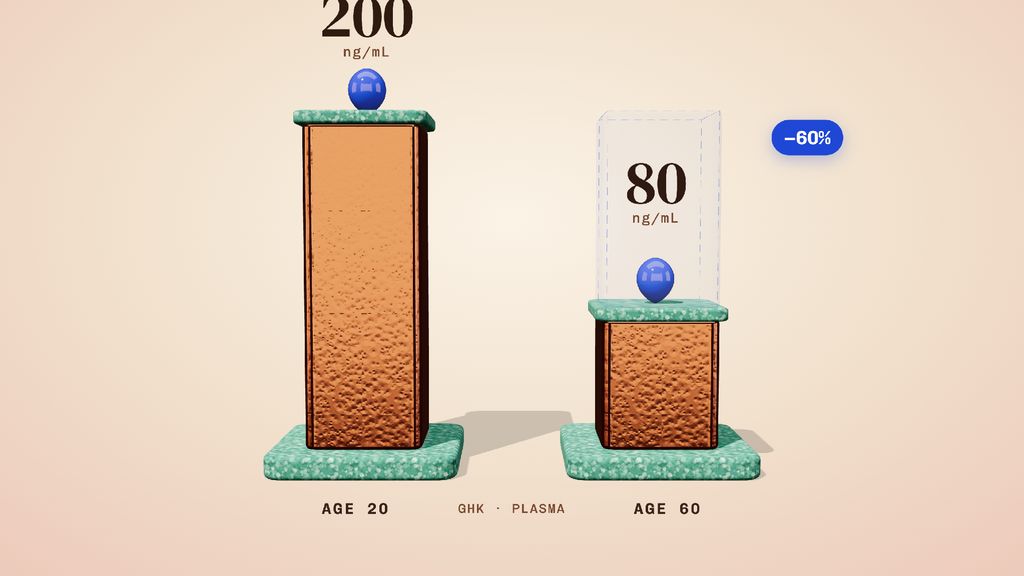
Studies also report that plasma levels fall with age. Pickart’s 2018 review, written with co-author Anna Margolina, records a drop of roughly 60% between the ages of 20 and 60. That figure describes what was measured in plasma samples, and on its own it says nothing about what the decline means.
Comparing plasma GHK levels at age 20 and age 60
The copper is what you see first. Copper(II) gives GHK-Cu its deep blue to violet colour, and the peptide holds the ion tightly through nitrogen atoms on its glycine and histidine. Pickart’s group has called that grip on copper(II) “the most distinctive feature of GHK” in a 2015 review.
The full mechanism hasn’t been mapped yet. Research points to four overlapping routes: carrying copper to copper-dependent enzymes, effects on fibroblasts and the extracellular matrix in cell models, broad changes in gene expression, and antioxidant pathways. Nearly all of it was gathered in cell cultures and lab animals.
Copper Delivery and Enzyme Cofactor Activity
Copper is a working part of several enzymes. The one GHK-Cu research keeps coming back to is lysyl oxidase, the enzyme that ties collagen and elastin fibres together with chemical cross-links. Without copper, it can’t do that job.
In 1980, Pickart’s group proposed that GHK acts by helping cells take up copper. That idea still anchors most mechanism studies, which treat the peptide as a carrier that hands copper to enzymes like lysyl oxidase.
Fibroblast and Extracellular Matrix Research
Fibroblasts are the cells that build the extracellular matrix, the protein scaffolding between cells. In fibroblast cultures, GHK-Cu has been linked to higher output of collagen, elastin and glycosaminoglycans. It’s also linked to decorin, a small proteoglycan that helps collagen fibres line up neatly.
The same body of work records effects on metalloproteinases, the enzymes that break matrix down. So the peptide is studied on both sides of matrix turnover, the building and the clearing.
Gene-Expression Research
The biggest number in GHK research comes from data mining. Pickart’s team turned to the Connectivity Map, a Broad Institute database of gene-activity profiles for more than 1,300 compounds tested on cultured cell lines.
In the 2015 review, they described GHK as capable of “up- and downregulating at least 4,000 human genes.” That count comes from their analysis of expression data. It points to where effects might be, and each listed gene would need separate lab work to confirm what changes. The authors see that as work in progress: “With time, we will be able to analyze the huge amount of data.”
Antioxidant and Anti-Inflammatory Pathways
Loose copper can set off harmful redox chemistry. The 2015 review notes that copper bound to GHK has its redox activity silenced, which is why antioxidant researchers pay attention to it. Cell and animal studies have linked GHK-Cu to lower markers of oxidative stress and to changes in inflammatory signalling molecules in those models.
What Does the Research on GHK-Cu Show?
GHK-Cu has five decades of lab and animal research behind it. Human studies are mostly small topical cosmetic trials. There’s essentially no controlled data on injecting it, which is the gap NPR highlighted in September 2026.
Research area
Model
Evidence level
Wound healing and tissue repair
Rat, rabbit, cell culture
Preclinical: many studies
Collagen and extracellular matrix
Fibroblast cultures
Preclinical
Skin appearance (topical)
Small human cosmetic studies
Limited: short, small trials
Hair follicles
Cell studies, small studies
Very limited
Gene expression
Computational and cell data
Early-stage
Injected GHK-Cu in humans
None
No controlled trials
The people closest to the molecule expect the list to grow. In their 2018 review, Pickart and Margolina wrote that “new studies are still revealing an even broader scope of GHK’s biological effects.”
Wound-Healing and Tissue-Repair Models
Animal wound models are the oldest strand of the research. Studies in rats, rabbits and pigs have measured how fast wounds close, how many new blood vessels form and what the new tissue is made of. The 2018 review gathers this work and adds connective-tissue models beyond skin.
Dermal and Extracellular Matrix Research
Skin is where GHK-Cu made its name. Lab studies measure collagen content, matrix organisation and fibroblast behaviour in skin-cell cultures. On the human side, a handful of short cosmetic trials have tested topical serums and creams, usually with small groups and often with industry funding.
Emerging Research Areas
Newer work has moved beyond skin. Warren Ladiges’s lab at the University of Washington has studied GHK in ageing mice, including a May 2026 preprint that compared two delivery routes and found each produced its own pattern of gene activity in the hippocampus. Hair-follicle signalling and lung fibroblast studies form smaller strands. All of it is early, and all of it is animal or cell based.
Cosmetic GHK-Cu vs Research-Grade GHK-Cu: What’s the Difference?
It’s the same molecule in two very different products. Serums and creams are cosmetics under the GB Cosmetic Products Regulation, with GHK-Cu listed as copper tripeptide-1 at a low concentration inside a formula. Research-grade GHK-Cu is a high-purity single compound for laboratory work, supplied with a batch-specific COA.
Cosmetic serum or cream
Research-grade GHK-Cu
Regulated as
Cosmetic (GB Cosmetic Products Regulation)
Laboratory research material
Form
Ready-made topical formula
Lyophilised powder in a vial, or a pre-filled research pen
Concentration
Low, part of a formula
High-purity single compound
Paperwork
Ingredients label (INCI)
Batch-specific COA (HPLC, LC-MS)
Claims allowed
Cosmetic claims only, no medical claims
No human-use claims at all
Where it’s sold
High street, Holland & Barrett, Amazon
Research suppliers
The cosmetic route comes with its own checks. Government guidance on cosmetics in Great Britain says every product needs a UK-based Responsible Person, a safety assessment by a qualified assessor and a notification to the Office for Product Safety and Standards (OPSS) before sale. Labels and adverts “must not imply they have characteristics or functions which they do not have.”
So if you’ve searched for GHK-Cu at Holland and Barrett, the copper peptide serums you’ll find on the high street belong firmly on the cosmetic side of the table. Research-grade material is made for the bench, and its paperwork shows it: a lot number, a purity percentage from HPLC and a measured mass.
Is GHK-Cu Legal in the UK?
Yes, GHK-Cu is legal in the UK in both of its main forms. Cosmetic products containing it are legal under cosmetics law as long as they make no medical claims, and research-grade GHK-Cu can be bought legally as laboratory material. It isn’t a controlled drug, and it isn’t an MHRA-licensed medicine.
Cosmetic products: legal under the GB Cosmetic Products Regulation, with no claims to treat or prevent anything
Research-grade material: lawful to purchase and keep for laboratory work
Medicines law: GHK-Cu holds no MHRA licence, which rules out marketing it for treating any condition
Controlled drugs: GHK-Cu doesn’t appear in the schedules of the Misuse of Drugs Act 1971
GHK-Cu isn’t named on WADA’s 2026 Prohibited List. It isn’t named on the 2027 list either, which WADA approved on 10 September 2026.
The 2027 wording still tightens things. From 1 January 2027, the S0 class for non-approved substances lists “peptides” among its examples, and WADA’s explanatory note says a peptide can be prohibited without a named entry. GHK-Cu has no approval as a medicine from the MHRA, the EMA or the US FDA, so S0 can apply to it.
Is GHK-Cu Safe?
Topical cosmetic use at low concentrations has a long history, and every GB cosmetic needs a safety assessment before sale. For injected or high-concentration use, published human safety data is close to nonexistent, which is the gap NPR’s September report focused on.
Three questions remain open:
Copper load: every GHK-Cu molecule carries a copper ion, so copper adds up at high exposure, and those limits haven’t been studied in controlled trials
Long-term exposure: no long-term controlled studies exist outside topical cosmetic use
Contamination: untested products can carry impurities, or contain something other than GHK-Cu, and only batch testing shows which
Regulators have started looking at the evidence. NPR reported that a US FDA advisory panel planned to review injectable GHK-Cu, among other peptides, in February 2027.
GHK-Cu vs Other Copper Peptides
GHK-Cu is the reference copper peptide. It has the longest research record, and newer copper peptides are usually measured against it. Relatives such as AHK-Cu change a single amino acid, while “copper peptides” on a cosmetic label can mean GHK-Cu alone or a mix of several.
GHK-Cu (Gly-His-Lys + Cu): naturally occurring, first found in plasma, backed by the largest number of papers
AHK-Cu (Ala-His-Lys + Cu): a synthetic cousin that swaps glycine for alanine, studied mainly in hair-follicle cell models
Copper tripeptide-1: the INCI label name for GHK-Cu inside cosmetic formulas
Research blends: KLOW and GLOW both use GHK-Cu as their largest ingredient, with BPC-157 and TB-500 alongside it. KLOW also contains the tripeptide KPV
GHK vs GHK-Cu: What’s the Difference?
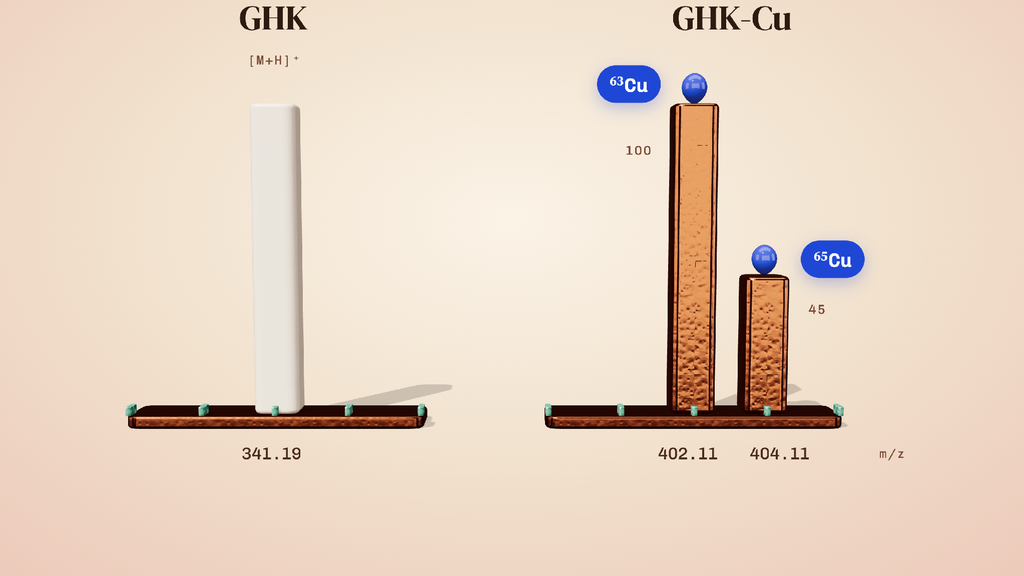
Take the copper away and you’re left with GHK, the bare tripeptide, which is a white powder. Add copper(II) and it becomes GHK-Cu, and the colour turns blue. On LC-MS the two read at different masses, about 340 for GHK and about 403 for GHK-Cu, so a COA should state which form it measured.
A report that shows only the free-peptide mass on a GHK-Cu product leaves the copper unconfirmed. A copper content figure, or the blue colour of the material, closes that gap.
Single GHK peak against the twin copper-isotope peaks of GHK-Cu
How to Verify Research-Grade GHK-Cu
The batch-specific COA comes first. Check that its lot number matches the product, that purity by HPLC appears alongside the method used, and that the LC-MS result names whether GHK or GHK-Cu was measured. Then confirm who ran the test, when, and that the material shows the expected blue colour.
☐ COA lot number and product label match
☐ HPLC purity is given, with the method stated
☐ LC-MS mass is given, with the form named (GHK ~340.4 g/mol, GHK-Cu ~402.9 g/mol)
☐ Copper content is reported, where the lab measures it
☐ The report names the lab that ran it and the date
Lyophilised GHK-Cu keeps best in a sealed container somewhere cold, dark and dry. Moisture and light are the two main threats, and copper-bound peptides can oxidise more readily once in solution. Apexion’s pens follow the same logic: keep them cool and out of warm spots and bright light, with −20 °C for long-term storage. More handling notes for every format are on the peptide storage and handling page.
Frequently Asked Questions
What does GHK-Cu do?
GHK-Cu holds copper(II) tightly, and research looks at it as a carrier that passes copper to enzymes like lysyl oxidase. In fibroblast cultures it’s tied to collagen, elastin and decorin output, and Connectivity Map analyses tie it to thousands of gene-activity changes. Nearly all of this work uses cultured cells or animals.
Is GHK-Cu legal in the UK?
Yes. Cosmetic products containing GHK-Cu, listed as copper tripeptide-1, are legal under the GB Cosmetic Products Regulation if they make no medical claims. Research-grade GHK-Cu can be bought legally as laboratory material. GHK-Cu isn’t a controlled drug or an MHRA-licensed medicine, so nobody can sell it for treating anything.
Is GHK-Cu the same as copper peptide serum?
It’s the same molecule in a different product. A serum is a finished cosmetic with GHK-Cu at a low level among many ingredients, sold under cosmetics law. Research-grade GHK-Cu is a high-purity single compound with a batch COA, made for laboratory work. The two follow different rules and serve different users.
Is GHK-Cu safe?
Topical cosmetic use at low concentrations has a long track record, and every GB cosmetic needs a safety assessment. For injected or high-concentration use, there are no controlled human safety studies. Copper load, long-term exposure and contamination in untested products remain open questions, which is why batch testing comes first for any research material.
Why is GHK-Cu blue?
The colour comes from the bound copper(II) ion. Copper(II) compounds absorb orange and red wavelengths, which leaves blue and violet for the eye to pick up. GHK on its own, with no copper attached, is white. That makes colour a quick first sign that the copper is in place.
Is GHK-Cu in KLOW and GLOW?
Yes. GHK-Cu is the largest component of both blends, at 50mg each. GLOW (70mg) pairs it with 10mg each of BPC-157 and TB-500. KLOW (80mg) has the same trio with 10mg of KPV added. Our KLOW vs GLOW guide sets both blends out in one table.
The Bottom Line
GHK-Cu is one of the best-studied copper peptides, backed by five decades of cell and animal work plus a small set of topical human trials. Cosmetic serums and research-grade material share a molecule and little else. They follow different UK rules and carry different paperwork, so batch-verified material is the place to start for lab work.
All Apexion products are supplied for laboratory research use only and are not for human or veterinary use. This is general information, not medical or legal advice.
Sources
Pickart L, Thaler MM. Nature New Biology, 1973; 243: 85-87 (original GHK paper).
Pickart L, Vasquez-Soltero JM, Margolina A. BioMed Research International, 2015; 648108. PMID 26236730.
Pickart L, Margolina A. International Journal of Molecular Sciences, 2018; 19(7): 1987. PMID 29986520.
Dou Y, Lee A, Zhu L, Morton J, Ladiges W. Aging Pathobiology and Therapeutics, 2020; 2(1): 58-61. PMID 35083444.
Mazzola J et al. Research Square preprint, May 2026. PMID 42245779.
NPR, 7 September 2026.
GOV.UK. Making cosmetic products available to consumers in Great Britain.
WADA. 2027 Prohibited List and Explanatory Note (September 2026).
PubChem CIDs 73587 (GHK) and 71587328 (GHK-Cu).
BPC-157 UK: What It Is, Legal Status and Research (2026)
Quick answer
What is BPC-157?
BPC-157 (Body Protection Compound-157) is a synthetic 15-amino-acid peptide based on a fragment of a protein found in human gastric juice. Researchers have studied it mainly in animal and cell models of gut, tendon and blood-vessel biology. In the UK it’s legal to buy as a research material, though it isn’t a licensed medicine.
Synthetic pentadecapeptide, supplied for research use only
The evidence is mostly preclinical, and human data is very limited
Banned in sport under the WADA Prohibited List (S0)
BPC-157 has had a busy 2026. In April, a Guardian investigation led the MHRA to look into UK clinics making claims about it. In July, the BBC reported on a US FDA panel vote to ease restrictions on it. All that attention has landed on a small peptide that started life in a Croatian university lab.
Below you’ll find what BPC-157 is, where it stands under UK law, what the studies show so far, why it’s banned in sport, and how to check a batch before it reaches the bench.
We supply BPC-157 strictly for laboratory research. It is not a medicine and is not for human or veterinary use. This page is general information, not medical or legal advice.
What Is BPC-157?
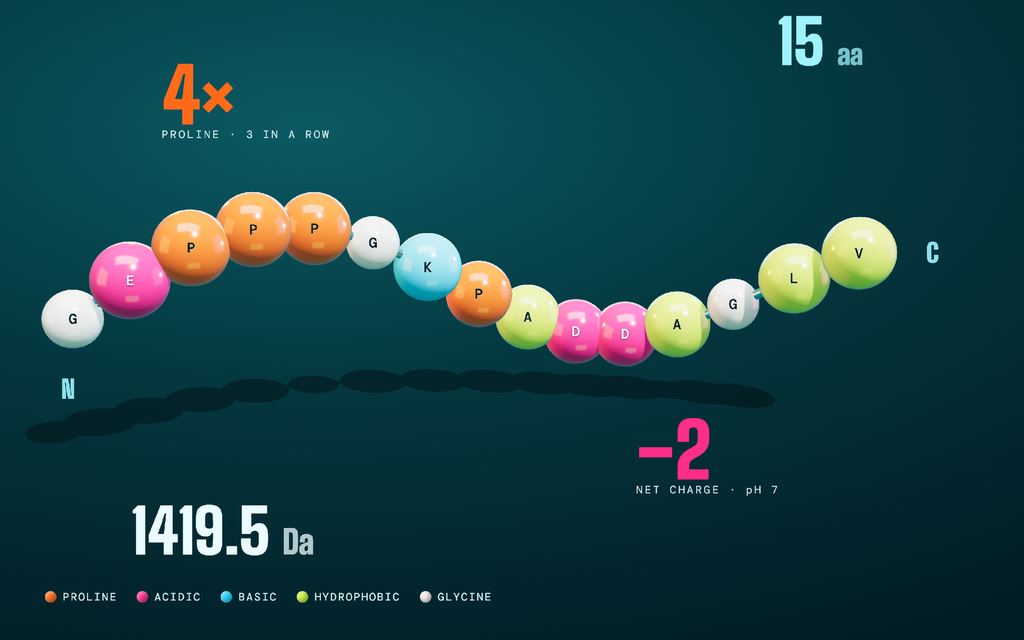
BPC-157 is a pentadecapeptide, a chain of 15 amino acids, made in the lab to match part of a larger protein found in human gastric juice. The name stands for Body Protection Compound-157. Most of what’s known about it comes from rat and cell studies published since the early 1990s.
The story starts with Predrag Sikirić at the University of Zagreb School of Medicine. His team collected gastric juice from hospital clinics, isolated a parent protein and, in 1990, named its active 15-residue stretch BPC-157. According to a 2026 Undark investigation, the Croatian drugmaker PLIVA later ran two early human trials in ulcerative colitis, and the rights returned to Sikirić in 2009.
Sikirić, who has worked on the idea since his student days in 1975, summed up his view of drug research to Undark in one line: “What is the essential purpose of the drug? To be useful for the people.”
One property turns up again and again in the Zagreb papers. BPC-157 is described as stable in human gastric juice, an acidic, enzyme-rich environment that breaks most peptides apart. That stability is why oral and capsule forms appear in the animal research alongside dissolved ones.
Cold, dry and dark; long-term storage is typically at −20 °C
BPC-157 shown as a string of 15 glossy beads coloured by amino-acid chemistry, highlighting four prolines, three acidic residues and a net charge of -2
The mechanism of BPC-157 isn’t fully established, and no single receptor for it has been identified. Lab studies have traced its activity through several overlapping signalling pathways linked to blood-vessel growth, cell movement and tissue structure. Nearly all of that work is preclinical.
The pathways that come up most often are:
Angiogenesis and VEGFR2 signalling. Rat studies have looked at BPC-157 alongside VEGFR2, the receptor that drives new blood-vessel formation. A 2025 narrative review by McGuire and colleagues names it among the best-documented pathways.
The nitric oxide pathway. The same review points to nitric oxide production through the Akt-eNOS axis, the signal that relaxes and widens blood vessels.
Growth-hormone-receptor expression. Cultured tendon fibroblasts exposed to BPC-157 have shown more growth-hormone receptors on their surface.
FAK-paxillin signalling. Cell-migration studies have examined BPC-157’s effect on FAK and paxillin, two proteins that help cells crawl, spread and anchor.
A common thread runs through these studies. Much of the tendon research focuses on tissue with a poor blood supply, which is why angiogenesis became the pathway researchers keep returning to.
Is BPC-157 a Growth Hormone?
No. BPC-157 is a short peptide and isn’t a hormone or a growth-hormone secretagogue (a compound that prompts the pituitary gland to release GH). The confusion traces back to one line of research on tendon cells, where BPC-157 was studied for its effect on growth-hormone-receptor numbers.
A 2025 systematic review in the HSS Journal reported that BPC-157 “enhances growth hormone receptor expression”. Receptor expression describes how ready a cell is to respond to growth hormone already in circulation. Secretagogues such as ipamorelin act at the pituitary, whereas BPC-157 research has stayed at the level of local tissue signalling.
What Does the Research on BPC-157 Actually Show?
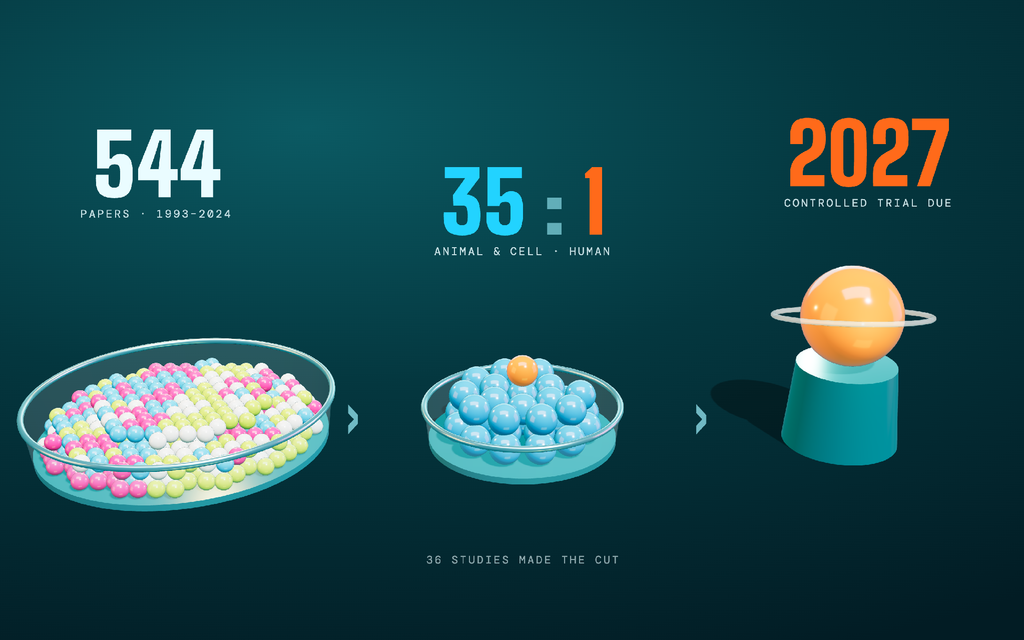
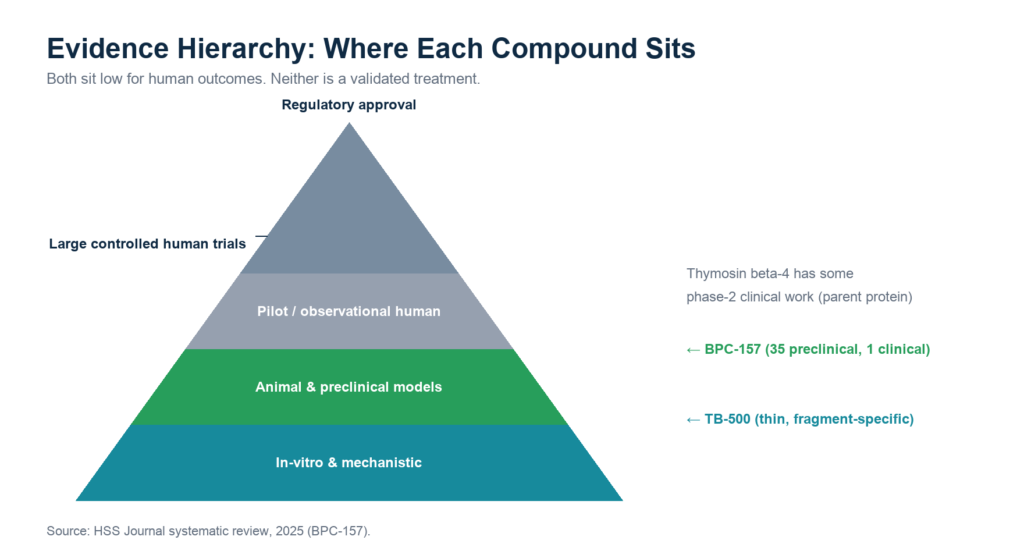
Most BPC-157 research has been carried out in rats and cell cultures, across gut, tendon, muscle, bone and blood-vessel models. Human data comes from a handful of small pilot and retrospective reports. A randomised, placebo-controlled Phase 2 trial began in 2026 and is due to report in 2027.
On the preclinical side, the picture is encouraging. The McGuire review describes BPC-157 as “a potentially valuable tool in musculoskeletal medicine” and calls for well-designed human trials to test it properly. The same authors counted three published human pilot studies, covering knee pain, interstitial cystitis and an intravenous safety study.
Research area
Model
Evidence level
Gastrointestinal (ulcer and IBD models)
Rat
Preclinical: many studies, mostly from one research group
Tendon and ligament
Rat, cell culture
Preclinical
Muscle and bone
Rat
Preclinical
Blood vessels (angiogenesis)
Rat, cell culture
Preclinical
Human
Small pilot and retrospective reports
Very limited, with no large controlled trials published
Evidence at a glance
3D funnel showing 544 BPC-157 papers narrowing to 36 eligible studies, 35 preclinical and 1 clinical, with a controlled trial due in 2027
Much of the published work comes from Sikirić’s group in Zagreb, and replication by independent labs is still thin. Reviewers treat that as the main gap to close, since findings carry more weight once a separate team can reproduce them.
That independent test is now running. In February 2026, Hudson Biotech began a randomised, double-blind, placebo-controlled Phase 2 trial at Peking University Shenzhen Hospital, enrolling 120 adults with MRI-confirmed hamstring strains, according to its ClinicalTrials.gov record (NCT07437547). Primary completion is estimated for February 2027, which makes it the trial to watch.
Is BPC-157 Legal in the UK?
Yes, as a research material. BPC-157 isn’t a controlled drug under the Misuse of Drugs Act 1971, so buying and holding it for laboratory work is lawful. It has no MHRA marketing authorisation, though, so it can’t legally be sold, supplied or advertised for human use.
UK law draws its line at how a product is presented. Under the Human Medicines Regulations 2012, anything offered to treat or prevent a condition counts as a medicine, whatever its label says. For the wider rules on other compounds, see our guide: are peptides legal in the UK.
Can You Buy BPC-157 in the UK?
Yes. UK research suppliers stock BPC-157 labelled for research use only, as lyophilised powder, pre-mixed solution or pre-filled research pens. Suppliers working within the rules describe identity, purity and storage, and make no claims about effects in people. Our Research Use Only policy sets out how Apexion applies this to every order.
Is BPC-157 Available on the NHS?
No. There’s no licensed BPC-157 product in the UK, and it has no place in NHS treatment pathways, so GPs and hospital doctors don’t offer it. Anyone searching “BPC-157 UK NHS” will find it only through private clinics and research suppliers, and that’s where the regulator has turned its attention.
What Has the MHRA Said?
In April 2026, a Guardian investigation found UK clinics claiming BPC-157 helps with recovery from injuries. The MHRA confirmed these were medicinal claims, which clinics aren’t allowed to make.
Once a clinic makes medicinal claims, the MHRA said, its peptide products “will be considered medicines”. At least one clinic deleted its claims after the Guardian got in touch. The MHRA also said it will take action against clinics found breaching the rules, and a “research only” label gives no cover to a seller who markets health outcomes.
What Is the FDA’s Position on BPC-157?
BPC-157 isn’t FDA-approved. In 2023, the FDA placed it in Category 2, its list of substances with safety concerns for compounding. It came off that list in April 2026, and on 23 July an FDA advisory panel voted 8 to 6 to recommend it for US compounding pharmacies. The FDA’s final decision is still pending.
The BBC’s coverage of the vote, published on 24 July 2026, noted that the FDA doesn’t have to follow the panel but often does. For UK readers, the vote changes nothing on the ground. US compounding rules have no bearing on MHRA licensing, so BPC-157’s UK status stays the same whichever way the FDA rules. We’ll update this page when that decision lands.
Why Is BPC-157 a Banned Substance in Sport?
WADA lists BPC-157 under S0, non-approved substances, because no health authority anywhere has approved it for human therapeutic use. It has been named on the Prohibited List since 2022 and is banned at all times, in and out of competition. In the UK, UKAD enforces the ban.
S0 works as a catch-all category. Any substance without human approval falls under it, named or not, and a search of the WADA Prohibited List for BPC-157 returns S0 with the status “all times”.
Anti-doping rules run on strict liability. Athletes in UKAD’s testing pool are responsible for anything found in their sample, including traces from a mislabelled supplement, and a supplement marketed as a “BPC-157 complex” puts them in exactly that position.
What Are the Known Risks and Side Effects of BPC-157?
Human safety data on BPC-157 is very limited, so its side effects in people aren’t established. The three human pilot studies were small and short, and no long-term follow-up exists. Regulators want long-term safety data before they’ll approve a medicine, and for BPC-157 that data hasn’t been gathered yet.
The open questions researchers discuss fall into three groups:
Long-term data. No study has followed people over months or years, so any late or cumulative effects remain unknown.
Angiogenesis. Reviews note a theoretical question: a compound studied for new blood-vessel growth could, in principle, act on tissue where extra blood supply is unwanted, such as tumours. No study has shown this; it remains a question for future trials.
Product identity. Unverified products may be mislabelled, underfilled or contaminated. That risk comes from the supply chain, and a batch COA is the way to rule it out.
Is BPC-157 Bad for the Heart?
There’s no reliable human evidence either way. Sikirić’s group has published rat studies in cardiovascular models, including heart-muscle and heart-rhythm models, but no human cardiac data has been published. For now, the effect of BPC-157 on the human heart is unknown.
BPC-157 Capsules vs Lyophilised Vials: What’s the Difference?
Research-grade BPC-157 normally comes as freeze-dried powder in a sealed vial, backed by a batch COA. Many “BPC-157 capsules” or “BPC-157 amino complex” products sold as supplements on Amazon UK are amino-acid blends, and they may contain little or no verified BPC-157.
Lyophilised vial
Pre-filled research pen
Supplement capsule or tablet
What’s inside
Freeze-dried BPC-157 powder
BPC-157 prepared to order
Often an amino-acid blend
Batch COA
Expected
Expected
Rarely supplied
Identity tested
HPLC, often LC-MS
HPLC
Seldom stated
UK status
Research material
Research material
Sold as a food supplement
Searches for “BPC-157 capsules UK”, “BPC-157 tablets” and “BPC-157 Holland and Barrett” usually lead to this third column. We’re not aware of any authorised BPC-157 food supplement in the UK, so a capsule’s label claim is only as good as the lab data behind it.
Apexion supplies BPC-157 in pre-filled research pens, prepared to order in the UK, each with its own batch COA. Our comparison of peptide pens vs vials covers how the two formats differ for lab handling.
BPC-157 vs TB-500
BPC-157 and TB-500 are different peptides with different research areas. BPC-157 is a 15-amino-acid fragment based on a gastric protein. TB-500 is a synthetic fragment of thymosin beta-4, a protein found in most cells and studied for its role in cell migration.
How to Check the Quality of Research-Grade BPC-157
A reliable batch of BPC-157 comes with a certificate of analysis that ties the product in your hand to named lab data. Before any BPC-157 goes into an experiment, check the COA for these five points:
A batch-specific COA. The lot number on the certificate should match the one on the product. A generic, undated certificate proves nothing about your batch.
HPLC purity, with the method stated. Look for the percentage purity plus the column, wavelength or gradient used.
An LC-MS observed mass near 1419.5 Da. Many reports show the doubly charged ion instead, at around 710 m/z, which confirms the same molecule.
The testing lab and test date. A named lab and a recent date make the result traceable.
Storage guidance. The COA or product sheet should state storage conditions for that specific batch.
Our BPC-157 is third-party tested, typically ≥98% HPLC-verified, and each batch links to its COA through a QR code or batch number. Our batch verification shows how to look one up.
Frequently Asked Questions
What is BPC-157 used for?
BPC-157 is used in laboratory research into the pathways it has been studied for, mainly angiogenesis, nitric oxide signalling and cell migration in gut, tendon and blood-vessel models. It isn’t approved for any human use in the UK or elsewhere, and it’s sold by research suppliers for in-vitro and preclinical work.
Is BPC-157 legal to buy in the UK?
Yes, BPC-157 is legal to buy and hold in the UK as a research material, because it isn’t listed under the Misuse of Drugs Act 1971. It has no MHRA marketing authorisation, so selling or advertising it for human use breaks the Human Medicines Regulations 2012.
Is BPC-157 a steroid?
No, steroids are built on a four-ring carbon structure, while BPC-157 is a linear chain of 15 amino acids. WADA bans it under S0, non-approved substances, which is a separate category from S1, where anabolic agents are listed.
Can you get BPC-157 on prescription in the UK?
No, there’s no licensed BPC-157 medicine in the UK, so it isn’t available on NHS prescription. Private clinics offering it as a treatment risk breaching medicines law, and the MHRA opened an investigation into clinics making medicinal claims about BPC-157 and other peptides in April 2026.
Does BPC-157 show up on a drug test?
Yes, on anti-doping tests. WADA-accredited laboratories test for BPC-157, which is banned at all times under the S0 category, and UKAD applies that ban to athletes in UK sport. Standard workplace or clinical drug screens aren’t designed to look for peptides like BPC-157.
How should lyophilised BPC-157 be stored?
Keep lyophilised BPC-157 sealed, cold, dry and away from light. Long-term storage is typically at −20 °C, and each batch’s guidance should take priority. Avoid repeated warming and cooling, since temperature swings and moisture speed up peptide breakdown. Our peptide storage and handling guide covers the detail.
The Bottom Line
BPC-157 is a legal UK research material and not a licensed medicine. Its evidence base is mostly animal and cell studies, and a controlled human trial is due to report in 2027. It’s banned in sport at all times, and the MHRA is watching clinics that make claims about it.
For laboratory work, choose a supplier with batch-matched documentation. Apexion supplies BPC-157 for research use only, never for human or veterinary use.
McGuire FP et al. “Regeneration or Risk? A Narrative Review of BPC-157 for Musculoskeletal Healing.” Current Reviews in Musculoskeletal Medicine, 2025. PMC12446177
Vasireddi N et al. “Emerging Use of BPC-157 in Orthopaedic Sports Medicine: A Systematic Review.” HSS Journal, 2025. PMC12313605
ClinicalTrials.gov. NCT07437547, BPC 157 for Acute Hamstring Muscle Strain Repair. Record
Undark. “A Peptide, a Secretive Scientist, and a Debate Over Evidence”, 29 May 2026. Article
The Guardian. “Medicines watchdog to investigate UK peptide clinics over health claims”, 4 April 2026. Article
BBC News. “FDA panel votes to loosen restrictions for controversial peptides”, 24 July 2026. Article
World Anti-Doping Agency. The Prohibited List. wada-ama.org
KLOW vs GLOW Peptide Blend: Key Differences Compared
Quick answer
What is the difference between KLOW and GLOW?
GLOW is a 70mg three-peptide blend of GHK-Cu (50mg), BPC-157 (10mg) and TB-500 (10mg). KLOW is an 80mg four-peptide blend containing the same three compounds in the same amounts, plus 10mg of KPV. KPV is the only compositional difference, and it’s a tripeptide studied mainly in inflammatory-signalling research.
Key takeaways
Both blends share one core: GHK-Cu, BPC-157 and TB-500.
KLOW adds 10mg of KPV to that core.
GLOW 70 and KLOW 80 are named after their total milligrams.
Pick the blend that matches what your study measures, and check every component on the batch certificate.
Below, we break down what’s in each blend, what KPV adds, what “70” and “80” mean, and how both compare with the Wolverine stack and with GHK-Cu on its own.
All compound blends are supplied for laboratory research use only and are Research Use Only.
What Is the GLOW Peptide Blend?
GLOW is a three-peptide research blend of GHK-Cu, BPC-157 and TB-500, most often supplied as 70mg: 50mg of GHK-Cu with 10mg each of BPC-157 and TB-500. Laboratories study it in models of skin structure, collagen and connective tissue, where all three compounds have their own published research.
A 15-amino-acid peptide studied in tendon, tissue and blood-vessel-formation models
TB-500 (a fragment of thymosin beta-4)
10mg
A short synthetic peptide studied in cell-migration research
GHK-Cu makes up about 71% of the blend by weight. That’s why GLOW is often described as a “GHK-Cu-led” formula, with the other two compounds in supporting amounts.
Why These Three Compounds Are Studied Together
Each compound reaches a different part of the same repair process. In published models, GHK-Cu is linked to collagen and matrix remodelling, BPC-157 to blood-vessel formation, and TB-500 to the way cells move into damaged tissue. Researchers combine them to look at those overlapping pathways in one model, with a single preparation. Full compound details and the batch certificate are on the GLOW 70mg research pen specification & COA page. For how blends like this compare with other common combinations, see peptide stacks explained.
What Is the KLOW Peptide Blend?
KLOW is an 80mg four-peptide research blend. It contains GLOW’s GHK-Cu (50mg), BPC-157 (10mg) and TB-500 (10mg), plus 10mg of KPV. It’s studied in the same tissue models as GLOW, with extra attention on inflammation-signalling pathways, the area where most KPV research has been done.
What Is KLOW 80?
“80” is the total number of milligrams in each pen or vial: 50 + 10 + 10 + 10. The name spells out the formula. The K stands for KPV and “LOW” comes from GLOW, so KLOW is shorthand for “GLOW with KPV”. Some suppliers print the total on the label (KLOW 80) and others leave it off, which is why the same blend can appear under both names.
KLOW Composition at a Glance
GHK-Cu, 50mg: the copper tripeptide from GLOW, now 62.5% of the blend
BPC-157, 10mg: unchanged from GLOW
TB-500, 10mg: unchanged from GLOW
KPV, 10mg: lysine-proline-valine, the last three amino acids of the hormone α-MSH
What Is the Difference Between KLOW and GLOW Peptide?
The difference is KPV. KLOW contains everything in GLOW at the same amounts, plus 10mg of KPV. Three things follow from that. The total rises from 70mg to 80mg, GHK-Cu’s share of the blend falls from about 71% to 62.5%, and inflammation-signalling measurements become part of what the blend is used to study. Our KPV peptide guide covers what KPV is and how it’s studied.
KLOW vs GLOW Head-to-Head Comparison
GLOW
KLOW
Total content
70mg
80mg
Number of compounds
3
4
GHK-Cu
50mg
50mg
BPC-157
10mg
10mg
TB-500
10mg
10mg
KPV
none
10mg
GHK-Cu share of blend
~71%
~62.5%
Main research areas
Skin structure, collagen, tissue-repair models
The same, plus inflammation-signalling models
Apexion format
70mg pre-filled research pen
80mg pre-filled research pen
Apexion price
£175
£195
GLOW and KLOW carry identical amounts of GHK-Cu, BPC-157 and TB-500, so any comparison between them comes down to KPV. KLOW costs £20 more for its extra 10mg. GLOW keeps a higher concentration of GHK-Cu, while KLOW spreads the same GHK-Cu across a larger total.
The share change has a knock-on effect in study design. Each milligram of GLOW carries about 0.71mg of GHK-Cu, and each milligram of KLOW carries 0.625mg. If two study arms are matched by total blend weight, the KLOW arm receives less GHK-Cu, BPC-157 and TB-500 than the GLOW arm. Matching by pen, or by GHK-Cu content, keeps the shared core identical and leaves KPV as the only variable.
What Does KPV Add to KLOW?
KPV (lysine-proline-valine) is the last three amino acids of alpha-melanocyte-stimulating hormone, or α-MSH. It’s studied mainly for its role in inflammation signalling, especially the NF-κB pathway, and in models of the gut lining and skin cells. In KLOW, it adds an inflammation-focused compound to a core built around tissue structure.
What Is KPV Peptide?
α-MSH is a 13-amino-acid hormone best known for its role in skin pigmentation. Scientists found that its tail end, the three amino acids K-P-V, kept much of the hormone’s anti-inflammatory activity on its own. A 2008 review in Endocrine Reviews by Brzoska and colleagues described KPV as keeping α-MSH’s anti-inflammatory effect while lacking its pigmentary action. That combination is the reason KPV became a research compound in its own right.
NF-κB is a protein complex that works like a master switch inside cells, turning on genes that drive inflammation. In a 2008 Gastroenterology study, Dalmasso and colleagues reported that nanomolar concentrations of KPV inhibited NF-κB and MAP kinase signalling in human intestinal cells and immune cells. In mouse models of colitis, KPV reduced pro-inflammatory cytokine expression. A German team using two other mouse colitis models reported similar anti-inflammatory effects in the same year.
GLOW already has a foothold on this pathway. Pickart and Margolina (2018) list NF-κB among the molecules GHK is reported to suppress. KPV gives KLOW a second, more targeted compound on a pathway the core already touches.
KPV in Epithelial and Barrier Research
The same Dalmasso study showed how KPV gets into cells. It’s carried by PepT1, a transporter for small peptides that is normally found in the small intestine and appears in the colon during inflammation. That discovery shaped later work: a 2017 study in Molecular Therapy loaded KPV into hyaluronic-acid nanoparticles aimed at colon-lining cells and immune cells in mouse models.
Adding KPV lets one blend cover inflammation-signalling measurements alongside GLOW’s tissue focus. The single compound is also available as KPV 10mg.
The Shared Core: GHK-Cu, BPC-157 and TB-500
Both blends are built on the same three compounds in the same amounts. Everything in this section applies equally to KLOW and GLOW, and these three compounds account for 70mg of each pen. Each one has its own research history, stretching back to the 1970s for GHK.
GHK-Cu
GHK is a tripeptide found naturally in human plasma, saliva and urine, and its levels fall with age. It binds copper tightly, and the copper complex is the form studied in most research. A 2015 review by Pickart, Vasquez-Soltero and Margolina described GHK stimulating collagen, decorin and glycosaminoglycans in laboratory models. The same review reported that GHK can up- and down-regulate at least 4,000 human genes. There’s more background in our GHK-Cu research overview, and the single compound is listed as GHK-Cu 50mg.
BPC-157
BPC-157 is a 15-amino-acid peptide based on a sequence from a protein found in gastric juice. It’s studied in tendon, ligament, muscle and blood-vessel-formation models. A 2019 review from Loughborough University’s National Centre for Sport and Exercise Medicine found consistently positive results across the soft-tissue studies it examined, while noting that most were carried out in small rodent models. That rodent-led evidence base is the one researchers work from today. For how it compares with TB-500, see BPC-157 vs TB-500, or view BPC-157 10mg.
TB-500
TB-500 is a synthetic peptide based on thymosin beta-4 (Tβ4), a 43-amino-acid protein present in almost every human cell. Goldstein and colleagues (2012) describe Tβ4 binding to actin, the protein that forms a cell’s internal scaffolding, and promoting cell migration. The active part is small: a 2003 study found that the seven-amino-acid actin-binding sequence LKKTETQ promoted repair in aged mice at levels comparable to the full protein. That short sequence is the basis of most TB-500 research material. The single compound is available as TB-500 10mg.
KLOW 80 vs GLOW 70: What Do the Numbers Mean?
The numbers are total milligrams. GLOW 70 is GHK-Cu 50mg + BPC-157 10mg + TB-500 10mg. KLOW 80 adds KPV 10mg. The three shared compounds come in identical amounts in both blends, so the extra 10mg in KLOW is entirely KPV.
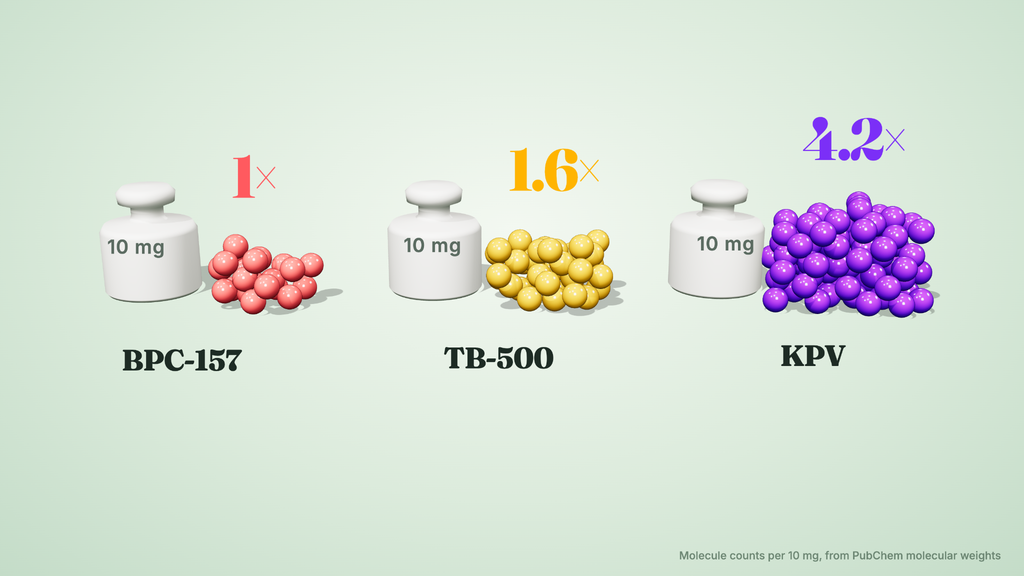
Milligrams measure weight, though, and peptides differ a lot in size. KPV weighs about 342 daltons per molecule, while BPC-157 weighs about 1,420 (PubChem). The same 10mg of KPV therefore holds roughly four times as many molecules as 10mg of BPC-157. On the label, KPV is 12.5% of KLOW. Counted in molecules, it’s closer to a sixth.
Some suppliers sell other totals, such as KLOW 70 or a 30mg GLOW, so read the amount of each component and ignore the headline number.
Is KLOW Peptide Worth It Compared With GLOW?
It depends on the research design. If a study measures inflammation signalling, KLOW includes KPV without needing a separate compound. If a study focuses only on tissue and collagen pathways, GLOW covers the same core for £20 less. The better choice is the one that matches the measurements you plan to take.
KPV costs £90 as a single pen and £20 as the step from GLOW to KLOW. So a design that needs all four compounds together is cheaper as KLOW, and a design that needs KPV on its own time course is better served by the single KPV 10mg pen.
When a Single-Compound Design Makes More Sense
A blend answers a combined question. When four compounds go in together, it’s hard to say which one produced a change in a measurement. Single compounds keep each variable separate, which is the standard route for dose-response work or for testing one mechanism. Predrag Sikirić, whose University of Zagreb lab produced much of the early BPC-157 research, put the open-ended nature of this work well in a June 2026 interview with Chemistry World: “In science, you are never all done. There is always an area that still has to be investigated.”
Which Blend Fits Your Research?
Neither blend is “better” in general. Each suits a different study design, and the right pick follows from what you plan to measure. The table below matches four common designs to the blend, or single compound, that covers them without extra variables.
If your study…
Choose
Measures only skin structure, collagen or tissue-remodelling pathways
GLOW
Also measures inflammation-signalling markers such as NF-κB or cytokines
KLOW
Needs to isolate the effect of one variable
Single compounds
Leaves GHK-Cu out of the design
Wolverine (BPC-157 + TB-500)
The easiest way to choose is to work backwards from your endpoints. A GLOW study usually measures structural outcomes such as collagen deposition, hydroxyproline content, tube formation in blood-vessel assays or cell movement in scratch-wound assays. A KLOW study adds signalling readouts on top: NF-κB reporter activity, or cytokines such as TNF-α and IL-6 measured by ELISA. If none of your planned readouts involve inflammation, KPV adds a compound without adding data.
KLOW vs GLOW vs Wolverine Stack
The Wolverine stack is the two-compound base: BPC-157 + TB-500. GLOW adds GHK-Cu, and KLOW adds GHK-Cu plus KPV. Each blend adds one compound to the one before, so the three form a ladder. At Apexion, the steps cost £120, £175 and £195, so moving from Wolverine to GLOW adds 50mg of GHK-Cu for £55, and moving from GLOW to KLOW adds 10mg of KPV for £20.
Blend
BPC-157
TB-500
GHK-Cu
KPV
Compounds
Wolverine
✓
✓
none
none
2
GLOW
✓
✓
✓
none
3
KLOW
✓
✓
✓
✓
4
The ladder also clears up a common mix-up. KLOW carries exactly the same BPC-157 and TB-500 as Wolverine, 10mg of each, and then adds 60mg of other compounds on top. For the two-compound option, see the BPC-157 + TB-500 20mg (Wolverine) blend, and for the pair compared head to head, BPC-157 vs TB-500.
KLOW and GLOW vs GHK-Cu Alone
GHK-Cu on its own isolates the copper-peptide variable. GLOW and KLOW study it alongside BPC-157 and TB-500, and in KLOW’s case KPV too. The choice comes down to what else goes in with it, and a single pen is the cleanest way to get a GHK-Cu-only baseline.
The single pen carries the same 50mg of GHK-Cu found in both blends. That makes a three-arm design possible: GHK-Cu alone, GLOW and KLOW. Comparing the arms shows what the copper peptide does by itself, what BPC-157 and TB-500 add to it, and what KPV adds on top.
A GHK-Cu-only design is the cleaner route for single-variable studies and for gene-expression work, where Pickart’s 4,000-gene findings give a clear starting point. At £65, GHK-Cu 50mg is also the lowest-cost way into copper-peptide research. Our GHK-Cu research overview covers the compound in more depth.
Not Every “GLOW” Is the Same Formula
The name “GLOW” is used for more than one product. Some US clinics use it for a different mixed formula of GHK-Cu, glutathione and vitamin C, which shares only one ingredient with the research blend. Supplier versions of the peptide blend also vary, from 70mg down to 30mg totals with 10mg of each compound.
Even popular online summaries quote ranges of 5 to 10mg for BPC-157 and TB-500 and 20 to 50mg for GHK-Cu. So check the component list and the milligrams of each compound on the label and certificate, and treat the product name as a starting point. (Glutathione is sold as a separate compound at Apexion.)
Pre-Filled Pen vs Vial: KLOW and GLOW Formats
KLOW and GLOW come either as freeze-dried powder in vials or as pre-filled research pens. The main differences are the preparation steps, the chance of contamination during handling, and how batches are labelled. A vial arrives as powder and a pen arrives ready.
Vial
Pre-filled research pen
Arrives as
Freeze-dried (lyophilised) powder
Ready-prepared in the pen
Lab preparation
Mixing (preparing) before measurement
Prepared fresh to order before dispatch
Handling steps
More transfers between containers
Fewer transfers in the lab
Batch labelling
On the vial
On the pen, tied to a batch certificate
Apexion supplies both blends as pre-filled pens, prepared to order in the UK. Each pen carries a batch number that links back to its certificate, so the record for a study arm stays tied to the exact material used. For a fuller comparison, read pre-filled pens vs vials.
How Are KLOW and GLOW Tested?
Each component of a blend should be identified and measured separately. The usual methods are HPLC (high-performance liquid chromatography) for purity and LC-MS (liquid chromatography-mass spectrometry) for identity. Testing each compound on its own confirms that all three or four are present, correct and in the amounts stated on the label.
A blend certificate should show:
every component by name
the milligrams and purity of each component
the batch number, matching the one on the pen or vial
the name of the testing laboratory
the test date
A certificate that gives a single purity figure for the whole blend is a warning sign. It can’t tell you whether one compound is under-filled or missing.
Mass spectrometry answers a second question for TB-500. The name is used for both the short seven-amino-acid fragment and full-length thymosin beta-4, which weigh about 889 and 4,963 daltons respectively. A measured mass shows which one is in the batch. Our guides explain how to read a peptide COA and how to verify a research peptide batch, and Apexion batch verification lets you check a batch number against its certificate.
Storage and Handling of Peptide Blends
Blends need the same care as single peptides, with one extra reason: every compound in the mix has to stay stable at the same time. Standard lab practice:
Store cold, with long-term storage typically at −20 °C.
Keep away from light and heat.
Avoid repeated freezing and thawing.
Log the date each pen or vial is opened, next to its batch number.
Keep blends and single compounds in clearly separated, labelled storage, since GLOW, KLOW and GHK-Cu pens share several of the same compound names.
In the UK, KLOW and GLOW are sold as research materials only. None of their components are licensed medicines. BPC-157 and TB-500 are on the WADA list of substances banned in sport, so labs that work with athletes or sports bodies need to keep that in view.
UK law decides whether a product is a medicine by how it’s presented and used. Under the Human Medicines Regulations 2012, anything sold with claims about treating or preventing disease in people counts as a medicinal product and needs a licence. Research blends are sold with compound identity, purity and batch data only, which keeps them in the research-materials category.
The WADA 2026 Prohibited List names BPC-157 under section S0 (non-approved substances) and “Thymosin-ß4 and its derivatives e.g. TB-500” under section S2. Both bans apply at all times, in and out of competition.
Frequently Asked Questions
What is the difference between KLOW and GLOW?
KLOW contains a fourth peptide, KPV, and GLOW doesn’t. Both blends share GHK-Cu (50mg), BPC-157 (10mg) and TB-500 (10mg) in identical amounts. KLOW adds 10mg of KPV, bringing the total from 70mg to 80mg and adding inflammation-signalling research to the blend’s scope.
Is KLOW the same as GLOW with KPV added?
Yes. KLOW uses the same three-compound core as GLOW in the same amounts: 50mg of GHK-Cu, 10mg of BPC-157 and 10mg of TB-500. The only addition is 10mg of KPV, which is why the name swaps GLOW’s G for a K. The extra 10mg lifts the total from 70mg to 80mg and lowers GHK-Cu’s share of the blend from about 71% to 62.5%.
What does KLOW 80 mean?
KLOW 80 means the blend contains 80mg in total. That total is made up of 50mg of GHK-Cu, 10mg of BPC-157, 10mg of TB-500 and 10mg of KPV. Some suppliers sell other totals under the same name, so check the milligrams of each compound on the label.
Is KLOW the same as the Wolverine stack?
No. The Wolverine stack contains only BPC-157 and TB-500, usually 10mg of each for 20mg in total. KLOW includes those same two compounds and adds GHK-Cu (50mg) and KPV (10mg), making it a four-peptide, 80mg blend. At Apexion, Wolverine is a 20mg pen at £120 and KLOW is an 80mg pen at £195.
Can KLOW and GLOW be compared in the same study?
Yes. Because the two blends share an identical core, a study can run them side by side and treat KPV as the single variable. Any difference in inflammation-signalling measurements between the two groups can then be linked to the added KPV. Matching the arms by pen, and not by total milligrams, keeps the GHK-Cu, BPC-157 and TB-500 content the same in both.
Where can I get KLOW and GLOW research blends?
Apexion Biolabs supplies both as pre-filled research pens, prepared to order in the UK, with batch documentation and tracked UK delivery. GLOW 70mg is £175 and KLOW 80mg is £195. Both are sold for laboratory research use only and are Research Use Only.
KLOW vs GLOW: The Bottom Line
KLOW and GLOW share the same three-peptide core, and the one difference is 10mg of KPV. Choose GLOW for tissue and collagen designs, KLOW when inflammation signalling is part of what you measure, and single compounds when one variable needs to stand alone. Then check the amount of every component on the batch certificate.
See all Apexion research blends. All Apexion research peptide pens are for laboratory research use only and are Research Use Only.
Are Peptides Legal in the UK? A 2026 Research Guide
Peptides spent much of 2026 in the headlines. The BBC ran a feature on the “wellness peptide craze” in March, and The Guardian followed in April by asking what the evidence says. One question got far less airtime than the science: are peptides legal in the UK, and who’s allowed to buy, sell or own them?
The answer depends on the peptide and on how it’s sold. This guide covers buying, selling, possession, importing, sport and drug testing, then runs eight well-known compounds past each rule.
This article is general information, not legal advice. Apexion products are supplied strictly for laboratory research use only and are Research Use Only.
Quick answer: are peptides legal in the UK? Most research peptides are legal to buy, sell and possess in the UK as laboratory research materials. They aren’t licensed medicines, so nobody can legally sell, supply or advertise them for human use. A few peptide hormones, including somatropin (HGH) and HCG, are Class C controlled drugs, and many peptides are banned in sport.
Key facts
Research peptides aren’t banned in the UK, though most have no MHRA licence as a medicine.
Selling or advertising a peptide for human use without a marketing authorisation breaks the Human Medicines Regulations 2012.
“Research use only” means laboratory work and doesn’t cover personal use.
Somatropin (HGH), somatrem and HCG are Class C drugs under the Misuse of Drugs Act 1971.
The WADA Prohibited List bans many peptides at all times, and UK Anti-Doping (UKAD) enforces it here.
What Counts as a “Peptide” Under UK Law?
UK law has no single rule for “peptides”. A peptide is a short chain of amino acids, and the same molecule can be regulated as a medicine, a cosmetic ingredient or a research chemical. Which law applies depends on how the product is presented and what it’s for.
MHRA marketing authorisation; most are prescription-only
Cosmetic ingredient
Copper tripeptide-1 (GHK-Cu) in face serums or other topicals
UK cosmetics rules; for use on the skin
Research material
BPC-157, TB-500 and MOTS-c supplied to labs
Sold for laboratory work, with no claims about human use
The dividing line is written into the Human Medicines Regulations 2012. Regulation 2 treats a product as a medicine if it’s “presented as having properties of preventing or treating disease in human beings”, or if people use it to change how the body works.
In practice, a product page or a social media caption can turn a research chemical into an unlicensed medicine overnight. The chemistry stays the same, but the legal category changes.
Which UK Laws Apply to Peptides?
Four UK frameworks cover peptides. The Human Medicines Regulations 2012 govern medicines, the Misuse of Drugs Act 1971 controls a short list of peptide hormones, the Psychoactive Substances Act 2016 covers mind-altering products, and UK cosmetics law covers skincare. The MHRA enforces medicines law, and WADA and UKAD set the rules for sport.
To check any single compound, run it through four questions. We call this the Four-Checkpoint Test:
Licensed? Does it hold a UK marketing authorisation as a medicine?
Controlled? Is it listed under the Misuse of Drugs Act 1971?
Claims? Is anyone selling it with health, dosing or body-change promises?
Sport? Is it on the WADA Prohibited List?
Human Medicines Regulations 2012
These regulations (SI 2012/1916) are the main UK law for anything sold as a medicine. Three rules do most of the work:
Regulation 46: nobody may sell or supply a medicinal product without a marketing authorisation.
Prescription-only medicines: these can only be supplied against a valid prescription.
Regulations 279 and 284: no advertising a medicine that has no authorisation, and no advertising prescription-only medicines to the public.
Regulation 46 reaches stockholders too. Keeping an unauthorised medicine is an offence when the person knows, or has reason to believe, it’s meant to be sold or supplied to someone else.
Misuse of Drugs Act 1971
Most research peptides aren’t controlled substances. The exceptions are a handful of peptide hormones listed in Class C alongside anabolic steroids. Schedule 2, Part III of the Act names chorionic gonadotrophin (HCG), non-human chorionic gonadotrophin, somatotropin, somatrem and somatropin.
Supplying these hormones without authority is an offence, and so is importing them without a Home Office licence. The Misuse of Drugs Regulations 2001 exempt possession when they’re in the form of a medicinal product. As a result, the law treats owning one very differently from selling it.
Psychoactive Substances Act 2016
The 2016 Act bans producing or supplying substances for their mind-altering effects, the products once sold as “legal highs”. It rarely touches research peptides. Schedule 1 exempts controlled drugs and medicinal products outright, so a peptide sold with health claims falls under medicines law, and a Class C hormone falls under the Misuse of Drugs Act.
UK Cosmetics Regulation
Peptide skincare follows its own route. Copper peptide serums, usually listed as copper tripeptide-1 on the label, are cosmetics under UK law. Before sale, the brand needs a UK Responsible Person, a product safety report and a notification through the government’s cosmetics portal. For the lab science behind the molecule, see our GHK-Cu research overview.
The MHRA’s Role
The Medicines and Healthcare products Regulatory Agency (MHRA) licenses medicines and acts against unlicensed ones. None of the research peptides in this guide are MHRA-approved.
The MHRA’s Criminal Enforcement Unit works with Border Force, the police and internet companies. In 2025, it seized almost 20 million doses of illegally traded medicines, valued at nearly £45 million, and disrupted more than 1,500 websites and social media accounts. In April 2026, it opened inquiries into UK clinics making medical claims about peptide injections.
Is It Legal to Buy Peptides in the UK?
Yes, you can legally buy most peptides in the UK as research materials, and owning them isn’t a criminal offence. The Class C peptide hormones, such as somatropin and HCG, are the exception, because the law controls how they’re supplied and imported. Buying a peptide legally doesn’t make it approved for human use.
The BBC’s March report called this a legal and regulatory grey area. Anyone can own a vial of BPC-157, yet no one can legally market it as a treatment.
The MHRA warns people against using unlicensed products, because nobody has assessed them for safety, quality or effectiveness.
Is It Legal to Sell Peptides in the UK?
Yes, selling peptides for laboratory research is legal in the UK. Selling, supplying or advertising them for human use without a marketing authorisation breaks the Human Medicines Regulations 2012, because the product then counts as an unlicensed medicine. So the same vial can be a lawful research sale or an illegal medicine sale, depending on how it’s marketed.
Things that make a sale unlawful:
Health, healing, anti-ageing or weight-loss claims
Dosing instructions or “how to use” guides
Before-and-after photos or results stories
Marketing aimed at consumers for self-use
Things a compliant research supplier does:
Labels products research use only (RUO) and keeps every description to identity, purity and storage.
Makes no therapeutic claims anywhere, including on social media.
Publishes batch documents, such as a certificate of analysis for each lot.
Age-gates the website and asks buyers to confirm a research purpose.
Applies written terms of sale that set out permitted use.
“Research use only” (RUO) means a product is supplied for laboratory research, such as in-vitro, analytical or preclinical work. It isn’t approved or intended for use in people or animals, or for diagnosing or treating anything. The label tells you who the product is for and how the supplier may sell it.
An RUO label only protects a sale when the marketing matches it. The MHRA’s Lynda Scammell said in April 2026, “We disregard claims that products are for ‘research purposes'” when they’re used to dodge medicines regulations.
New medicines begin with research-grade peptides. Stanford Medicine counts about 100 peptide therapeutics approved by the FDA, and Professor Katrin Svensson says peptides for conditions such as Alzheimer’s disease are now a realistic possibility. A 2021 review in Nature Reviews Drug Discovery counted hundreds more candidates in preclinical and clinical testing.
A good research reagent supplier gives you:
A batch or lot number on every product
A certificate of analysis (COA) for that batch
The testing method, usually HPLC and sometimes LC-MS
Yes, research peptides can be imported into the UK for genuine research. Border Force can stop, hold or seize parcels that look like unlicensed medicines or controlled drugs. Class C peptide hormones such as somatropin need a Home Office licence to import.
Ordering from overseas brings three common problems:
Customs delays or seizure, which can hold up a research project for weeks
No UK accountability if the order is wrong, damaged or never arrives
Certificates you can’t check, with no way to link the document to the vial in your hand
Licensed peptide medicines such as semaglutide (Wegovy, Ozempic) and tirzepatide (Mounjaro) are prescription-only medicines in the UK. Research peptides aren’t medicines, so no prescription route exists for them, and they can’t replace prescribed treatment. Your GP or a registered pharmacy is the route to licensed care.
A few compounds sold as research peptides have been approved abroad but hold no UK licence:
Bremelanotide: approved by the FDA as Vyleesi in 2019.
Licensed peptide medicines are available on the NHS. The NHS began offering Mounjaro through GP practices for weight management in 2025, subject to clinical eligibility. Research peptides have no NHS route at all.
UK Legal Status of Common Research Peptides
None of the research peptides below holds a UK marketing authorisation, and none is a controlled drug. Sport is where the rules tighten: seven of the eight are named on, or covered by, the 2026 WADA Prohibited List. Somatropin is included at the bottom for comparison.
Peptide
UK marketing authorisation?
Controlled drug?
Banned by WADA (2026)?
BPC-157
No
No
Yes, S0 (named as a non-approved substance)
TB-500
No
No
Yes, S2 (thymosin-β4 derivative)
GHK-Cu
No (allowed in topical cosmetics)
No
Not named on the list
CJC-1295
No
No
Yes, S2 (GHRH analogue)
Ipamorelin
No
No
Yes, S2 (GH secretagogue)
Tesamorelin
No (approved in the US)
No
Yes, S2 (GHRH analogue)
MOTS-c
No
No
Yes, S4.4 (named as an AMPK activator)
Retatrutide
No (Phase 3 complete; Eli Lilly plans a US filing in early 2027)
No
Covered by S0 while unapproved
Somatropin (HGH), for comparison
Yes, as licensed brands
Yes, Class C
Yes, S2
Statuses checked against legislation.gov.uk and the WADA list on 26 September 2026.
Yes. BPC-157 is legal to buy and possess in the UK as a research material. It isn’t a controlled drug and holds no marketing authorisation, so it can’t be sold for human use. WADA names it in section S0, which bans it for athletes at all times. Our BPC-157 vs TB-500 research overview compares the two in the lab. For its full legal status, the research and how to check a batch, see our full BPC-157 UK guide.
Is CJC-1295 legal in the UK?
Yes, as a research material. CJC-1295 is an analogue of growth hormone-releasing hormone (GHRH), and it isn’t listed under the Misuse of Drugs Act. It holds no UK licence and is banned in sport under WADA’s S2. Researchers often study it alongside ipamorelin, and our CJC-1295 vs Ipamorelin guide explains why.
Are Peptides Banned in Sport?
Yes, many are. The WADA Prohibited List bans peptide hormones, growth factors and growth hormone secretagogues under section S2, and unapproved substances such as BPC-157 under S0. Both bans apply in and out of competition. UK Anti-Doping (UKAD) enforces the list for athletes in the UK.
Three sections of the 2026 list catch most research peptides:
S0, non-approved substances: any drug with no human approval anywhere, including compounds still in clinical trials. BPC-157 is named here.
S2, peptide hormones and growth factors: TB-500, CJC-1295, ipamorelin, tesamorelin and somatropin. The 2026 list added pegmolesatide as a new example.
S4.4, metabolic modulators: MOTS-c is named as an AMPK activator.
Anti-doping works on strict liability. An athlete is responsible for anything found in their sample, however it got there.
Will Peptides Show Up on a Drug Test?
A standard workplace drug test usually won’t screen for peptides. Those panels look for drugs such as cannabis, cocaine, opiates and amphetamines. Anti-doping tests run by WADA-accredited laboratories use targeted methods, including mass spectrometry, that can detect many banned peptides and their breakdown products.
WADA funds ongoing research into detecting small peptide hormones, so the range of detectable compounds grows each year. The British Army runs its own Compulsory Drug Testing programme, covered in the FAQ below.
Are Peptides the Same as Steroids?
No. Peptides are short chains of amino acids, the same building blocks that make up proteins. Anabolic steroids are synthetic relatives of testosterone, built on a four-ring carbon structure. UK law treats them differently too: anabolic steroids are Class C drugs, while most research peptides aren’t controlled.
Peptides
Anabolic steroids
Structure
Short amino-acid chains
Four fused carbon rings
Examples
BPC-157, GHK-Cu, insulin
Nandrolone, stanozolol
UK legal status
Mostly uncontrolled; a few hormones are Class C
Class C
How to Stay Compliant When Buying Research Peptides in the UK
A compliant purchase comes down to buying from the right supplier and keeping your paperwork in order. Run through this checklist before you order:
Buy from a UK supplier that labels every product research use only.
Check for a batch-specific COA that shows the testing method (HPLC or LC-MS) and names the lab.
Yes, research peptides are sold legally in the UK by suppliers that label them for laboratory use. Licensed peptide medicines, such as semaglutide and tirzepatide, are available on prescription from a GP or a registered pharmacy. Class C peptide hormones like somatropin can only be supplied legally through licensed medical channels.
Are peptides legal to sell in the UK?
Yes, for laboratory research. A supplier can legally sell research peptides with clear RUO labelling, batch documents and no health claims. Selling or advertising a peptide for human use without a marketing authorisation breaks the Human Medicines Regulations 2012, and the MHRA can remove websites, seize stock and prosecute.
Is BPC-157 legal in the UK?
Yes, BPC-157 is legal to buy and own in the UK as a research material. It isn’t a controlled drug under the Misuse of Drugs Act 1971. It has no UK marketing authorisation, so it can’t be sold for human use, and WADA bans it for athletes under section S0.
Are peptides MHRA approved?
Some are. The MHRA has licensed peptide medicines such as insulin, semaglutide and tirzepatide after reviewing their safety and effectiveness. Research peptides, including BPC-157, TB-500 and MOTS-c, have no MHRA approval. The MHRA only approves medicines, so a research supplier can’t claim MHRA approval for its products.
Is it illegal to import peptides into the UK?
No, importing research peptides for genuine research is legal. Border Force can seize parcels that look like unlicensed medicines, and importing Class C peptide hormones such as somatropin or HCG needs a Home Office licence. Buying from a UK supplier avoids customs holds and keeps the paperwork traceable.
Are peptides banned in the UK?
No. The UK has no blanket ban on peptides. Most research peptides are legal to buy and own, licensed peptide medicines are available on prescription, and copper peptides appear in everyday skincare. The restrictions cover human-use marketing of unlicensed products, a short list of Class C hormones, and sport.
In which countries are peptides legal?
Rules vary by country. In the US, the FDA has approved tesamorelin and bremelanotide, while unapproved peptides can’t be sold as drugs. EU law requires a marketing authorisation before any medicine is sold. Australia’s TGA made BPC-157 a prescription-only (Schedule 4) substance in 2024. The UK permits research sales and controls human-use marketing.
Are peptides legal in the British Army?
The British Army states a zero-tolerance policy on substance misuse, including anabolic steroids, and runs Compulsory Drug Testing for serving personnel. Class C peptide hormones such as somatropin fall under the same controlled-drug rules. Service personnel should check any product with their chain of command or medical officer first.
The Bottom Line
Most peptides are legal to buy, own and sell in the UK as research materials. None of the research compounds in this guide is licensed for human use, a handful of peptide hormones are Class C drugs, and many peptides are banned in sport. The safest purchase comes from a supplier that publishes its batch testing and makes no health claims.
Apexion products are supplied strictly for laboratory research use only and are Research Use Only.
Tesamorelin Research Overview: Mechanism, Classification and Key Considerations
Quick answer
Tesamorelin is a synthetic, stabilized analog of growth hormone-releasing hormone (GHRH) studied for its interaction with GHRH receptors on the pituitary gland. It has an approved clinical indication in some markets for a specific, narrow population, but we supply it strictly as a non-clinical research compound for laboratory use only.
Tesamorelin Research Overview
Tesamorelin is a full-length analog of human GHRH, built to hold together longer than the natural hormone. That single design choice is what makes it interesting to researchers, and it is where this overview starts.
It is worth being upfront about its status. In some jurisdictions Tesamorelin has an approved pharmaceutical indication, specifically for reducing visceral fat in adults with HIV-associated lipodystrophy. This guide covers research classification and mechanism only. It does not cover clinical use, dosing or off-label application of any kind, and the approval above belongs to a specific medicine, in a specific population, in specific markets.
Our product is a separate thing. It is research-grade material for laboratory use, and it is not the approved pharmaceutical formulation. It is not intended for human use. Throughout this Tesamorelin research guide, we focus on mechanism, classification, regulatory context and documentation, and we hedge clearly wherever the popular story runs ahead of the evidence.
What Is Tesamorelin? Classification and Origin
Tesamorelin is a synthetic peptide analog of human growth hormone-releasing hormone (GHRH), structurally stabilized to resist rapid enzymatic degradation while keeping its ability to bind GHRH receptors.
Structural Stabilization
Natural GHRH has a very short biological half-life. Enzymes in the body break it down within minutes, which limits how long it can signal. Tesamorelin answers that with a small structural addition: a trans-3-hexenoic acid group attached at the N-terminus.
That group protects the molecule from rapid breakdown, and it does so while leaving the receptor-binding end free to work. The result is a full-length GHRH sequence that holds up longer than the natural hormone.
Attribute
Tesamorelin
Classification
Full-length, stabilized GHRH analog
Structural feature
N-terminal modification for enzymatic stability
Molecular weight
~5135.9 g/mol
CAS reference
218949-48-5
Regulatory status (some markets)
Approved for a narrow clinical indication; not approved for general population use
How Does Tesamorelin Work? Proposed Mechanism
Tesamorelin binds to GHRH receptors on pituitary somatotroph cells. That binding activates intracellular cAMP and PKA signaling, which leads to the pulsatile release of growth hormone, and growth hormone in turn raises IGF-1 levels.
The steps run in order.
Tesamorelin docks onto the GHRH receptor, the cell responds by raising cAMP, cAMP activates the enzyme PKA, and PKA drives the release of stored growth hormone from the cell.
Existing literature references IGF-1 as the key downstream marker, since growth hormone prompts the liver and other tissues to produce it, and IGF-1 is easier to measure steadily than the short, pulsing bursts of growth hormone itself.
That is why research reports in this area tend to track IGF-1 as the readout for GHRH-pathway activity. This mirrors the way natural GHRH signals, with one practical difference: the stabilised structure gives Tesamorelin a longer active window.
What Is Tesamorelin’s Regulatory and Research Status?
Tesamorelin has an approved pharmaceutical indication in some markets, specifically for reducing visceral fat in adults with HIV-associated lipodystrophy, a narrow population studied in controlled clinical trials.
This approval does not extend to general weight loss, anti-aging or off-label use, and our product is supplied strictly as a non-clinical research compound, not the approved pharmaceutical formulation.
The approved indication is narrow and trial-specific. It came from controlled trials in one defined patient group, and the evidence supports that group. Stretching it into a general “fat loss” or “anti-aging” story, the way many ranking pages do, goes well beyond what those trials showed. The studied population had a specific clinical picture, the endpoint was a specific measure of visceral fat, and the trials ran for defined periods. Read outside those bounds, the same data no longer carries the same weight.
The regional picture matters too, and it is often glossed over. In the United States, Tesamorelin holds an approved indication under a brand-name medicine. In the UK and the European Union, the position is different: the EU marketing-authorisation application for the branded product was withdrawn in 2012, after the CHMP “considers that the provided data do not allow it to conclude on a positive benefit-risk balance.” So it was never authorised as a medicine in the EU, and it is not an authorised medicine in the UK either.
That context makes our own position simple to state. The material we supply is for laboratory research use only. It is not for human use, self-administration or any clinical purpose, and it is separate from any approved medicine in any market.
Tesamorelin vs CJC-1295: How Do They Compare?
Tesamorelin and CJC-1295 are both GHRH receptor analogs, and they take different structural routes to get there. Tesamorelin is a full-length, independently stabilized molecule. CJC-1295 (No DAC) is a truncated GHRH fragment, also called Mod GRF 1-29, which relies on its own structural modification for a shorter research-signaling duration.
Factor
Tesamorelin
CJC-1295 (No DAC)
Classification
Full-length, stabilized GHRH analog
Truncated GHRH fragment (Mod GRF 1-29)
Structural basis
N-terminal enzymatic-stability modification
Shortened amino-acid sequence without DAC extension
Molecular weight
~5135.9 g/mol
~3367.88 g/mol (as supplied in our blend)
Regulatory status
Approved for a narrow clinical indication in some markets
No approved pharmaceutical indication
Research classification
GHRH receptor analog
GHRH receptor analog
Both belong to the same broad GHRH-analog research family. For a closer look at the fragment side of that family and how it pairs with a ghrelin-receptor agonist, see our overview of CJC-1295 vs Ipamorelin.
What Is Tesamorelin Studied for in Research Settings?
Tesamorelin has been studied most extensively in clinical trials examining visceral adipose tissue reduction in a specific patient population, with GHRH receptor activity and IGF-1 elevation as the primary studied mechanisms.
Its best-documented trial evidence relates to visceral fat reduction in that one approved population, and that is where the strongest data sits. Falutz and colleagues reported that the growth hormone-releasing factor selectively reduced visceral adipose tissue in the studied HIV group, by roughly 15% over 26 weeks, without a matching change in general body weight. Broader interest in body composition and metabolic questions does exist in the wider literature, and it should stay separate from confirmed, general-population outcomes.
Falutz and colleagues also noted that the visceral-fat reduction came without a matching drop in subcutaneous fat or overall body weight, which is a reminder that the effect studied was specific and targeted, and not a broad change across the body. This section summarises published research classification, and it is not usage guidance.
Research note: Tesamorelin’s strongest clinical evidence is specific to a narrow, studied population. Claims extending its effects to general weight loss or anti-aging in the broader population are not supported by the same level of evidence and should be treated cautiously.
How Should Tesamorelin Purity and Identity Be Verified?
Tesamorelin batch verification should include matching the lot number on the product label to its Certificate of Analysis, reviewing the HPLC purity result, and confirming that the LC-MS or mass data aligns with Tesamorelin’s expected molecular weight of approximately 5135.9 g/mol.
Check
What to confirm
Product identity
Label states “Tesamorelin” and matches the order record
Batch/lot number
Matches exactly between product and COA
HPLC purity
Reported result and method are stated on the COA
LC-MS identity
Observed mass data is consistent with ~5135.9 g/mol
CAS reference
Matches 218949-48-5 where stated
For the general process behind these checks, start with our guide on how to read a peptide Certificate of Analysis, then work through the step-by-step lot-matching and HPLC/LC-MS review in our guide on how to verify a research peptide batch. One point specific to Tesamorelin: at roughly 5135.9 g/mol it is a larger molecule than many research peptides, so the mass data on the COA is a genuinely useful identity anchor to confirm.
How Should Tesamorelin Be Stored and Handled in Research?
Tesamorelin should be stored according to its product-specific instructions, with attention to temperature control, light protection and keeping repeated freeze-thaw cycles to a minimum, following the same general handling principles as other reconstituted research peptides.
The basics are familiar: store it promptly after receipt, keep the container tightly sealed, and handle it as little as necessary. We supply Tesamorelin in a Premium vial-based presentation, and the product-specific storage instructions supplied with it take priority over any general guidance.
There is one extra reason to follow those instructions precisely here. As a larger, full-length peptide at around 5135.9 g/mol, Tesamorelin is more structurally complex than short fragments, so it earns careful, product-specific handling, because assumptions carried over from smaller GHRH-analog products can mislead.
Tesamorelin is a synthetic, stabilized analog of growth hormone-releasing hormone (GHRH) studied for its interaction with pituitary GHRH receptors. It has an approved pharmaceutical indication in some markets for a narrow clinical population.
Is Tesamorelin approved for general weight loss or anti-aging use?
No, Tesamorelin’s approved indication is specific to reducing visceral fat in adults with HIV-associated lipodystrophy. That approval does not extend to general-population weight loss, anti-aging or off-label use.
What is the difference between Tesamorelin and CJC-1295?
Tesamorelin is a full-length, independently stabilized GHRH analog, while CJC-1295 (No DAC) is a truncated GHRH fragment. Both are studied as GHRH receptor analogs, and they differ in structure, molecular weight and regulatory status.
Is our Tesamorelin the same as the approved pharmaceutical product?
No, we supply Tesamorelin strictly as a non-clinical research compound for laboratory use. It is not formulated, tested or intended as the approved pharmaceutical product.
How should Tesamorelin batch purity be verified?
Match the batch or lot number on the product label to its Certificate of Analysis, review the HPLC purity result and method, and confirm the LC-MS or mass data is consistent with Tesamorelin’s expected molecular weight of approximately 5135.9 g/mol.
What research areas is Tesamorelin most associated with?
Tesamorelin is studied most for its role in reducing visceral adipose tissue in a specific clinical-trial population, with GHRH receptor activity and IGF-1 elevation as the primary studied mechanisms. Broader research interest exists and is less robustly evidenced.
Does Tesamorelin require different storage than other GHRH-analog peptides?
The general reconstituted-peptide principles apply: temperature control, light protection and minimal freeze-thaw cycles. As a larger, full-length peptide, it should be handled according to its specific product instructions, since assumptions based on shorter fragments like CJC-1295 may not transfer.
How Does Tesamorelin Fit Into Our Research Peptide Range?
Tesamorelin is part of our Premium research compound tier, supplied with batch-specific analytical documentation. It sits alongside our other single-compound research materials, each one documented so the paperwork can be matched to the physical product.
The framing holds across the range: everything is supplied for laboratory research, and everything comes with documentation you can check. For Tesamorelin that means a COA you can match to the lot number and mass data you can confirm against its molecular weight. You can review the Tesamorelin and its documentation directly, and for a related copper-peptide overview see our guide on GHK-Cu.
Conclusion
Tesamorelin remains one of the more clinically documented GHRH analogs, with a narrow approved indication supported by controlled-trial data in the United States and a distinct structural profile next to fragments like CJC-1295. Its UK and EU status is different, since the branded product was never authorised there. As with any research compound, meaningful work depends on verifying batch-specific purity and identity documentation and following correct storage practices after receipt.
Check out our research peptides and review the relevant batch documentation and handling information before assigning material to a research workflow.
BPC-157 vs TB-500: Research Overview, Key Differences and Format Considerations
Why BPC-157 and TB-500 Are Compared
BPC-157 vs TB-500 is one of the most common peptide comparisons in research search results, yet the two are different materials with different scientific contexts. This guide is an educational comparison for laboratory and analytical research audiences. It is not guidance for human or veterinary administration, diagnosis, treatment, dosing, or self-experimentation.
BPC-157 and TB-500 appear together in research and commercial search results because they are linked to related biological research themes, such as tissue repair and angiogenesis. That shared framing is why people compare them, and it is also why the two are so often confused. Being studied in the same broad area does not make two compounds interchangeable.
This guide covers four things: the molecular and terminology differences between the compounds, their research mechanisms and the quality of the evidence, the important distinction between BPC-157, TB-500, and full-length thymosin beta-4, and the quality, documentation, and supply-format considerations that matter before any research material is chosen.
BPC-157 vs TB-500 at a Glance
BPC-157 and TB-500 are different peptide materials with different research profiles. The table below is a research-planning reference, summarising each compound’s identity, common research themes, and documentation priorities before the deeper sections.
Research factor
BPC-157
TB-500
Basic identity
Synthetic pentadecapeptide; 15 amino acids
Synthetic fragment associated with thymosin beta-4 biology
Common research themes
Gastrointestinal, soft-tissue, vascular and inflammatory signalling models
Actin dynamics, cellular migration, tissue-remodelling and angiogenesis-related models
Evidence base
Predominantly preclinical; limited human research
Broader thymosin beta-4 literature exists, but it must not be treated as automatically equivalent to TB-500
Key terminology caution
Avoid converting preclinical findings into human efficacy claims
Distinguish TB-500 from complete thymosin beta-4 in every substantive comparison
Documentation priority
Identity, purity, lot number and storage history
Identity, exact sequence or fragment information, purity, lot number and storage history
Format consideration
Available in lyophilised and prepared formats, depending on supplier
Available in lyophilised and prepared formats, depending on supplier
Key takeaway:
BPC-157 and TB-500 are different peptide materials with different scientific contexts.
“Which is better?” is not a scientifically useful question without a defined model, endpoint, methodology, and compound-verification standard.
What Is BPC-157?
Molecular identity and nomenclature
BPC-157 is a synthetic 15-amino-acid peptide, which is why it is often called a pentadecapeptide (penta-deca meaning fifteen). The name “body protection compound” comes from the historical research literature, where the sequence was studied as a fragment associated with a gastric protein. The name describes that research origin and carries no therapeutic meaning. We publish the exact identity for its material on the COA, so the sequence you rely on is documented against the product specification.
Research themes in the literature
BPC-157 research has been investigated in several experimental areas, almost all preclinical. Published work explores angiogenesis-related signalling, nitric-oxide and vascular signalling hypotheses, gastrointestinal tissue models, and tendon, ligament, muscle, and soft-tissue models. These are reported in animal or in-vitro models, and preclinical studies have explored them as mechanisms, well short of confirmed outcomes.
Evidence limitations for BPC-157
The published BPC-157 evidence base is mainly preclinical. A 2025 systematic review in the HSS Journal screened the literature and included 36 studies: 35 were preclinical and only one was clinical, and the authors reported no completed controlled human efficacy trials. There is a clear lack of large, well-controlled human studies, and robust clinical safety evidence is absent. Read any claim in that light. For material identity and testing, researchers can review the batch documentation on the BPC-157 research material product page. For a closer look at BPC-157 on its own, including its UK legal status, see our BPC-157 UK guide.
What Is TB-500?
TB-500 and thymosin beta-4 are not identical terms
The TB-500 thymosin beta-4 difference is the single most misunderstood point in this whole comparison. Thymosin beta-4 is an endogenous 43-amino-acid peptide with a substantial biological research history. TB-500 is commonly described as a synthetic fragment related to thymosin beta-4. They are connected, but they are not the same thing, and data on full-length thymosin beta-4 cannot automatically be presented as direct evidence for a TB-500 product.
Define the fragment carefully
TB-500 is generally described as the N-terminal acetylated 17-23 fragment of thymosin beta-4, subject to confirmation against the product specification being discussed. WADA’s research material identifies the active content as Ac-LKKTETQ, a seven-residue sequence. That precision matters: loose statements such as “TB-500 is thymosin beta-4” are inaccurate and blur the evidence. A fragment and its parent protein are different research materials.
Figure 1: BPC-157 (15 aa) vs TB-500 (Ac-LKKTETQ, residues 17-23 of thymosin beta-4).
Research themes associated with TB-500
TB-500 research is associated with actin binding and cytoskeletal regulation, cell motility and migration models, and tissue-remodelling and angiogenesis-related research. These themes arise partly from thymosin beta-4 biology, so they must be attributed precisely: a theme observed for the full protein is not automatically an established property of the fragment.
Evidence limitations for TB-500
Keep three evidence buckets separate: TB-500-specific evidence, full-length thymosin beta-4 evidence, and general mechanistic or animal-model evidence. Thymosin beta-4 has been examined in animal studies and in phase-2 wound-healing research, but those findings do not establish equivalent clinical outcomes for a TB-500 product. Researchers verifying material can check the batch record on the TB-500 research material product page.
BPC-157 vs TB-500: Key Research Differences
Molecular and structural differences
The clearest BPC-157 research and TB-500 research difference is structural. BPC-157 is a 15-amino-acid synthetic peptide linked in the literature to a gastric protein fragment. TB-500 is a shorter fragment (Ac-LKKTETQ) tied to the 43-amino-acid thymosin beta-4. So the two differ in length, in nomenclature, and in their relationship to larger endogenous proteins. Any molecular graphic should be checked against verified product details before publication.
Mechanisms explored in research
BPC-157 research themes centre on angiogenesis and vascular signalling, growth-factor-related signalling, and gastrointestinal and connective-tissue experimental models. TB-500 research themes centre on actin-related biology, cell migration and cytoskeletal organisation, and tissue-remodelling research. The mechanisms are studied through different biology, even where the headline topic sounds similar.
Shared themes, different evidence
Both compounds may appear under angiogenesis, inflammatory-signalling, or tissue-repair discussions. A shared topic label does not mean an identical mechanism, the same evidence quality, or a comparable experimental effect. Two materials can sit under the same keyword and still behave very differently in a controlled study.
Localised versus systemic: a claim to treat carefully
Competitor content often frames BPC-157 as “localised” and TB-500 as “systemic.” Treat that framing with caution. It is an oversimplification, and it should not be presented as established human pharmacokinetic fact without compound-specific and formulation-specific data. This guide does not discuss routes of administration or protocol selection, and neither should a claim like this be used to imply them.
What Does the Evidence Actually Show?
Both compounds sit low on the evidence hierarchy for human outcomes. BPC-157 evidence is mostly animal and mechanistic. Thymosin beta-4 has a wider research history than TB-500, including clinical exploration, but that does not transfer to a TB-500 product. Neither is a validated treatment.
Evidence hierarchy
A simple hierarchy keeps claims honest, strongest at the top:
Regulatory approval.
Large controlled human trials.
Small observational or pilot human research.
Animal and preclinical models.
In-vitro and mechanistic studies.
Figure 2: evidence hierarchy, where BPC-157 and TB-500 actually sit.
BPC-157 evidence profile
BPC-157 research is dominated by animal and mechanistic work. The HSS Journal systematic review found 35 of 36 included studies were preclinical, with no completed controlled human efficacy trials and no clinical safety dataset. That places it near the base of the hierarchy for human questions. Listing medical conditions as if they were established indications would misrepresent this evidence.
TB-500 and thymosin beta-4 evidence profile
Full-length thymosin beta-4 has a different and wider research history, including phase-2 clinical exploration in wound-healing contexts. That history belongs to the parent protein. It does not validate all TB-500 formulations, and it does not establish therapeutic efficacy for the fragment sold as a research material.
What researchers cannot conclude
Neither compound should be described as a proven treatment, a recovery shortcut, or a clinically validated solution. A preclinical signal is not a human outcome. And a commercial product label is not evidence of identity, purity, sterility, or clinical suitability. Those are separate questions answered by documentation, not by marketing.
Why BPC-157 and TB-500 Are Often Discussed Together
The comparison rationale
BPC-157 and TB-500 are frequently compared because their research themes are often framed as complementary, both touching tissue-repair and angiogenesis discussions. That is the comparison rationale, and it is a fair reason to study them side by side. It is not evidence of synergy. This guide avoids “stack,” “combined protocol,” or “better together” framing, because those claims need a specific study design and still should not be extrapolated to human use.
A research-design perspective
A neutral research approach runs in order: define the hypothesis first, then select a material only where its verified identity and available literature match the study objective, then document the product lot, concentration, storage conditions, and experimental endpoint. The research question drives material selection; marketing does not.
Callout: pairing two compounds increases study complexity and confounding risk. Every added material multiplies the variables you must control, identity by lot by concentration by endpoint, so a two-compound design demands extra rigour. Our guide to the Wolverine stack and other peptide stacks covers pre-mixed blends and how to verify them.
Figure 3: pairing two compounds multiplies the variables to control.
Format Considerations: Peptide Pens vs Lyophilised Vials
Why format belongs in a research comparison
Format does not change a compound’s identity by itself. A BPC-157 TB-500 vial and a metered pen of the same material contain the same peptide. Format does affect handling steps, concentration flexibility, documentation, storage workflow, and the potential for operator-introduced variation, which is why it belongs in a research comparison. Our peptide pen vs vial guide covers the format science in more depth.
Pre-filled or metered pen formats
A pre-filled or metered format can offer a fixed concentration or metered-volume design, fewer preparation steps at point of use, potentially simpler unit-level batch association and usage logging, and reduced open-container handling, depending on the device design and intended research workflow.
Questions to ask before selecting a pen format: Is the exact formulation disclosed? Is the batch number visible on the device and linked to a batch-specific COA? Is the declared concentration verified on the COA or a supporting analytical document? What are the documented storage conditions and in-use stability limits? Is the delivery device suitable for the intended laboratory workflow? Our Pen Priming Guide covers set-up for research handling.
Important limitations: when a BPC-157 TB-500 peptide pen is offered, remember that a pen format can reduce preparation steps but does not prove purity, identity, sterility, or stability, and a fixed concentration can limit protocol flexibility. This section uses no self-administration language by design.
Lyophilised vial formats
A lyophilised vial can offer greater concentration flexibility for defined laboratory protocols, suitability for analytical work requiring specific dilutions, and support for controlled, documented preparation where procedures are validated.
Documentation requirements: record the vial batch and COA, and record the preparation date, diluent or reagent lot, target concentration, storage location, and discard date. Use validated procedures appropriate to the laboratory’s work.
Important limitations: more handling steps can introduce preparation variability, and reconstitution and repeat access may change stability and contamination-control requirements. This guide gives no reconstitution recipe, volume calculation, or administration protocol.
BPC-157 and TB-500 format comparison
Consideration
Pre-filled / metered format
Lyophilised vial
Concentration
Predetermined by supplier
Can be adjusted within a validated research procedure
Preparation workflow
Fewer point-of-use steps
Requires documented preparation
Batch association
May be simpler if unit and COA are linked
Requires lot and preparation log
Format flexibility
Lower
Higher
Storage documentation
Device lot, expiry, conditions and in-use period
Vial lot, preparation date, reagent lot and storage record
Quality decision
Verify device label, formulation and linked COA
Verify vial label, identity, purity and preparation controls
Figure 4: pen vs vial as a research format decision.
Quality Checks Before Comparing Any Two Peptide Materials
Before you compare any two peptide materials, confirm what each one actually is. A product name alone is insufficient. Work through three checks: identity, the Certificate of Analysis, and handling documentation.
Verify compound identity
Check the sequence, molecular mass, analytical identity method, and lot number, and confirm they match the supplier’s specification. For TB-500 specifically, check that the stated fragment or sequence (the Ac-LKKTETQ content) matches the specification, because “TB-500” on a label does not confirm the fragment inside.
Read the Certificate of Analysis
A batch-specific COA should include an HPLC purity result and chromatogram, an identity confirmation method such as mass spectrometry, a lot number matching the purchased unit, and the test date, laboratory details, and specification limits. Distinguish a batch-specific report from a generic sample COA, since only the batch-specific document describes the material you received. We state HPLC-verified purity on each product, at 98%-plus for BPC-157 and 99%-plus for TB-500.
Assess handling and storage documentation
Verify the storage conditions, record the shipment receipt condition where applicable, and follow the supplier’s documented stability guidance over generic online advice. Our forthcoming How to Read a Peptide COA and Peptide Storage and Handling for Research guides will cover these steps in order.
Regulatory and Sporting-Compliance Context
Research-use-only is not a clinical claim
Research materials are not licensed human or veterinary medicines. Research-use-only labelling describes intended use; it is not a clinical claim, and it is not evidence of safety or efficacy. Avoid country-specific legal claims unless they have been reviewed against the relevant jurisdiction and the publication date.
Competitive sport
Both compounds are prohibited in sport. WADA’s 2026 Prohibited List names BPC-157 and thymosin-β4 derivatives, including TB-500, as prohibited substances. This guide gives no athlete-use advice, no clearance timelines, and no evasion-related information; athletes and support staff should check the current list and their own governing body’s rules.
BPC-157 vs TB-500: Research Decision Framework
Whether you frame it as BPC-157 vs TB-500 or TB-500 vs BPC-157, the decision follows the science in a fixed order: question, then documentation, then format.
Choose the research question first. Is the interest molecular identity, cellular migration, angiogenesis-related signalling, a tissue-model response, or analytical method development? Then ask whether the selected peptide has a relevant and clearly qualified evidence base for that question.
Choose documentation before format. Do not choose a material on a marketing claim or a device style. Prioritise batch-specific evidence of identity, purity, and traceability first.
Choose the format around protocol constraints. Fixed-format pens suit work where the supplied concentration and documented device workflow match the research design. Lyophilised vials suit work where validated preparation flexibility is required. Neither format is inherently better without a defined use case and complete product documentation.
Frequently Asked Questions
What is the main research difference between BPC-157 and TB-500?
BPC-157 is a synthetic 15-amino-acid pentadecapeptide studied mainly in gastrointestinal and soft-tissue models. TB-500 is a shorter fragment (Ac-LKKTETQ) linked to thymosin beta-4 and studied in actin and cell-migration models. They are different materials with different evidence bases.
Is TB-500 the same as thymosin beta-4?
No. Thymosin beta-4 is an endogenous 43-amino-acid peptide. TB-500 is commonly described as its acetylated 17-23 fragment, Ac-LKKTETQ. Data on the full protein does not automatically apply to the fragment, so the two should be described separately.
Is there strong human clinical evidence for BPC-157?
No. A 2025 HSS Journal systematic review found 35 of 36 studies were preclinical, with one clinical study and no completed controlled human efficacy trials. The evidence base is mainly animal and mechanistic, and robust human safety data is absent.
Does thymosin beta-4 research directly apply to TB-500?
Not automatically. Thymosin beta-4 has a wider research history, including phase-2 wound-healing work, but that belongs to the full protein. It does not validate a TB-500 fragment product or establish therapeutic efficacy for it.
Are BPC-157 and TB-500 ever compared in the same research context?
Yes, because their research themes overlap in tissue-repair and angiogenesis discussions. A shared theme is a reason to compare them, not evidence of synergy. A sound comparison needs defined endpoints, controls, and batch documentation for every material.
Does a pre-filled peptide pen prove a product is higher quality than a vial?
No. A pen format can reduce preparation steps and simplify logging, but it does not prove purity, identity, sterility, or stability. Quality is shown by a batch-specific COA and supporting documentation, whatever the format.
What should a batch-specific peptide COA include?
At minimum: product and peptide identity, a lot number matching the unit received, HPLC purity with a chromatogram, an identity method such as mass spectrometry, the test date, laboratory details, and specification limits.
Are BPC-157 and TB-500 prohibited in competitive sport?
Yes. WADA’s 2026 Prohibited List names BPC-157 and thymosin-β4 derivatives, including TB-500. Athletes and support personnel should review the current list and their sport’s specific rules directly.
References and Editorial Review
This guide prioritises primary scientific sources:
PubMed-indexed reviews and original research, ClinicalTrials.gov records, and official anti-doping documentation, cited immediately after the technical claims they support.
Editorial standards for this page: a visible publication date, a last scientifically reviewed date, and a named reviewer with a relevant qualification where available.
This article does not provide medical, veterinary, or self-administration guidance.
For material selection, prioritise batch-specific documentation; the Precision Manufacturing and quality hub sets out how we document identity and purity before a compound reaches your bench.
Compliance: All content is for laboratory and analytical research use only. The compounds discussed are not licensed human or veterinary medicines, are not for human or animal administration, and are not FDA-approved for any therapeutic use. Research-use-only labelling is a statement of intended use, not evidence of safety or efficacy.
How to Read a Peptide Certificate of Analysis: HPLC, LC-MS, Purity and Batch Verification
A peptide Certificate of Analysis (COA) is a batch-specific analytical record. To assess it, first match the lot number to the supplied material, then review the HPLC chromatogram and purity result, compare the expected and observed mass in the LC-MS data, and check whether the report names the method, laboratory and test date. A COA supports quality documentation, but it does not automatically prove potency, sterility or suitability for any particular use.
Why a purity number is not enough
A COA is evidence attached to one specific tested batch. Read it that way, and a single headline figure stops carrying the whole story.
The same “99% pure” claim means very different things depending on what sits behind it. A percentage that arrives with no stated method, chromatogram, mass-spectrometry result or laboratory name is a marketing line. The same percentage backed by a dated chromatogram, an observed mass and a named lab is documentation you can actually check.
HPLC and LC-MS do two different jobs, and you need both. HPLC (high-performance liquid chromatography) separates the components in a sample and estimates chromatographic purity. LC-MS (liquid chromatography paired with mass spectrometry) measures mass data that supports identity, which tells you whether the main component is the peptide you ordered. Purity answers “how much of the signal is one thing.” Identity answers “is that thing the right thing.” One without the other leaves a gap.
This guide walks through reading a COA for research materials only. A peptide purity test by HPLC is only one part of that picture, and we test every batch by HPLC in-house and publish the result, so the aim here is simple: help you read any COA, ours or anyone’s, with a clear eye. If you want to see how we document a live batch, our high-purity research peptides pages show the format.
What Is a Peptide Certificate of Analysis?
A peptide Certificate of Analysis is a document that reports analytical findings for a defined peptide batch. It commonly lists the product identity, the batch or lot number, the test methods used, the reported purity, mass-spectrometry findings, the test dates and the laboratory details. Its value depends on whether those records trace back to the exact material in front of you.
What a peptide COA may confirm
The name and stated identity of the tested peptide.
The link to a specific lot or batch.
The reported HPLC purity under the stated analytical method.
Mass-based identity evidence from LC-MS or MS.
Selected extra results, but only when they are specifically reported with data.
What a peptide COA does not automatically confirm
Biological activity or potency.
Net peptide content, unless a suitable quantitative content or assay result is stated.
Sterility, endotoxin status, microbial condition or residual-solvent status, unless actual method-specific results are included.
Stability after the report’s test date.
Human suitability, safety, dosing or any therapeutic outcome.
Keep five ideas separate in your head as you read: purity, identity, content, activity and sterility. Many pages fold all of these into the purity percentage, which is where confusion starts. HPLC and MS are complementary tests with distinct scopes. A high purity figure describes the chromatographic signal; it says nothing on its own about how much net peptide is in the vial, whether the material is sterile, or whether it will behave as expected in a given experiment.
Why Must a COA Match the Exact Batch?
A COA is only directly relevant when its batch or lot number matches the peptide vial, the outer packaging and the supplier record exactly. Different production batches can return different analytical results, so a generic report, or a report from another lot, does not verify the material you are actually holding.
“Lot” and “batch” are usually used to mean the same thing: one defined quantity of material made in a single run under the same conditions. A report created for a previous synthesis, or for a different run of the same peptide, describes that run. It does not stand in for the batch on your bench, even when the product name is identical.
Here is what should line up before you trust the rest of the page: the product name, the strength or material description, the batch number, the physical form (such as lyophilised powder), the test date and the certificate or report reference. When all of those agree across the vial, the box and the COA, you have traceability. When one disagrees, you have a question to ask.
There are a few normal ways to verify a match: a vendor batch portal, a QR code that links to the batch COA, a report number you can quote to support, or a direct confirmation from the supplier. Transparency and traceability matter more than any single testing arrangement. A supplier who can pull the matching batch record on request is giving you something you can check.
Quick check: If the vial says ABX-BPC-2608-01 and the COA says ABX-BPC-2607-04, treat the report as documentation for another batch until the supplier provides the matching batch record.
You can see how we keep this traceable across our range of research peptides in the UK, where each product is documented as its own batch-specific record.
How Do You Verify a Peptide COA? A Seven-Step Checklist
Verify a peptide COA by matching the batch number, confirming the stated identity and material form, reviewing the HPLC trace and purity result, cross-checking the LC-MS mass data, checking the report date and laboratory details, reviewing any relevant supplementary tests, and confirming that the document can be independently traced.
Match the batch or lot number exactly. Compare the vial label, the outer packaging, the invoice or shipping paperwork where available, and the COA. This is a character-by-character check. A single wrong digit points to a different batch.
Confirm the peptide identity and material form. Check the name, the stated sequence or modification where shown, the molecular formula and mass, and the salt or counter-ion form. A COA for the free peptide and one for a salt form can list different masses for the same molecule.
Check the report is batch-specific and dated. Look for the batch number, a report number, the analysis date, a release date if included, the laboratory name, and a signatory or reviewer. A report with no date and no lab is hard to stand behind.
Review the HPLC chromatogram and reported purity. Look for a dominant target peak, visible integration, disclosed minor peaks, the purity result, and enough method context to understand it. A number with no chromatogram tells you less than a chromatogram with a number.
Review the LC-MS peptide identity evidence. Compare the expected mass with the observed mass. Raw mass-to-charge (m/z) values can look different from the molecular mass because peptide ions often carry more than one charge, so read the lab’s stated convention before calling a mismatch.
Assess supplementary tests only where reported. Water content, residual solvents, counter-ion content, endotoxin and microbial results should each carry a method, a unit, a value and a sample or batch identifier. A word like “passed” with no data is not a result.
Verify the record beyond a screenshot. Use a batch-verification portal, a QR route, a laboratory report number, or a direct supplier confirmation. Peptide batch verification shows up again and again in how researchers vet peptide COAs, so treat a checkable record as the baseline you should expect.
In one sentence, when you verify peptide COA data, the most useful report traces to your exact batch, explains how purity was measured, supports identity with mass data, and gives enough laboratory detail to check the record.
How to Read the Identity and Traceability Section of a Peptide COA
Before you read a single purity percentage, confirm that the certificate identifies the exact material, batch and analytical record. If those details are missing or do not match the supplied item, the rest of the COA carries limited evidential weight.
Product name and stated peptide identity
The report should name the compound clearly, and where relevant, show the sequence, analogue or modification. Similar names are a real trap in this field: a fragment, an acetylated version and a full-length parent peptide can read almost the same at a glance while being different molecules with different masses. Our BPC-157 research overview walks through one such pair, where a BPC-157 10 mg record and a TB-500 10 mg record each need their own batch-specific data. The sample name on the test record should match the product record you are checking.
Molecular formula, expected mass and peptide form
The theoretical mass, calculated from the stated composition, is your identity reference point for the MS section later. Two things trip people up here. First, molecular mass and reported m/z are not always the same number, because of charge states. Second, the salt or counter-ion form changes the mass: a peptide supplied as a trifluoroacetate (TFA) salt weighs more than the free peptide. And “10 mg of material” is not the same as “10 mg of net peptide” unless a content or assay result specifically says so, since salt, water and counter-ions all add mass.
Batch number, COA number and report dates
Four fields do four jobs, and it helps to read them separately:
Batch number: the production or material identifier.
COA or report number: the document identifier.
Analysis date: when the testing happened.
Release date: when the record was approved, if it is included.
A retest or expiry date should be read exactly as written. It is a stated date on a document, and it does not guarantee the material stays unchanged.
Storage and sample condition
Storage instructions give handling context, such as keeping lyophilised material cold and dry. The physical format is important here too, and our guide on peptide pens vs vials for research covers how presentation affects handling and documentation. A storage line describes what is recommended; it is not proof of how the vial was actually handled after it left the lab. Appearance can be informative, and an off colour or a collapsed cake is worth noticing, but appearance alone cannot prove identity or purity.
COA field
What it tells you
What to verify
Product name
The material described in the report
It matches the product label and listing
Batch/lot number
Which specific batch was tested
Exact match to vial and packaging
COA/report number
A unique document reference
It is present and usable for verification
Analysis date
When the tested sample was analysed
It is visible and plausible for the batch
Expected molecular mass
The reference value for MS review
It fits the named peptide and reported form
Sample form
How the material is described, such as lyophilised powder
It is consistent with the product information
Storage statement
The recommended storage conditions
It is specific, with real conditions stated
How Do You Read an HPLC Chromatogram on a Peptide COA?
An HPLC chromatogram shows detector response over time as the components of a peptide sample separate on a column. On a peptide chromatogram, look for a dominant target peak, the reported HPLC peptide purity calculation, visible minor peaks, clear integration, and enough method context (such as the detector wavelength) to understand how the result was produced.
What HPLC measures in peptide analysis
HPLC separates compounds by how strongly they interact with the column’s stationary phase and the liquid mobile phase moving through it. As each component leaves the column at a different time, the detector draws a chromatogram. For peptides, laboratories commonly use reversed-phase HPLC (RP-HPLC), usually on a C18 column with a water and acetonitrile gradient, though exact conditions vary by peptide and lab. According to Creative Proteomics, peptide RP-HPLC typically uses UV detection at 210 to 220 nm, the range where the peptide backbone absorbs. HPLC here gives you separation and a purity-related result. It does not make a claim about biological activity.
What the axes and peaks mean
X-axis: retention time, how long a component takes to leave the column.
Y-axis: detector response, how much signal the detector sees.
A peak: the signal from a component eluting at its retention time.
The main peak: the candidate signal for your target peptide.
Minor peaks: possible impurities, related substances or other detected components, depending on the method.
How HPLC purity is commonly calculated
Most peptide COAs report purity by area normalisation. In plain terms:
HPLC area purity (%) = (area of the main peak ÷ total area of all integrated peaks) × 100.
The result is the share of the detected, integrated signal that belongs to the main peak under the stated conditions. Detector response can vary by compound and by wavelength, so this is a proportion of what the detector saw, measured the way the method defines it. That figure should not be read across as net peptide content, potency, biological activity, sterility or general safety. It is a chromatographic proportion, no more and no less.
Feature
What to look for
Why it matters
Main peak
A clear, dominant peak at a stated retention time
Supports the reported primary component
Minor peaks
Visible and integrated secondary signals
Shows whether impurity-related peaks are disclosed
Peak area
The percentage tied to the main peak
The basis of the reported HPLC purity
Baseline
A stable baseline before and after the peaks
Heavy noise or drift complicates interpretation
Peak shape
A reasonably defined peak
Broad, split or tailing peaks may need context
Peak integration
Clear boundaries and labelled values
Shows how the percentage was calculated
Method details
Wavelength, column, gradient or sample conditions
Helps you judge what the result represents
Why a large main peak is not the whole story
Two components can sometimes leave the column at almost the same time and stack into one apparent peak, a problem called co-elution. Different substances also do not all respond equally to a UV detector, so a small peak by area is not always a small amount by mass. And if a chromatogram is cropped, or shown with no integration marks, you simply cannot verify how the number was built. This is exactly why mass-spectrometry identity evidence belongs next to the HPLC data.
Why retention time alone does not prove identity
Retention time is a useful context, but it changes with the column, the mobile-phase mix, the gradient, the temperature, the flow rate and even the instrument. Two labs running the same peptide can report different retention times and both be correct. So a matching retention time supports identity; it does not prove it by itself. For that, you read the LC-MS section.
Figure 1. An example HPLC chromatogram on a peptide COA, showing the main peak, minor peaks, retention time, baseline and integrated area. Illustrative only.
What Does LC-MS Confirm on a Peptide COA?
LC-MS supports peptide identity by separating the components chromatographically and then measuring their mass-to-charge values. A good COA compares the expected peptide mass with an observed or deconvoluted mass result. This complements the HPLC purity figure, because a purity result alone does not confirm that the dominant peak is the intended peptide.
How LC-MS complements HPLC
HPLC separates the material and describes how it behaves on the column. Mass spectrometry measures the mass of the ions produced from it. LC-MS joins the two, putting mass data against the separated component as it elutes. Read together, they cover each other’s blind spots: HPLC supports the purity picture, and MS supports the molecular identity. This pairing matters because UV-HPLC is partly blind on its own. Salts, water and components that do not absorb UV light at the chosen wavelength can be near-invisible to the detector, so a purity percentage needs mass data (and, where relevant, water and counter-ion results) to sit alongside it.
Expected mass versus observed mass
The theoretical or expected mass is calculated from the peptide’s stated composition. The observed mass is what the instrument reports, often as an average or deconvoluted value. A clear report states which convention it is using, because comparing an average mass to a monoisotopic one, or an m/z to a molecular mass, can look like a mismatch when nothing is wrong. Method and calibration context help here, without needing to turn the COA into a textbook.
Why raw m/z may look different from the peptide mass
Electrospray ionisation, the technique commonly used, can put more than one charge on a single peptide. The raw spectrum then shows mass-to-charge (m/z) values, which read lower than the intact neutral mass. A peptide of around 3,000 Da might appear as a +2 or +3 ion at a much lower m/z. A deconvoluted value takes those multiple charge-state signals and works back to one estimated molecular mass. So before you conclude that an observed mass is wrong, check whether you are reading a raw m/z or a deconvoluted mass, and read the lab’s stated convention.
Figure 2. One peptide appears at several m/z values from different charge states; deconvolution resolves these to a single molecular mass to compare against the expected value.
What MS does not establish on its own
A correct mass is strong identity evidence, but it does not prove full chromatographic purity by itself. It may not separate every related impurity, isomer or co-eluting compound, and a loose mass tolerance can hide real problems. A tolerance quoted at roughly ±0.1% on a 3,000 Da peptide allows about ±3 Da of wiggle room, which is wide enough to mask a truncated sequence or a swapped residue. Full sequence confirmation, where it is needed, uses additional methods and reporting; do not assume it from a single mass match.
Question
HPLC can help address
LC-MS can help address
Is there a dominant chromatographic component?
Yes
Sometimes, when paired with LC separation
What proportion of the integrated signal is the main peak?
Yes
Not usually the primary purity metric
Does the main material have a mass consistent with the named peptide?
Not by itself
Yes, through observed or deconvoluted mass
Does the result prove biological activity?
No
No
Does the result prove sterility or human suitability?
No
No
Which Additional Peptide COA Tests Matter?
Extra results can strengthen a peptide COA when they are relevant to the material and clearly documented. Depending on the report, these may include water content, residual solvents, counter-ion content, endotoxin or microbial testing. Each result should name the method, the unit, the value and the tested batch. A broad claim with no data is not the same as an analytical result.
Test or field
What it may help assess
What a useful entry includes
Water content
Moisture in the tested material
Method, numerical result, units and batch identity
Residual solvents
Solvents that may remain after production
Listed analytes, result, units, method and any limit
Counter-ion content
The salt or counter-ion tied to the material form
Named counter-ion, method and basis of expression
Endotoxin
Bacterial endotoxin measurement, if performed
Method, numerical result, units, batch reference
Microbial test
Microbial status, if performed
Method, result, detection threshold and batch identity
Net peptide content / assay
The amount of stated peptide, if measured
Method, units, stated reference basis and result
Appearance
The visual description at testing
A clear sample description, though not a substitute for data
There is a wider point behind these entries. Credible analytical methods are built on principles that regulators lean on: specificity, accuracy, precision, detection and quantitation limits, linearity and range. You do not need to master validation science to use a COA. It helps, though, to see why a real report is more than one number: a value means something when the method behind it is sound and stated.
This is also where documented thresholds add useful perspective. The internationally agreed ICH Q3A(R2) guideline, applied in the UK through the Medicines and Healthcare products Regulatory Agency (MHRA), sets reference points for a new drug substance: an impurity above about 0.10% generally warrants identification, and one above about 0.15% needs qualification. Those are dose-dependent, pharmaceutical-manufacturing benchmarks, and research materials sit in a different context, so read them as a sense of scale for what “an impurity worth naming” can mean.
How to Check Whether a Peptide COA Is Credible
A polished PDF is not automatically a verifiable COA. Credibility comes from a specific batch connection, identifiable analytical methods, traceable report details, and an honest description of what the testing does and does not show.
Green flags on a peptide COA
The batch or lot number matches your material exactly.
The product name, material form and report reference are clearly stated.
A named laboratory or analytical organisation appears on the report.
Both an analysis date and a report date are present.
The HPLC chromatogram is shown with integration and method details.
Expected and observed MS data are given together.
Any extra tests carry methods, units and numerical results.
There is a batch-verification route or a supplier support process.
The claims carefully separate purity, identity, content and sterility.
Red flags on a peptide COA
A generic document with no lot or batch number.
A report batch that differs from the vial or packaging.
A headline purity claim with no chromatogram, method or date.
Words like “tested” or “verified” with no numerical data behind them.
An unnamed laboratory, or no report or certificate number.
The same certificate reused across visibly different products or batches.
A claim that 99% purity proves safety, dosing accuracy, sterility or performance.
Endotoxin, residual-solvent or microbial claims with no method, result or unit.
One practical tell sits on top of that list. Suspiciously round purity numbers, such as an exact 99.00%, are unusual from real instruments, which tend to produce values with decimal detail like 98.73%. A round figure proves nothing by itself, though it is a fair prompt to ask for the chromatogram behind it.
Figure 3. A fast green-flag / red-flag credibility check for any peptide COA.
Common Mistakes When Reading a Peptide COA
Treating the highest purity percentage as the only thing that matters. A 99.2% figure with no chromatogram is weaker evidence than a 98.4% figure with a full, dated, integrated trace and matching mass data.
Ignoring a batch-number mismatch. If the COA batch and the vial batch differ, the report describes other material until the supplier provides the matching record.
Confusing HPLC purity with content. Area purity is a proportion of the detected signal. It is not a measure of how many milligrams of net peptide sit in the vial; that needs a content or assay result.
Treating retention time as identity proof. Retention time supports identity but shifts with the method and instrument, so it cannot stand alone.
Misreading a raw m/z as the full molecular mass. Multiply charged ions show lower m/z values; the deconvoluted mass is the figure to compare against the theoretical mass.
Assuming missing tests have passed. A test that is not on the report was not shown to you. Silence is not a result.
Treating “third-party tested” as meaningful on its own. The phrase means little without a named lab, a method and a traceable report you can actually check.
Making human-use or therapeutic assumptions from research documentation. A COA is a description of research material. It says nothing about human suitability, safety or outcomes.
Example: How to Review a Peptide COA Step by Step
The example below shows how one COA should be read as a connected evidence set: the batch match first, then identity, HPLC purity, LC-MS mass data, supplementary tests and traceability. It is illustrative and does not represent a real product, batch or laboratory report.
COA detail
Fictional example
What to check
Product name
Example Peptide X, 10 mg
Does it match the labelled product?
Batch number
ABL-EPX-260816
Does it match the vial, packaging and supplier record?
COA number
COA-EPX-816-01
Is it a unique, traceable document reference?
HPLC result
98.7% area purity
Are the chromatogram, integration and method supplied?
HPLC data
One dominant peak plus minor integrated peaks
Are the baseline, peaks and integration visible?
Expected mass
1,234.56 Da
Is the value compatible with the product identity and form?
Observed MS data
Deconvoluted mass reported near the expected value
Does the report state the mass convention and method?
Water content
Numerical result with method and units
Is the sample or batch identified?
Analysis date
14 August 2026
Is it visible and logically linked to this batch?
Verification
Supplier batch-record lookup
Can the record be traced beyond a generic PDF?
Reading it in order:
Step one, the batch. ABL-EPX-260816 on the COA has to equal the batch printed on the vial and box, character for character, before anything else counts.
Step two, identity: the name and form match the listing, and the expected mass of 1,234.56 Da becomes the reference for the MS check.
Step three is HPLC purity. The 98.7% figure is only as good as the trace behind it, so you look for one dominant peak, disclosed minor peaks and clear integration, with the method noted.
Step four is the mass data: the report gives a deconvoluted value near 1,234.56 Da and says so, which is why it lines up with the theoretical mass; a raw m/z would read lower.
Step five is the supplementary result. The water-content entry lists a method, a number and units, tied to this batch, so it reads as a real measurement.
Step six, the date: 14 August 2026 sits logically with this batch and is recent enough to stay relevant.
Step seven, traceability: because the batch record can be looked up with the supplier, the whole document can be checked against a source you can reach.
In this hypothetical example, the report is more credible because the material, batch, HPLC record, mass data and document reference all connect. Even so, the record should not be read as proof of biological activity, sterility, human suitability or performance in any specific experiment.
Peptide COA FAQ
What is a peptide Certificate of Analysis?
A peptide COA is an analytical document tied to a defined material batch. It commonly records the product identity, the batch number, the methods used, the reported purity, mass-spectrometry information, dates and laboratory details. The exact data varies between reports, so a COA is only as useful as its traceability and method transparency allow.
Does HPLC purity prove peptide identity?
No, HPLC purity describes the chromatographic signal assigned to the main integrated peak under a stated method. It helps you judge sample composition, but it does not confirm on its own that the main peak is the intended peptide. LC-MS or MS mass data provides the complementary identity evidence you need.
Why is the batch number important on a peptide COA?
The batch number links the analytical report to one specific manufactured lot. If it does not match the vial or packaging exactly, the COA may describe a different sample or synthesis run. In that case it should not be treated as direct verification of the material you actually received.
What should I look for in an HPLC chromatogram?
Look for a dominant main peak, visible minor peaks, clear integration, a reported purity value, and method context such as detector wavelength, retention time or chromatographic conditions. A purity percentage with no chromatogram and no method behind it is far less informative than a transparent, fully shown trace.
What does LC-MS show on a peptide COA?
LC-MS combines chromatographic separation with mass-spectrometry data. It supports identity by comparing an expected peptide mass with the observed or deconvoluted result. Raw mass-to-charge values can look different from the full molecular mass, because peptide ions produced by electrospray ionisation often carry more than one charge.
Does a COA prove sterility or suitability for human use?
No, a standard COA does not prove sterility, endotoxin status, safety, biological activity or suitability for human use. Each of those needs its own specific testing, a documented scope and appropriate regulatory evaluation. A purity and identity record covers documentation quality for research material, nothing further.
Is 99% HPLC purity always better than 98%?
Not automatically. The method, the traceability, the chromatogram quality, the identity evidence and the type of impurities present all shape what a figure means. A stated percentage should be read in context, alongside the trace and the mass data, as one part of a complete quality picture.
CJC-1295 vs Ipamorelin: Research Overview, Mechanisms and Why They’re Studied Together
Quick answer
CJC-1295 is a growth hormone-releasing hormone (GHRH) receptor analog that supports sustained pituitary signaling, while Ipamorelin is a selective ghrelin receptor (GHSR-1a) agonist associated with pulsatile growth hormone release. They are frequently studied together because they act on distinct, complementary receptor pathways, which is why they work well together as a research pair.
CJC-1295 vs Ipamorelin
This article is a mechanism and classification overview, so treat it as a look at how these two research compounds work and why they are paired. Researchers usually study them as a pair, because each one covers a different part of the growth hormone axis. Both are supplied strictly for laboratory research use only, and nothing here is medical advice, dosing information or administration guidance.
We supply CJC-1295 and Ipamorelin as a single combined blend, which reflects the way researchers most often request them. A blend does change one practical thing: the batch documentation. A finished blend needs its Certificate of Analysis (COA) checked slightly differently from a single-compound product, because the report should account for both peptides. We cover that verification step in full later in this guide. Throughout, we keep the framing on receptor mechanism and documentation, and we flag clearly where a popular claim runs ahead of the evidence.
Why Are CJC-1295 and Ipamorelin Compared?
CJC-1295 and Ipamorelin are compared because they are both classified as growth hormone secretagogues, and they act through different receptor systems. That makes them a complementary pair in growth hormone-axis research, discussed alongside each other because each covers a different receptor.
A growth hormone secretagogue is simply a compound studied for its ability to prompt the body’s own release of growth hormone, so the compound works upstream of the hormone itself. It is a category term, and it covers several structurally different molecules that reach the same endpoint by different routes.
Most search interest in this pair is about the combination rationale. People want to understand why the two are put together and what each one contributes, so the useful question is how they fit together. This guide answers that mechanistic question. It does not provide dosing, stacking protocols or administration guidance of any kind.
What Is CJC-1295? Mechanism and Classification
CJC-1295 is a synthetic analog of growth hormone-releasing hormone (GHRH). It is studied for how it binds the GHRH receptor on the anterior pituitary, an interaction linked to extended pulsatile signaling compared with natural GHRH.
Natural GHRH breaks down quickly in the body, so a synthetic analog is studied partly for how it holds that GHRH-side signal for longer. In research terms, CJC-1295 sits on the “sustain the signal” side of the growth hormone axis. The exact duration depends heavily on one structural detail, which is where the DAC distinction comes in.
CJC-1295 With No DAC: What Does “No DAC” Mean?
DAC stands for Drug Affinity Complex, a modification that binds a compound to albumin in the blood and stretches out its active duration. When a compound carries that modification, it stays around far longer.
The scale of that difference is well documented. In a study published in the Journal of Clinical Endocrinology & Metabolism, Teichman and colleagues (2006) reported the estimated half-life of the DAC-modified analogue at roughly 5.8 to 8.1 days. That multi-day figure is the DAC form, and it explains why the modification matters so much.
“No DAC,” also called Mod GRF 1-29, leaves that modification out. Without albumin binding, the No-DAC form has a much shorter research-signaling duration than the DAC form. Our product is the No-DAC form. Because DAC and No-DAC are chemically and functionally different research materials, researchers should confirm the No-DAC distinction on both the product label and the COA before use.
Attribute
CJC-1295 (No DAC)
Classification
GHRH receptor analog
Receptor pathway
GHRH receptor, anterior pituitary
Formulation note
Modified GRF(1-29), no albumin-binding extension
Molecular weight
~3367.88 g/mol (as supplied in our blend)
CAS reference
863288-34-0 (blend batch reference)
What Is Ipamorelin? Mechanism and Classification
Ipamorelin is a synthetic pentapeptide classified as a selective growth hormone secretagogue. It is studied for how it binds the ghrelin receptor (GHSR-1a), an interaction linked to growth hormone release with minimal reported effect on cortisol or prolactin compared with earlier-generation secretagogues.
Where CJC-1295 works on the GHRH receptor, Ipamorelin works on a completely separate receptor, the ghrelin receptor. That single fact is the reason the two are discussed as a pair, each covering a different receptor.
Why Is Ipamorelin Described as “Selective”?
“Selective” refers to Ipamorelin’s comparatively narrow receptor activity next to older growth hormone-releasing peptides such as GHRP-2 and GHRP-6. Those earlier compounds tended to nudge other hormones upward at the same time.
The original characterisation makes the point directly. In the paper that named it, Raun and colleagues (1998) in the European Journal of Endocrinology found that “ipamorelin did not release ACTH or cortisol in levels significantly different from those observed following GHRH stimulation,” while GHRP-6 and GHRP-2 did raise those hormones. That clean profile is the basis for calling it selective, and it is the main reason Ipamorelin is chosen so often for combination research.
Attribute
Ipamorelin
Classification
Selective growth hormone secretagogue (GHRP)
Receptor pathway
Ghrelin receptor (GHSR-1a)
Structural type
Pentapeptide
Reported selectivity
Limited associated cortisol/prolactin activity relative to earlier GHRPs
CJC-1295 vs Ipamorelin: Key Differences at a Glance
Here are the two compounds side by side. The short version: they belong to the same broad category, and they reach the growth hormone axis through two different doors.
Factor
CJC-1295 (No DAC)
Ipamorelin
Classification
GHRH analog
Selective GH secretagogue (GHRP)
Receptor target
GHRH receptor
Ghrelin receptor (GHSR-1a)
Signal pattern studied
Sustained/extended signaling (No-DAC form is shorter than the DAC form)
Rapid, pulsatile signaling
Structural class
Modified 29-amino-acid GHRH fragment
5-amino-acid peptide
Common research pairing rationale
Provides the GHRH-side signal
Provides the ghrelin-receptor-side signal
Reported selectivity notes
Receptor-specific analog
Associated with limited cortisol/prolactin activity in existing literature
Regulatory status
Not an approved pharmaceutical product
Not an approved pharmaceutical product
Why Are CJC-1295 and Ipamorelin Often Studied as a Blend?
CJC-1295 and Ipamorelin are frequently studied together because they act on two distinct receptor pathways involved in growth hormone release: the GHRH receptor and the ghrelin receptor. Current literature suggests this combination may produce a more comprehensive growth hormone-axis signal than either compound studied alone.
The two-receptor idea is easy to picture. CJC-1295 works on the GHRH receptor and is associated with sustaining the signal, so it keeps the line open. Ipamorelin works on the ghrelin receptor and is associated with a sharper, more immediate pulse, so it initiates. Because they press two different buttons, researchers study whether using them together covers more of the pathway than either does on its own.
The evidence base for each half of that pair is itself different in kind, which is worth knowing. The Ipamorelin selectivity work by Raun and colleagues was built on animal and in-vitro models, while the Teichman characterisation of the DAC analogue measured growth hormone and IGF-I responses over multi-week trials. Both are legitimate research, and both sit at the mechanism-and-pharmacokinetics end of the scale, well short of the long-term outcome end. Reading them together is what supports the two-receptor rationale, and it is also what keeps the claims modest.
That said, the popular framing runs ahead of the data in places. Reported synergy in some sources rests on receptor-pathway theory and early-stage research, and it is separate from confirmed, long-term clinical outcome data. Treat combination-rationale claims as a research hypothesis under continued study, and hold any specific “combined magnitude” numbers at arm’s length until controlled research supports them.
This common pairing is exactly why we supply the two as a single pre-blended research product. The blend reflects the combination researchers most often request, and it is a convenience of supply, with no efficacy claim attached.
Research note: Mechanistic complementarity between the GHRH and ghrelin receptor pathways is well documented at the receptor level. Claims about the combined magnitude of effect (for example, “5x greater”) are not consistently supported by controlled research and should be treated cautiously. For how this pairing compares with other common research combinations, see other common peptide stacks.
How Should a CJC-1295 + Ipamorelin Blend COA Be Verified?
Verifying a CJC-1295 + Ipamorelin blend COA means confirming that both compounds are identified individually in the analytical report. A single combined purity figure should not be read as proof that each peptide is present and correct.
Why Blend Verification Differs From Single-Peptide Verification
A single-compound COA is simple: one HPLC purity value and one LC-MS identity result, tied to one lot number. A blend adds a second peptide, so the documentation has more to account for.
A blend COA should ideally identify each compound separately and, where possible, report separate purity data for each, since HPLC can resolve more than one component in a single run. When a report shows only one combined purity percentage with no sign that both peptides were individually resolved, that is a documentation gap worth raising with the supplier before use.
Check
What to confirm
Product identity
Label clearly states “CJC-1295 (No DAC) + Ipamorelin” and matches the order
Batch/lot number
A single lot number covers the finished blended product
HPLC resolution
The report shows separate retention-time peaks or otherwise distinguishes each compound
LC-MS identity
Mass data supports the identity of both compounds across the blend
Molecular weight reference
Documentation includes relevant reference weights for the blend components
Formulation clarity
The COA or label confirms the No-DAC form specifically, not DAC
Format and Handling Considerations for CJC-1295 + Ipamorelin
CJC-1295 + Ipamorelin is commonly supplied as a reconstituted vial or a pre-filled research pen. Both formats call for the same batch verification and storage principles, with the pen prepared as a ready-to-use research presentation.
We supply this blend in an easy-to-use pen device, which keeps the handling simple at the bench. For a closer look at the two presentations, see our comparison of peptide pens vs vials for research. Whatever the format, a reconstituted blend should follow the same temperature, light-protection and handling documentation as any single-compound solution.
The format affects the practical workflow, and it leaves the compound’s mechanism and stability profile to the product’s own documentation, which takes priority over general rules. Regarding temperature, light and receipt handling, read our guide on reconstituted peptide storage and handling for research.
CJC-1295 and Ipamorelin: What Does Current Research Say?
Current research on CJC-1295 and Ipamorelin, both individually and in combination, is largely early-stage and mechanism-focused. Human data on long-term safety and effectiveness, especially for the combination, stays limited next to approved growth hormone therapies.
Neither compound is an approved pharmaceutical product with the FDA or the MHRA. Most of the available data centres on receptor-binding mechanisms and on animal or in-vitro study designs, which is why this guide stays on classification and pathway and keeps outcome claims aside.
The clearest human pharmacokinetic data belongs to the DAC-modified CJC-1295 analogue, whose multi-day half-life was characterised in a small healthy-adult trial, and that work describes how long the compound persists at the pharmacokinetic level.
For the No-DAC form and for the blend, the picture is thinner still, so the honest summary is that the receptor mechanism is well described and combined long-term effects remain an open research question. As a closing reminder before the FAQs: both are supplied for laboratory research use only, and none of this is clinical guidance.
For a related mechanism comparison, our overview of BPC-157 vs TB-500 takes the same evidence-first approach with two different peptides.
FAQs
Are CJC-1295 and Ipamorelin the Same Compound?
No, CJC-1295 is a GHRH receptor analog, while Ipamorelin is a selective ghrelin receptor agonist. They belong to the same broad secretagogue category, and they act through different receptor pathways.
What Is the Difference Between CJC-1295 With DAC and Without DAC?
The DAC modification binds the compound to albumin and extends its signaling window. The No-DAC form (Mod GRF 1-29) has a shorter research-signaling duration and leaves that modification out. Our product is the No-DAC formulation.
Why Are CJC-1295 and Ipamorelin Often Supplied as a Blend?
They are frequently studied together because their receptor pathways are considered complementary. Supplying them as a single blended research product reflects this common research pairing, and it carries no implied efficacy claim.
How Should a CJC-1295 + Ipamorelin COA Be Checked?
Confirm the lot number matches the product label, then check whether the HPLC and LC-MS data identify and resolve both compounds individually, because a single undifferentiated result is a documentation gap.
Does the Research Pen Format Change How CJC-1295 + Ipamorelin Should Be Handled?
No, the peptide pen format changes the presentation and handling workflow, and the same batch verification, storage and documentation principles apply as with a reconstituted vial.
Is There Strong Evidence That Combining CJC-1295 and Ipamorelin Produces a Greater Effect Than Either Alone?
Receptor-level mechanistic rationale is well documented. Robust, long-term human data quantifying a combined effect is limited, and claims of a specific multiplied benefit stay poorly substantiated in current literature.
Conclusion
CJC-1295 and Ipamorelin are best understood as a complementary pair, each working through its own receptor. One is a GHRH receptor analog associated with sustaining the signal, the other a selective ghrelin receptor agonist associated with a sharper pulse, and together they cover two sides of the same axis. Keep your focus on mechanism, confirm the No-DAC distinction, and verify a blend COA that accounts for both peptides.
Browse our CJC-1295 with no DAC + Ipamorelin 10mg research product and review the relevant batch documentation before assigning material to a research workflow.