FREE UK DELIVERY OVER £100 MADE TO ORDER THIRD-PARTY TESTED UK BASED SUPPORT EARN WITH APEXION PARTNERS

Apexion

Research

Research notes, guides and Apexion updates.

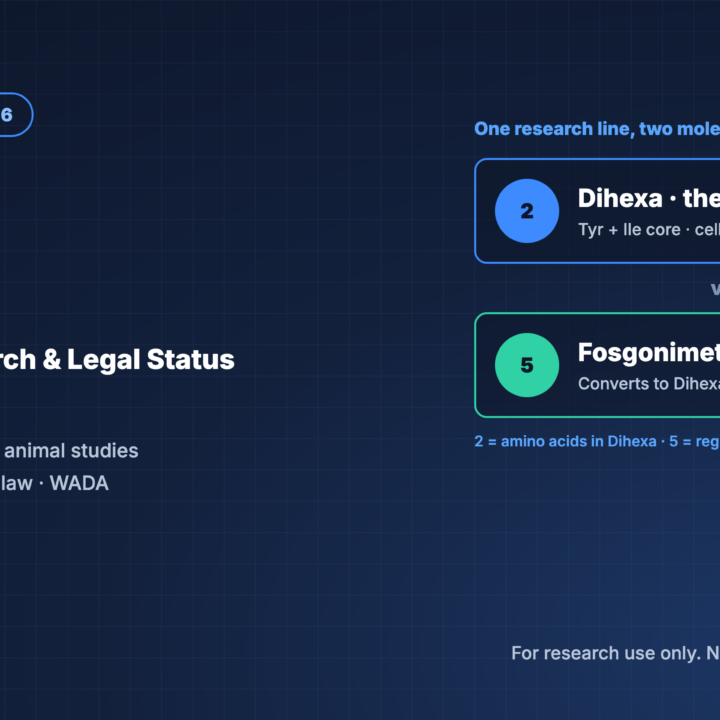
Dihexa UK Feature Image | Apexion Biolabs

Dihexa UK: What It Is, Research & Legal Status (2026)

Quick answer What is Dihexa? Dihexa (PNB-0408) is a small, modified fragment of the peptide hormone angiotensin IV, developed at Washington State University. In animal and cell studies, it binds hepatocyte growth factor (HGF) and strengthens HGF/c-Met signalling, a pathway involved in forming connections between neurons. No published human trial has given Dihexa itself, and…
Read more
What is Thymosin Alpha-1?

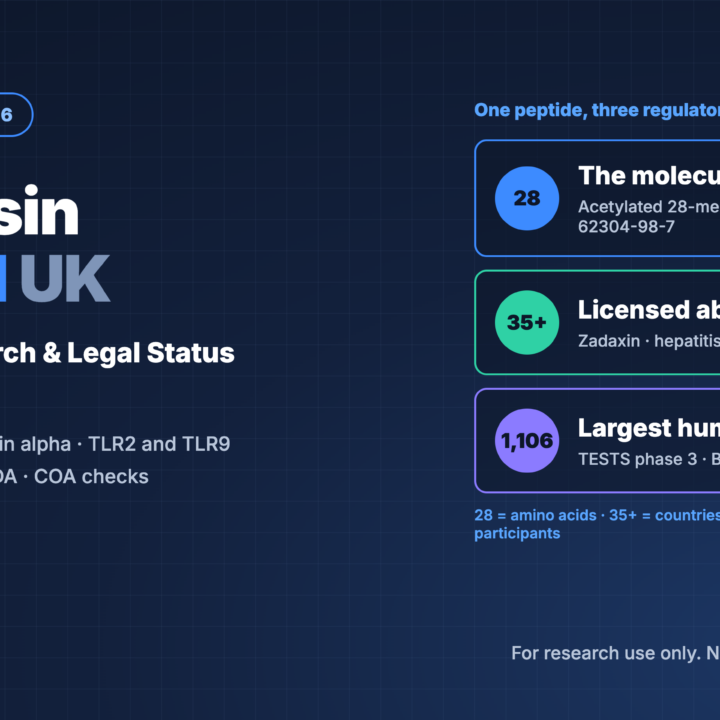
Thymosin Alpha-1 UK: What It Is, Research & Legal Status (2026)

Quick answer What is Thymosin Alpha-1? Thymosin Alpha-1 (Tα1, thymalfasin) is a 28-amino-acid peptide first isolated from thymus tissue. It is studied for how it influences immune-cell signalling, including T-cell maturation and dendritic-cell activity. A synthetic version is licensed as a medicine in some countries, though not in the UK, where it is supplied for…

Read more
Kisspeptin-10 UK Feature Image | Apexion Biolabs

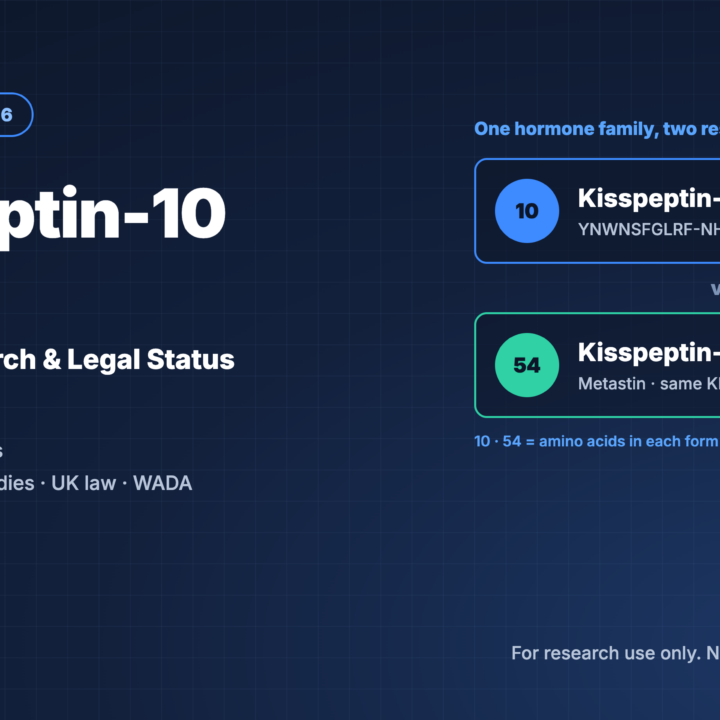
Kisspeptin-10 UK: What It Is, Research & Legal Status (2026)

Quick answer What is Kisspeptin-10? Kisspeptin-10 is the shortest active fragment of Kisspeptin, a hormone encoded by the KISS1 gene. It activates the KISS1R (GPR54) receptor on GnRH neurons, the starting point of the reproductive hormone axis. It has been studied in cell, animal, and supervised human research, and much of the human Kisspeptin UK…

Read more
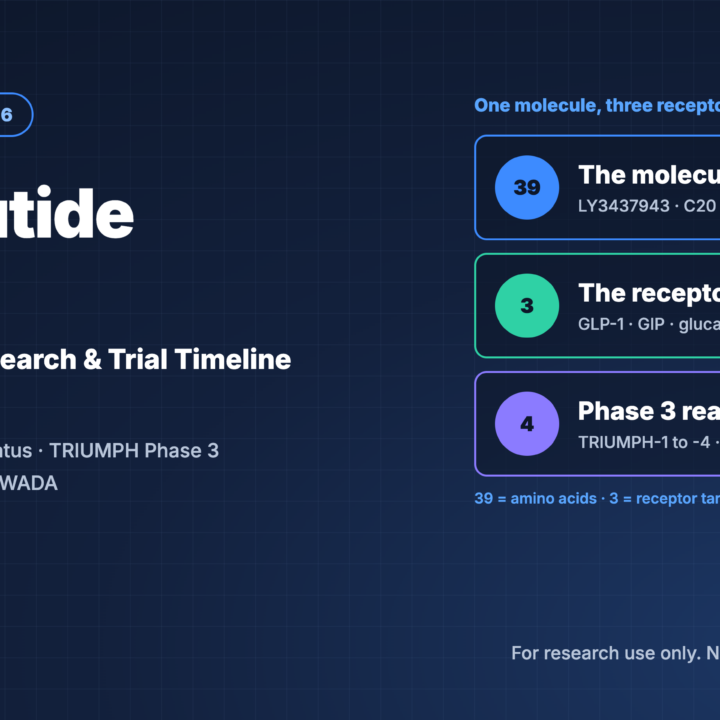
Retatrutide UK Feature Image | Apexion Biolabs UK

Retatrutide UK: Legal Status, Research & Trial Timeline (2026)

Quick answer Is Retatrutide legal in the UK? No. Retatrutide (LY3437943) is an investigational triple receptor agonist from Eli Lilly that has finished its first wave of Phase 3 trials but has not been approved anywhere. The MHRA said in July 2026 that it “has not been authorised for use in the UK”. For anyone…

Read more
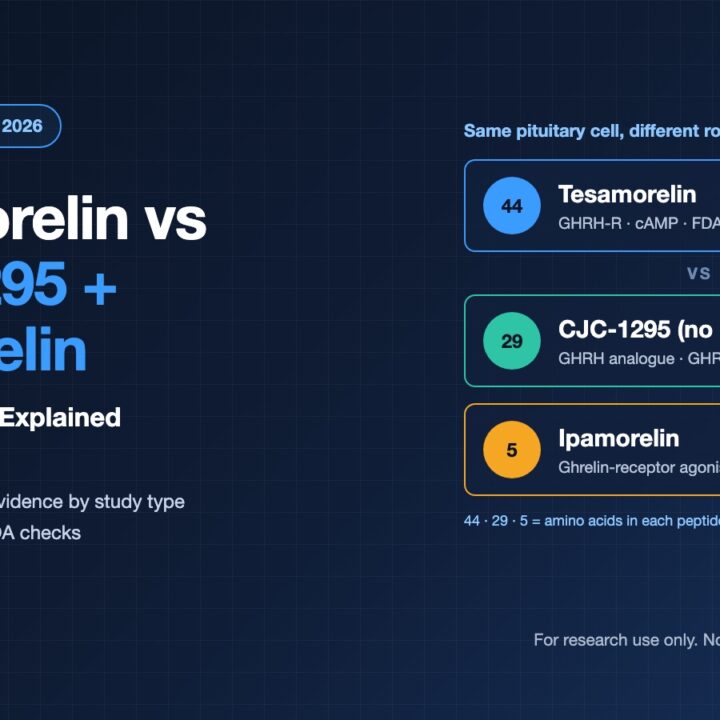
Tesamorelin vs CJC-1295 + Ipamorelin research guide comparing 44, 29 and 5 amino acid peptides, their receptors and approval status

Tesamorelin vs CJC-1295 + Ipamorelin: Key Differences (2026)

Reviewed by Oscar Reyes, PhD, Synthesis Lead at Apexion BioLabs · Scientific review of the chemistry and analytical content · Updated October 2026 Quick answer What’s the difference between Tesamorelin and CJC-1295 + Ipamorelin? Tesamorelin is one lab-made peptide that copies growth hormone-releasing hormone (GHRH), the signal the hypothalamus sends to the pituitary. CJC-1295 +…

Read more
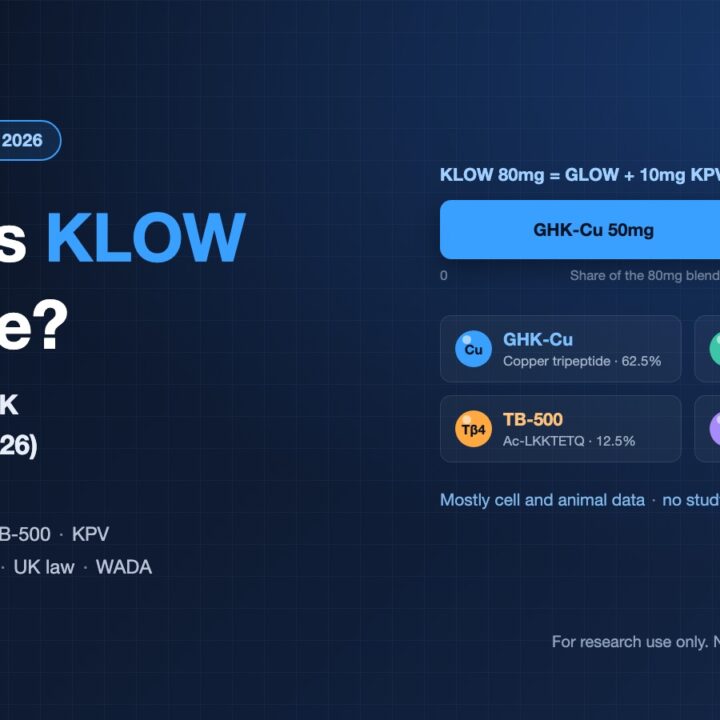
what is klow peptide

What Is KLOW Peptide? Research and UK Legal Status (2026)

Quick answer What is KLOW peptide? KLOW is an 80mg research blend of four compounds: GHK-Cu (50mg), BPC-157 (10mg), TB-500 (10mg) and KPV (10mg). It’s the three-compound GLOW blend with KPV added. Each component has its own cell and animal research, but nobody has published a study of all four in combination. Under UK law…

Read more
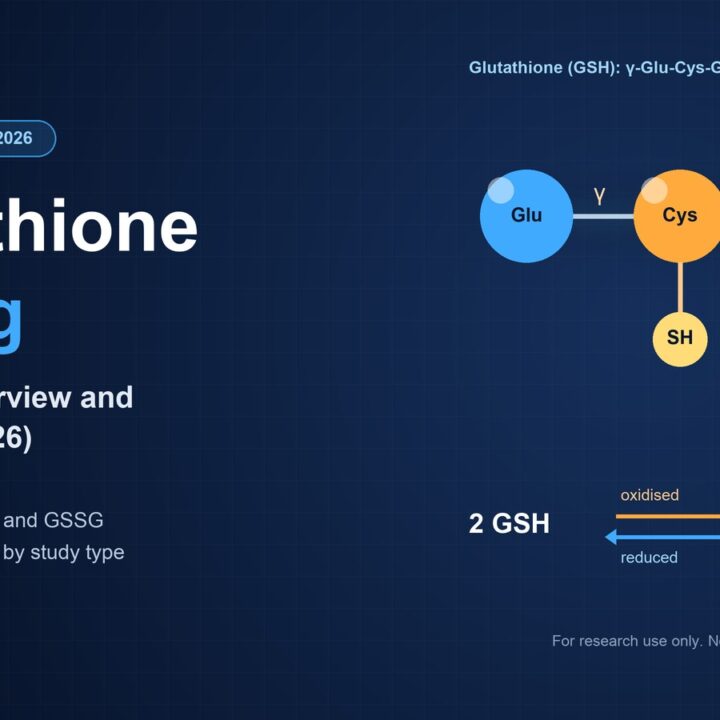
Glutathione 500mg: Research Overview

Glutathione 500mg: Research Overview and UK Status (2026)

Quick answer What is glutathione? Glutathione is a tripeptide (γ-Glu-Cys-Gly) made inside nearly every cell, and it’s the main thiol antioxidant studied in redox biology. On a research product, “500mg” describes how much glutathione the pen contains. It’s a statement of contents with no usage meaning. “500mg” might be the most misread figure in this…

Read more
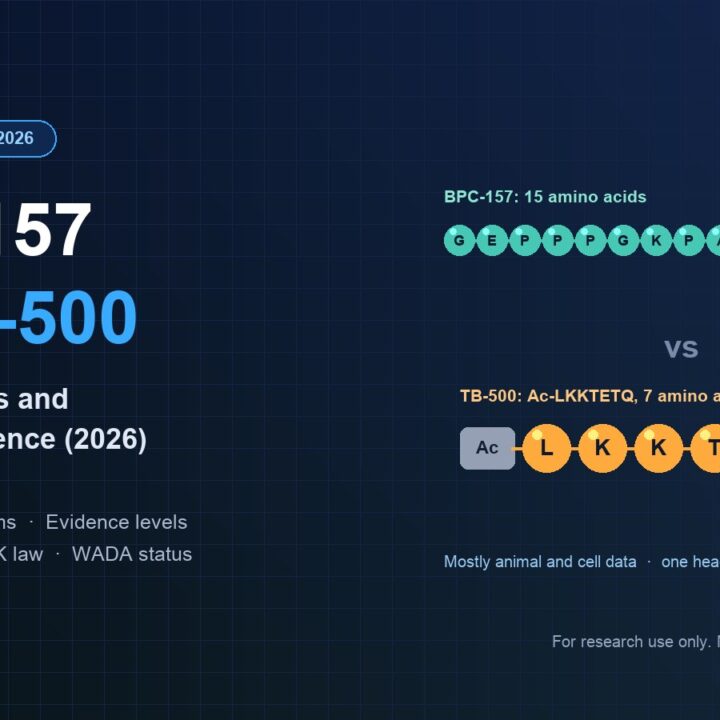
bpc-157-vs-tb-500

BPC-157 vs TB-500: Key Differences and Research Evidence (2026)

Quick answer What is the difference between BPC-157 and TB-500? BPC-157 is a 15-amino-acid synthetic peptide studied mainly in angiogenesis and tendon models. TB-500 is a seven-residue fragment of thymosin beta-4 (Ac-LKKTETQ) studied for actin regulation and cell migration. Both rely almost entirely on animal and cell data, and both are sold in the UK…

Read more
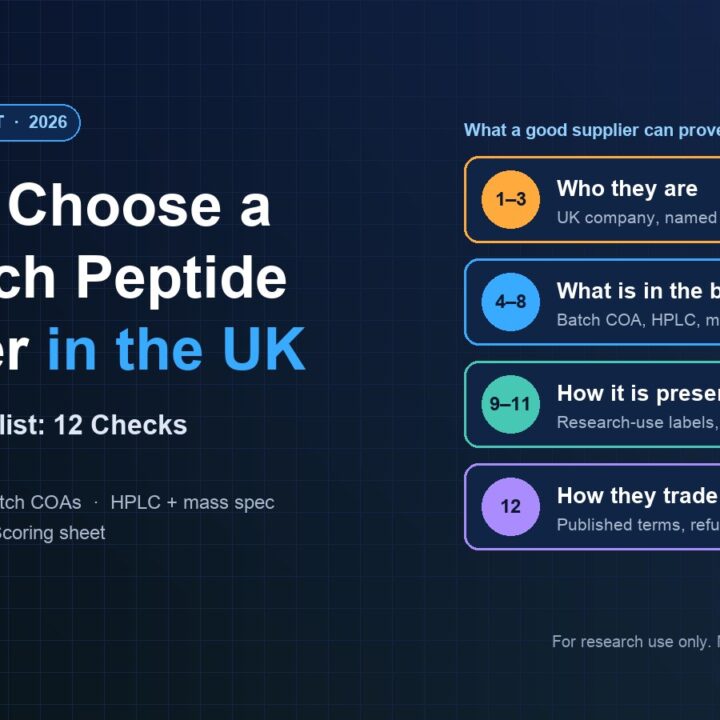
research peptide supplier uk

How to Choose a Research Peptide Supplier in the UK (2026 Checklist)

Quick answer The checklist in five lines Say you found a research compound COA that looks perfect. The peptide name is right, the HPLC purity reads 99.1%, and a lab logo fills the top corner. Then you check the lot number, and it belongs to a different batch from the batch printed on your vial.…

Read more
WhatsApp us