
Peptide Pens vs Vials for Research: A Technical Comparison
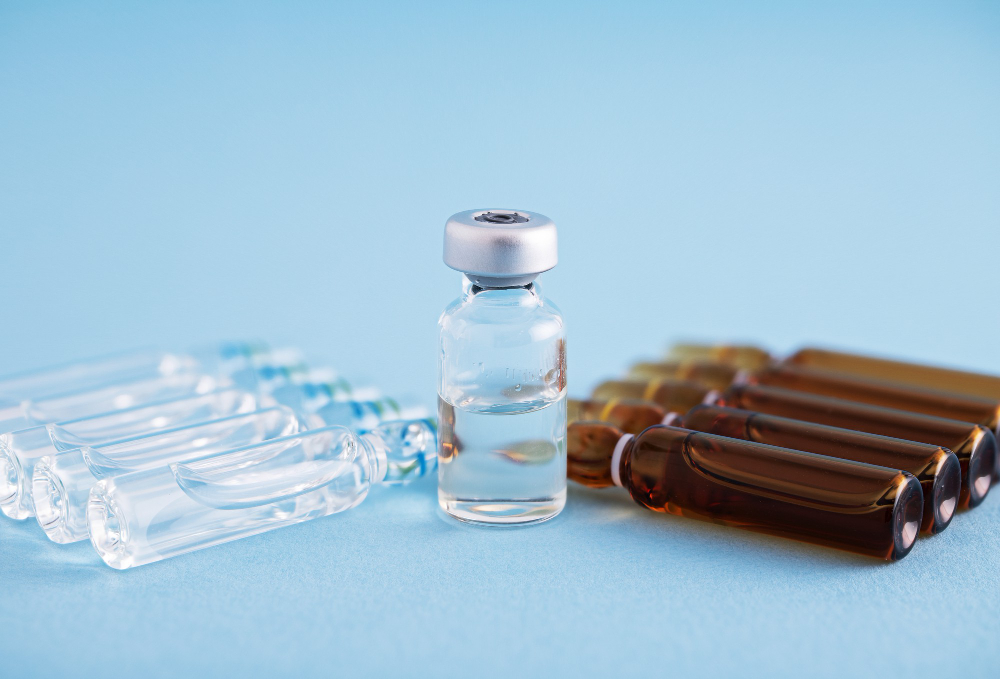
Research peptides reach the bench in two main formats:
- A pre-filled pen is a sealed device holding the compound at a fixed concentration, ready to dispense in set increments with no mixing.
- A lyophilised vial holds the same compound as a freeze-dried powder that you reconstitute with bacteriostatic water before use.
This guide compares the two on what actually makes a difference in a lab: reproducibility, stability chemistry, and documentation. We have parked convenience and self-use to one side, because those miss the point for research work. Both formats are supplied for laboratory research use only and are Research Use Only.
Peptide Pens VS Vials – Quick Comparison
Take a look at the short version before we get into the science. The compound inside is identical; the table compares the handling pathway around it.
| Factor | Pre-filled Pen | Lyophilised Vial |
|---|---|---|
| Preparation required | None, sealed and metered | Reconstitution with bacteriostatic water |
| Dosing/volume reproducibility | Fixed increments, low operator variance | Depends on manual draw precision |
| Sterility exposure | Single sealed device, minimal re-entry | Repeated needle entry raises contamination risk |
| Stability once prepared | Stable for device shelf life | Reconstituted solution degrades faster (days to weeks at 2 to 8°C) |
| Format flexibility | Fixed concentration | Adjustable concentration for custom protocols |
| Best suited for | Repeatable, multi-session protocols | Custom concentrations, calibration, bulk or cost-sensitive studies |
| Documentation | Easier batch and COA traceability per sealed unit | Requires logging reconstitution date, water lot, and dilution |
What Each Format Actually Is
Both peptide pens and peptide vials carry the same peptide. What changes is the handling pathway from packaging to bench, and that pathway drives most of the differences below.
Pre-filled pens
A pre-filled pen is a sealed device with the peptide already held at a set concentration. A click-dial mechanism dispenses fixed increments per actuation, so there is no powder to mix and no concentration to calculate. Apexion supplies selected compounds in this ready-to-use pen format, and the Pen Priming Guide covers set-up for research handling.
Lyophilised vials
A lyophilised vial holds the peptide as a freeze-dried powder. Before use, you reconstitute it with bacteriostatic water, work out the resulting concentration, and draw your target volume. This is the traditional format for compounds like BPC-157 and TB-500, and it gives you full control over concentration.
The key point is that the molecule is the same in both. A vial and a pen of the same peptide differ only in the handling pathway around an identical compound.
Reproducibility and Measurement Variance
For research, the pen’s real advantage is reproducibility. A metered device dispenses the same set volume every actuation, so operator variance stays low. A vial protocol stacks several manual steps, and each one adds a little error that compounds across a study.
Walk through the vial pathway. You reconstitute the powder, calculate the concentration, translate your target into a volume, then draw to a mark on a syringe by eye. Every step carries a small measurement error, and those errors add up across dozens of draws in a multi-week study.
That variance lands in your inter-assay consistency and can blur a dose-response curve. Picture a 3% draw error repeated across twenty sessions: each draw looks fine on its own, yet together they widen your error bars and make a real effect harder to see. Reproducibility is a data-quality question first, and a convenience question a distant second.
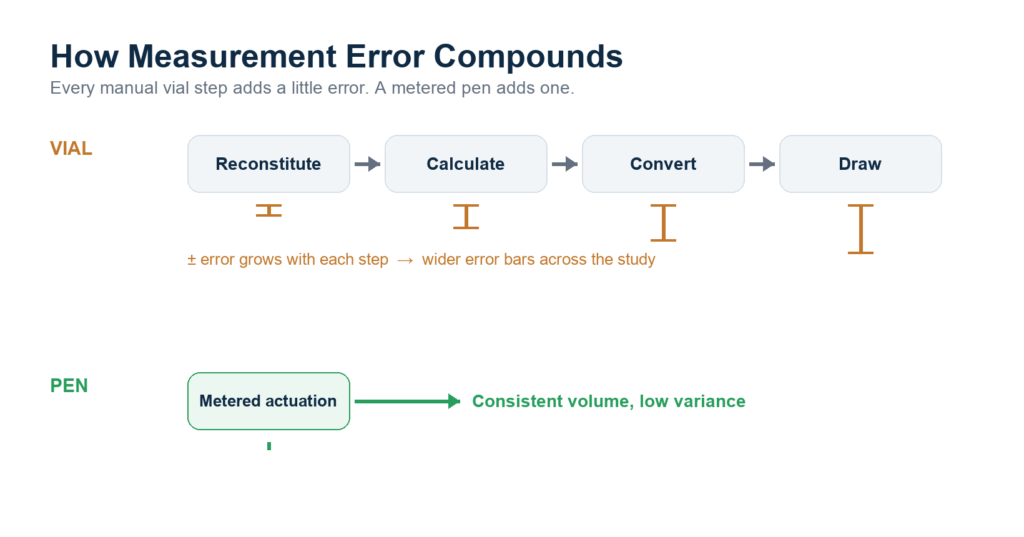
Figure 1: How measurement error compounds across manual vial steps versus a metered pen.
Insulin pens are a different product, but they are the closest well-studied metered-device class, so they work as a precedent rather than peptide-specific data. Tested against the ISO 11608-1 standard, both pens in one study “delivered all doses within ISO limits”, showing that sealed metered devices hold tight tolerances across their range. Manual syringe draws, by contrast, lose accuracy fastest at very small volumes, exactly where fine research work often sits.
Stability Chemistry: Why Format Affects Shelf Life
Format decides how exposed your peptide is to the things that degrade it. A dry, sealed peptide is far more stable than the same peptide sitting in solution, so the handling pathway sets the real shelf life.
The gap is large. Peptide manufacturers advise keeping peptides as dry lyophilisate in a tightly closed container below minus 15°C, with minus 50°C or lower preferred for long-term storage, and notes that frozen solutions “may be kept for a few weeks.” So a dry peptide can hold for months to years, while the same peptide reconstituted is usually good for days to a few weeks at 2 to 8°C. Most of that loss happens early, in the first days after mixing.
Temperature drives the rate. As a rough rule of thumb from the Arrhenius relationship, every 10°C rise roughly doubles the rate of a degradation reaction. That is why a few minutes on a warm bench costs more than the fridge reading suggests, and why cold-chain discipline matters once a vial is open.
Light is also an important consideration. Peptides with aromatic residues, tryptophan, tyrosine and phenylalanine, absorb light and break down under it. A study on photosensitised oxidation found the “Trp residue yields N-formylkynurenine and hydroxytryptophan as oxidized products, whereas the Tyr undergoes dimerization” (Silva et al.). That is the chemistry behind amber and opaque packaging. Connect it back to format: a sealed pen standardises this exposure, while a reconstituted vial’s stability depends entirely on how it is handled afterward.
Two more enemies round out the set. Dry lyophilised peptide is hygroscopic, so it pulls in moisture from the air; Peptides manufacturers advise letting a sealed container reach room temperature in a desiccator before opening, which limits the water pickup that shortens shelf life. And repeated freeze-thaw cycles stress a peptide in solution and encourage aggregation, which is why aliquoting into single-use volumes is the safer habit.
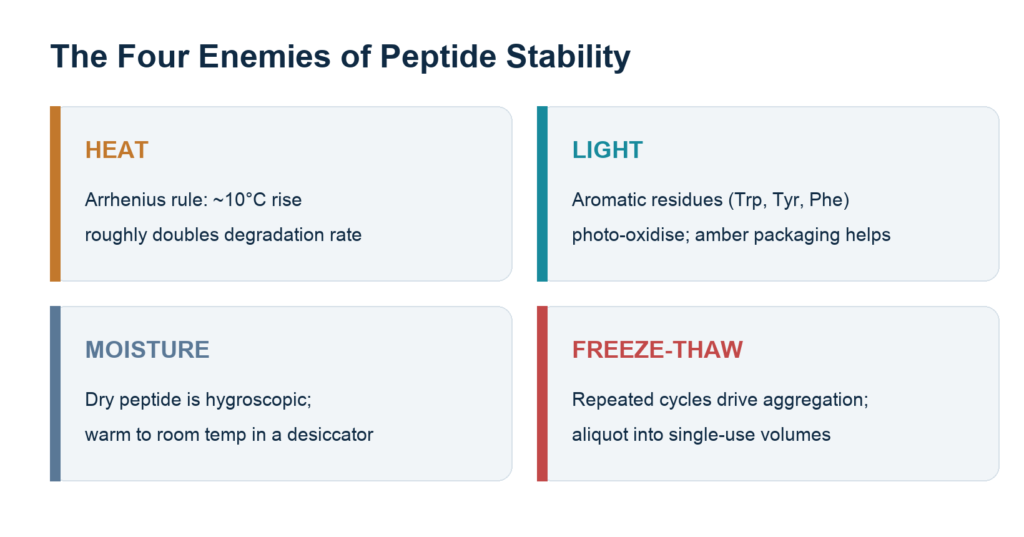
Figure 2: The four enemies of peptide stability and the mechanism behind each.
Getting storage right is half the battle with any format. Our Precision Manufacturing page sets out how Apexion documents purity before a compound ever reaches your bench.
Contamination and Handling Risk
Every needle entry into a multi-use vial is a fresh chance for contamination and oxidation. Repeated septum punctures introduce air and microbes over the life of the vial, and each draw exposes more of the solution to oxygen. A sealed device, like a peptide pen, limits this by design.
Each puncture also pulls a little air into the headspace, and the dissolved oxygen that comes with it drives the slow oxidation of vulnerable residues over a vial’s working life. The fix for vials is disciplined handling. Best practice is to aliquot the reconstituted solution into single-use volumes, so you avoid repeated freeze-thaw cycles that stress the peptide and drive aggregation. Label each aliquot and store it cold.
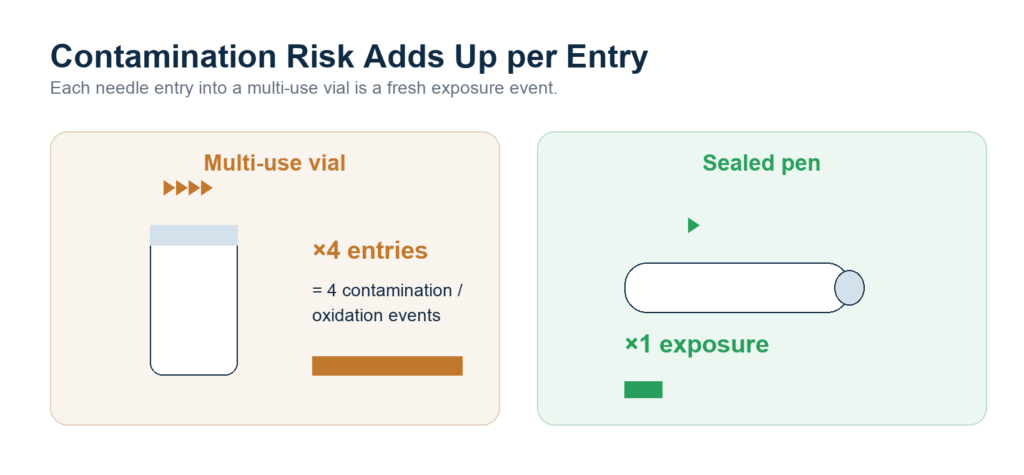
Figure 3: Contamination and oxidation risk rises with each needle entry.
Some context could be helpful here. As researchers on the r/UK_Peptide_Sources community on Reddit point out, a pre-filled pen from a proper facility with cold-chain handling can be as clean as a well-managed vial; the contamination problems usually trace back to handling, not the format itself. A sealed, metered format reduces that handling risk, though it does not remove it entirely.
Documentation and Batch Traceability
This is where format choice shapes your records, and where most guides go quiet. Documentation is the ability to tie a specific measurement back to a specific batch, and the two formats make that job easier or harder.
Think of it as a traceability chain. With a sealed pen, one unit maps to one batch and one Certificate of Analysis (COA), so the chain is short and clean. With a vial, the chain has more links: the powder lot, the bacteriostatic water lot, the reconstitution date, and the dilution you used all sit between the raw material and the number in your notebook. Miss a link and the result is harder to defend.
Good records are what let another researcher, or you in six months, reproduce a result and trust it. When a number gets questioned, a clean chain back to a batch-specific COA is the difference between defending the finding and repeating the whole run.
For solid records with either format, log the batch or lot number, the reconstitution date and water source or lot for vials, and the storage conditions throughout. Apexion publishes the current COA on each product page, so the purity behind a given lot is documented on the page you order from. Products like GHK-Cu and SS-31 list HPLC-verified purity of at least 98 to 99%, in line with Apexion’s stated commitment to full transparency.
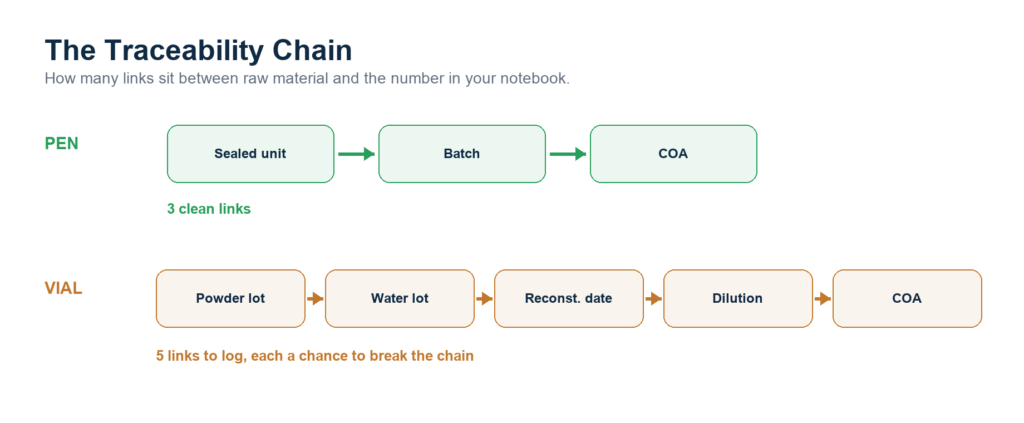
Figure 4: The traceability chain, sealed pen versus lyophilised vial.
When a Vial Is Still the Right Choice
A vial is the better pick in several common research situations:
- You need a custom or non-standard concentration the pen does not offer.
- You are working with a compound that no supplier offers in a pre-filled format.
- You are doing mass-spec calibration or analytical work that needs precise dilution control.
- You are running a larger-scale or cost-sensitive study where headline price per milligram matters.
For custom concentration work, a vial of CJC-1295 + Ipamorelin gives you the dilution control a fixed pen cannot.
When a Pre-Filled Pen Is the Right Choice
A pre-filled pen earns its place when consistency and clean handling lead your priorities:
- You are running a multi-session protocol that needs the same repeatable volume every time.
- You want to keep operator-introduced variance to a minimum across a study.
- You want to reduce open-vial handling and the contamination exposure that comes with it.
If a protocol runs for weeks and leans on tight repeatability, the metered pen format does the steady, boring work of giving you the same volume on session one and session twenty.
Comparison Summary / Decision Checklist
Use this quick decision aid to point yourself at the right format:
- Need a non-standard concentration? Choose a vial.
- Running a multi-week protocol that needs consistency? Choose a pre-filled format.
- Budget-constrained and high-volume? Choose a vial.
- Prioritising minimal handling steps and lower contamination exposure? Choose a pre-filled format.
Most labs end up using both, matching the format to the protocol in front of them.
Frequently Asked Questions
For repeatability, yes. A pen dispenses fixed increments with low operator variance, while a vial depends on manual reconstitution and syringe draws that add error at each step. Insulin-pen research on metered devices supports this, though it is an analogous device class rather than peptide-specific data.
Usually days to a few weeks at 2 to 8°C, with most degradation happening early. A dry, frozen peptide lasts far longer. To extend a solution’s life, aliquot it into single-use volumes and keep it cold and out of the light.
Yes. Bachem advises storing dry lyophilised peptide in a tightly closed container below minus 15°C, with minus 50°C or lower preferred for long-term storage. Keep the container sealed and let it reach room temperature in a desiccator before opening to limit moisture pickup.
It does. A sealed pen maps one unit to one batch and one COA, a short chain. A vial adds links: powder lot, water lot, reconstitution date, and dilution. Logging each of these keeps a vial result traceable back to its batch-specific COA.
A pre-filled format usually suits multi-week work, because repeatable metered volumes hold consistency across many sessions and reduce handling. A vial still wins where the protocol needs custom concentrations or precise dilution control that a fixed pen cannot provide.
Disclaimer
All products and information referenced here are for laboratory research use only and are Research Use Only. This content is written for laboratory and analytical research audiences and is educational in nature. It does not constitute medical, clinical, or usage advice.